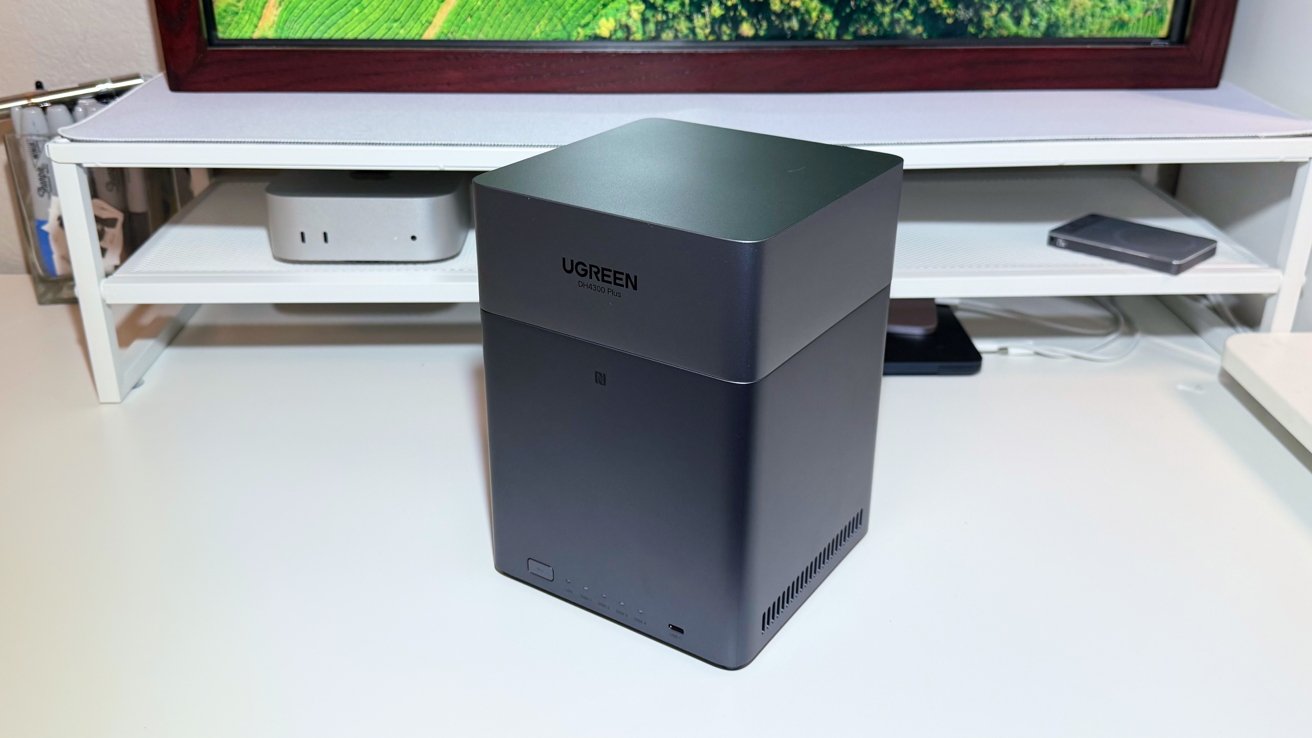

We obsess about cloud scalability, but we rarely interrogate the simplest piece of infrastructure sitting on a home office shelf: local storage. That small decision-keep everything in a vendor cloud or run a modest “local cloud” on your premises-shapes resilience, sovereignty, cost and user experience for years.
Context
A recent review of the Ugreen NASync DH4300 framed it as an easy-to-use, affordable four-bay NAS aimed at beginners moving beyond two‑bay boxes or Apple Time Capsule-style backups. The device is positioned as a practical local-cloud appliance for users who want more capacity and simplicity without becoming networking experts.
Analysis – what this means for architects and founders
The wider implication here isn’t the DH4300 itself; it’s the democratization of on-prem storage. As devices like this become simpler and cheaper, the trade-offs between cloud-only, hybrid, and on-prem models shift. For CTOs and founders, that shift raises five strategic considerations:
1) Architect for hybrid, not binary choices.
Cloud providers give elasticity and global reach; a local NAS gives low-latency access, predictable cost and control. Treat them as complementary tiers: use NAS for primary backups, fast restores, and working datasets; leverage cloud for offsite archival, DR, and compute-on-demand. This lets you optimize for latency, cost and regulatory constraints.
2) Plan for growth, not just today’s backup needs.
Two-bay devices look attractive until growth, versioning, and multiple workloads turn them into bottlenecks. Four-bay appliances (or modular scale-out) offer flexibility: mixed drive sizes, RAID parity choices, and capacity for snapshots. But be explicit about long-term costs-power, cooling, monitoring, and eventual replacement-and model them into your TCO.
3) Don’t mistake ease-of-use for a security posture.
Beginner-friendly NAS units can expose SMB/NFS shares carelessly if remote access is configured without VPNs, MFA, or secure reverse-proxy. Apply Zero Trust principles: least privilege shares, encrypted at-rest and in-transit, hardened admin interfaces, firmware update policies, and regular restore drills. If you expose services for remote work, use VPNs or vendor-secure remote access-do not punch holes in your perimeter.
4) Backups are a process, not a product.
Follow the 3-2-1 rule: three copies, two different media, one copy offsite. A NAS makes the “two local copies” easy; the cloud becomes the offsite copy. Automate snapshot schedules, retention tiers, and periodic restore verification. Regularly test restores-backups that can’t be restored are a liability.
5) Build vs. buy: choose based on risk and personnel.
For small teams without storage expertise, an off-the-shelf NAS reduces operational risk and accelerates time-to-value. For organisations handling regulated data, high availability SLAs, or heavy I/O workloads, consider engineered storage stacks or cloud-native storage services that include lifecycle management, replication, and vendor support.
The Bharat connection – why this matters in India (and the Northeast)
In geographies where connectivity can be intermittent and cross-border data concerns are real, local cloud is not indulgence-it’s necessity. For enterprises and government units in Northeast India, an affordable, easy-to-manage NAS preserves productivity during outages, keeps sensitive data under local control, and lowers recurring egress costs. That makes hybrid designs-local NAS + cloud archive-a pragmatic pattern for resilience and data sovereignty.
Practical takeaways
– Start with clear SLAs for restore time and retention, then choose hardware that meets them.
– Prefer four-bay (or more) for future flexibility; plan RAID and rebuild implications.
– Protect admin interfaces, enable encryption, and integrate NAS backups with offsite cloud replication.
– Automate verification: scheduled restores are as important as scheduled backups.
– If you lack storage ops capability, prefer reputable vendors with transparent firmware and support.
Closing thought
The move toward local cloud is less about nostalgia and more about control: control over latency, cost, compliance and continuity. For technologists building the next decade of systems, the right storage topology is the one that makes data both available and trustworthy-wherever your users are.
About the Author Sanjeev Sarma is the Founder Director of Webx Technologies Private Limited, a leading Technology Consulting firm with over two decades of experience. A seasoned technology strategist and Chief Software Architect, he specializes in Enterprise Software Architecture, Cloud-Native Applications, AI-Driven Platforms, and Mobile-First Solutions. Recognized as a “Technology Hero” by Microsoft for his pioneering work in e-Governance, Sanjeev actively advises state and central technology committees, including the Advisory Board for Software Technology Parks of India (STPI) across multiple Northeast Indian states. He is also the Managing Editor for Mahabahu.com, an international journal. Passionate about fostering innovation, he actively mentors aspiring entrepreneurs and leads transformative digital solutions for enterprises and government sectors from his base in Northeast India.