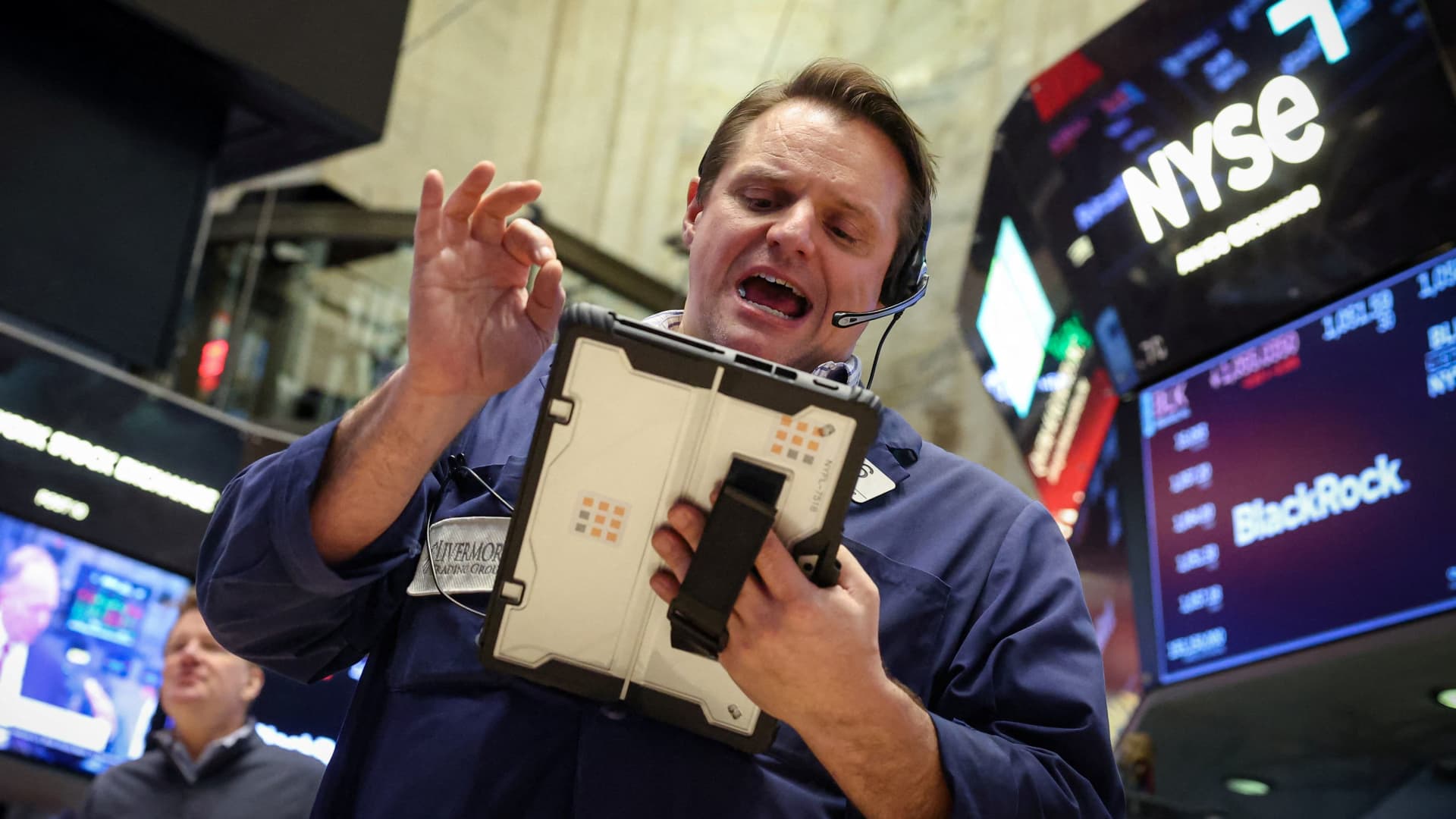

Another week on Wall Street has left traders feeling that “it could’ve been worse” serves as a declaration of success, despite mini-crashes rippling through various sectors. The S&P 500 remained largely flat last week, closing at a level first reached 112 days ago, reminiscent of the market’s optimistic moment last October when hopes for an economic recovery were fueled by Federal Reserve rate cuts and a booming AI investment wave.
As the market grapples with more pressing questions than before, some investors are left wondering if the risks to existing businesses outweigh the prospects for new ventures in the ongoing AI boom. The sharp sell-offs in software and data services stocks raise additional concerns, prompting questions about Nvidia’s stagnant share price despite significant growth expectations in AI capital expenditures for 2026. The disparity between struggling consumer-exposed stocks and usually stable staples is also under scrutiny: is this a mere lull or an indication of deeper issues?
Market dynamics reflect a puzzling scenario where the S&P 500, despite challenges, has shown resilience. John Kolovos, chief technical strategist at Macro Risk Advisors, noted that the ongoing rotation within the market is creating dispersion without significant directional movement at the index level, which is unusual given the declines in high-profile stocks like Netflix and Microsoft. This highlights a broader trend where even as some sectors falter, the overall index remains relatively stable, raising questions about the underlying strength of this apparent resilience.
Data from Goldman Sachs indicates a significant migration of investment from high-value virtual assets to tangible goods, suggesting an evolving perception of risk within the market. With $700 billion earmarked for AI capital expenditures this year, there’s a narrative that such massive investment will disrupt various sectors, altering risk-reward dynamics across the board. This shift in focus, particularly towards traditional physical products, may reveal overblown fears or could indicate a necessary correction.
As companies prepare for new IPOs, the market is closely observing how established tech giants and newly minted entities will coexist, particularly given concerns over previously inflated valuations. The recent trend of selling off shares of leading technology firms may be a strategic move to make space for potential newcomers vying for significant market capitalizations.
Despite these fluctuations, the macroeconomic picture remains relatively steady. Economic data released last week indicated a softer-than-feared outlook, spurring optimism among investors that a “soft landing” for the economy could be within reach. The S&P 500 is projected to achieve modest profit growth in the fourth quarter, outperforming expectations, while indicating that ongoing corporate earnings could spur further market support.
While the current market climate remains challenging, it’s essential to consider that dramatic leadership changes rarely occur in the midst of a bull market. Though enthusiasm for AI persists, confined largely to specific sectors, there remains potential for a shift back towards tech-focused investments as broader economic conditions stabilize. With significant corporate moves on the horizon, the market stands at a crossroads, poised to reflect shifts in investor sentiment and evolving opportunities within the landscape of both old and new economies.
Original Source: https://www.cnbc.com/2026/02/16/sp-500-finds-itself-once-again-unable-to-surmount-the-7000-threshold.html
Category :
Tags:
Publish Date: 2026-02-16 20:08:00