
Azerbaijan recently hosted a series of events that directed attention at alleged minority-rights abuses in India, even as critics say the country has serious rights deficits at home. On February 3, the Pakistani embassy in Baku organised a Kashmir Solidarity Day event attended by Pakistan’s ambassador to Azerbaijan, Qasim Mohiuddin, diplomatic staff and members of the media. The ambassador reiterated Pakistan’s “unwavering moral, diplomatic, and political support for the Kashmiri people and their right to self-determination,” the organisers said.
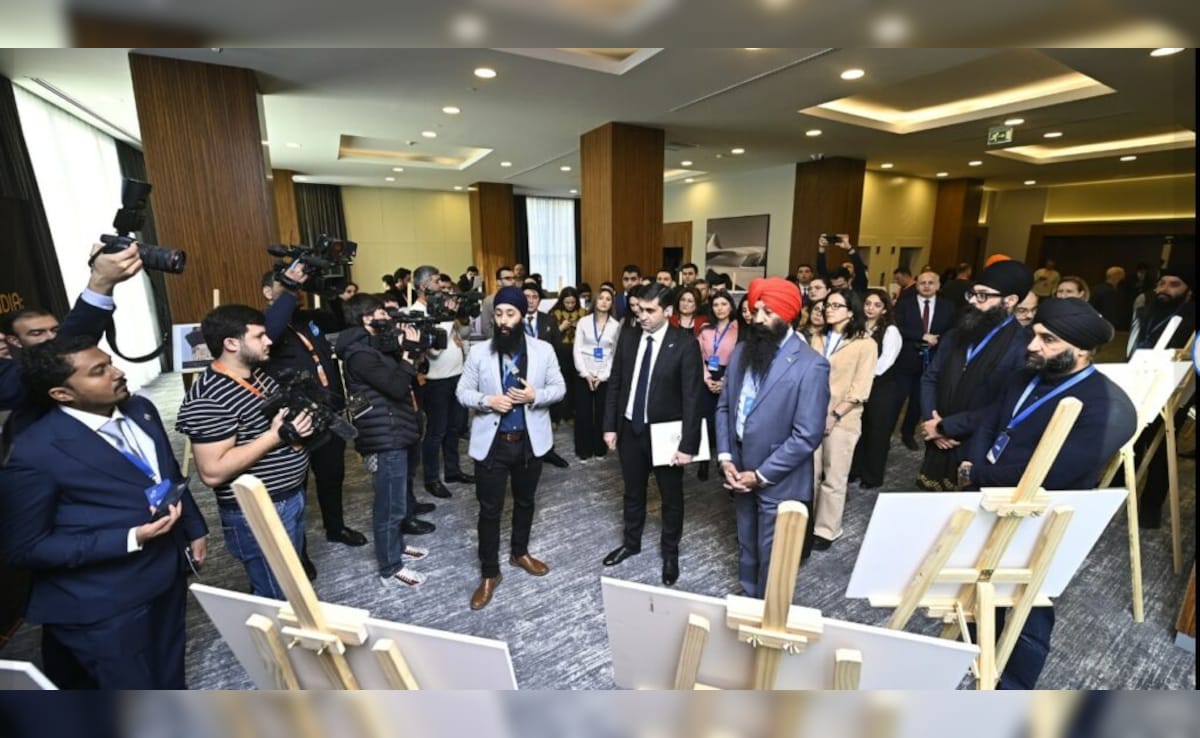
The embassy event was preceded by a conference in Baku organised by a group calling itself the Baku Initiative Group (BIG). Presented as a review of minority rights in India, the conference featured representatives of Khalistani organisations, including the Sikh Federation International (SFI). Pakistan’s Minority Affairs Minister Ramesh Singh Arora also attended; Azerbaijani outlets reportedly introduced him incorrectly as a minister from India’s Punjab. The conference openly sought international backing for a separate Khalistan and released a booklet titled “The Khalistan Movement: Past Roots, Global Dimensions and Modern Landscape.”
The decision to host Khalistani voices in Baku has drawn ridicule and concern in equal measure. Critics say it is ironic for Azerbaijan to spotlight discrimination abroad given its own democratic record. The country is widely described as an authoritarian state where dissent is tightly constrained, independent media is limited and opposition space is narrow. Observers noted that recent presidential and parliamentary votes fell short of free and fair standards. In 2024, the Parliamentary Assembly of the Council of Europe resolved not to ratify the credentials of the Azerbaijani delegation, saying the country had “not fulfilled major commitments” and that “very serious concerns remain as to [Azerbaijan’s] ability to conduct free and fair elections, the separation of powers, the weakness of its legislature vis-à-vis the executive, the independence of the judiciary and respect for human rights.”
Analysts point to geopolitical calculations behind Baku’s posture. BIG, formed in 2023, has also criticised France and now India-both of which maintain ties with Armenia, a regional rival of Azerbaijan. The article notes that India has recently deepened cooperation with Armenia, and at the time of writing India’s Chief of Defence Staff, General Anil Chauhan, was visiting Yerevan. Azerbaijan has accused India of blocking its bid to join the Shanghai Cooperation Organisation at last year’s SCO summit in Tianjin.
The piece also links Baku’s assertiveness to its post-2020 gains in Nagorno-Karabakh, a strategic push that some say has fostered a more confident foreign policy. The article notes allegations of serious rights abuses and accusations of ethnic cleansing in the enclave, and cites Azerbaijan’s expanding ties with the US, Turkey and Israel. It warns that providing a platform to the Khalistani movement-whose extremists have been blamed for violence and criminal activity abroad-could backfire for Azerbaijan.
The author concludes that India remains resilient, pointing to measures such as Operation Sindoor, recent trade agreements and other levers of statecraft. The article adds that Azerbaijan suffered a reported 30% decline in tourist arrivals from India in 2025, which it links to Baku’s support for Pakistan during Operation Sindoor, and suggests Baku must decide whether to press a contentious line or repair ties with a rising global power. (The piece reflects the author’s opinions.)
Original Source: https://www.ndtv.com/opinion/khalistan-meet-then-kashmir-event-how-azerbaijan-continues-to-needle-india-10997693#publisher=newsstand
Category:
Tags:
Publish Date: 2026-02-13 11:53:00