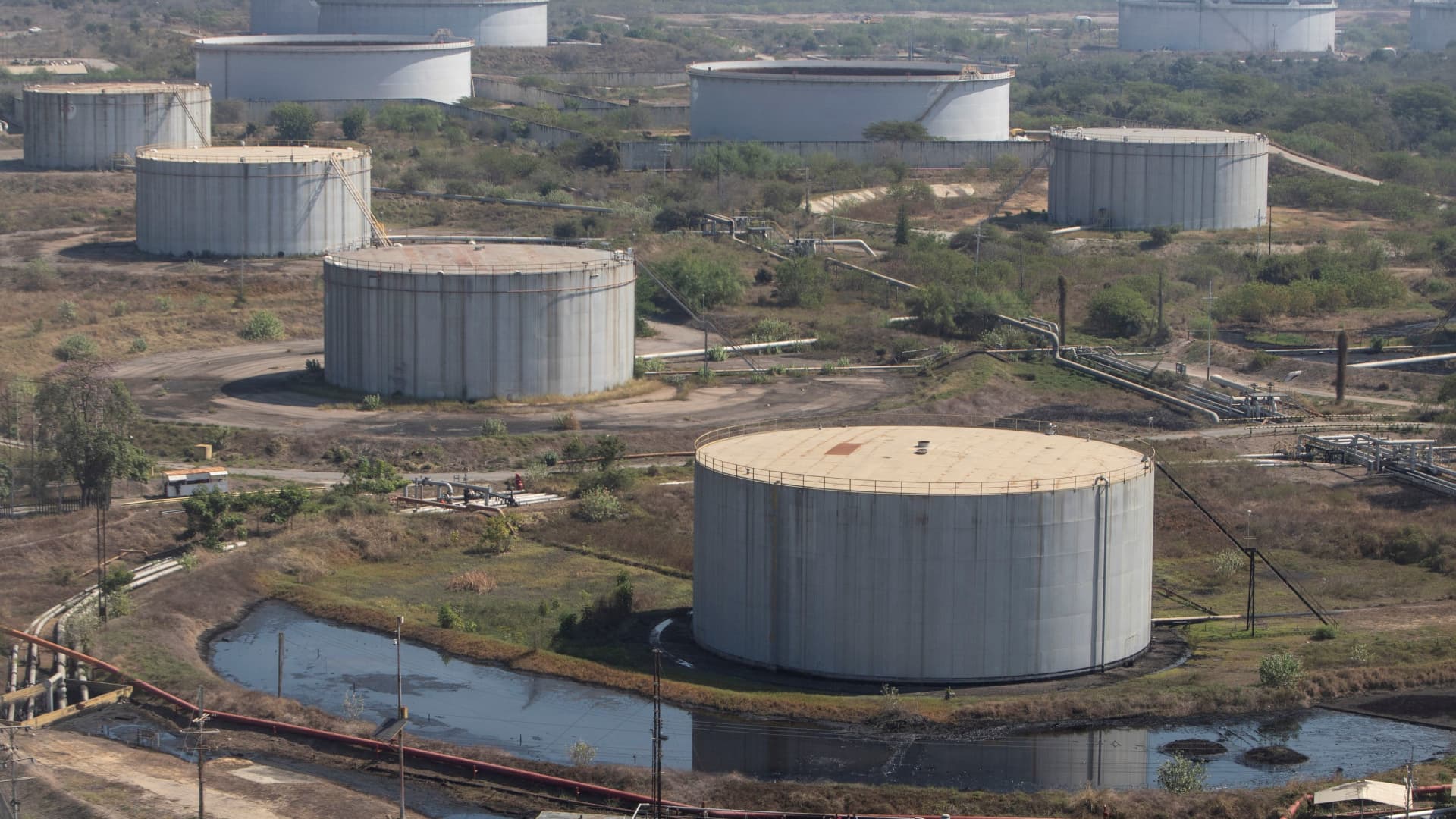

The decision by the Trump administration to allocate $500 million from Venezuelan oil revenue to Qatar raises significant concerns about the future governance of Venezuela following the controversial ousting of former President Nicolás Maduro. With power dynamics shifting rapidly, key questions emerge: When will a transition of power occur, who will govern Venezuela, and who will control its extensive resources?
Currently, the U.S. is working closely with the remnants of Maduro’s administration, led by interim President Delcy Rodriguez. However, this collaboration is complicated by the fact that the U.S. does not officially recognize Rodriguez’s government. During his first term, President Trump had acknowledged the opposition-led National Assembly, elected in 2015, as the legitimate representation of the Venezuelan populace. On January 9, he issued an executive order requiring proceeds from Venezuela’s oil sales to be deposited in a U.S. Treasury account, describing these funds as the sovereign property of Venezuela. Yet, confusion arises regarding which government the executive order refers to.
Scott Anderson, an international law expert who previously served under President Obama, notes that theoretically, these funds should be under the control of the opposition National Assembly, raising potential conflicts for U.S. cooperation with Rodriguez. The interim president has agreed to export 50 million barrels of crude oil to the U.S., a process managed by the Trump administration to maintain leverage over Caracas, as highlighted by Energy Secretary Chris Wright.
Amid this backdrop, Democrats are questioning the legality of the arrangement. Secretary of State Marco Rubio explained to Congress that the choice to hold the funds in Qatar was a strategic move while the issue of government recognition is navigated. “We have to find some creative way legally to meet that standard,” he told the Senate Foreign Relations Committee, referencing the need for recognition of the 2015 National Assembly.
A Trump administration official stated that an account has been established for Venezuela at the Treasury Department, with future revenues generated from natural resources being routed through this account. Although the initial $500 million has now been transferred to Venezuela, how the oil money will be utilized remains uncertain. Anderson emphasized that the Rodriguez government theoretically has no authority over expenditure of Venezuelan funds in the U.S., complicating matters further.
Rubio described the ongoing communication with Rodriguez as “respectful and productive,” indicating a pragmatic approach to the perceived “transition and stabilization” phase in Venezuela. The U.S. aims to eventually shift away from the current system under Rodriguez. “This is not the end state that we want,” he remarked.
In line with these developments, Caracas plans to submit a budget for U.S. review, with provisions for waiving sanctions on oil revenue from a previously blocked account. Rubio emphasized the importance of transparency regarding potential expenditures, stating that an audit process will ensure responsible fiscal management.
Despite these strategies, lawmakers like Rep. Sean Casten, D-Ill., have raised concerns about the legality of the current approach. They argue that Congress has not received a comprehensive explanation of the legal framework underpinning the oil sales program under the International Emergency Economic Powers Act (IEEPA). Democrats question whether this framework is applicable when the U.S. is not technically at war with Venezuela.
Rubio maintained that the U.S. is not confiscating Venezuela’s assets, asserting, “The money never enters our hands. We only control the disbursement.” As the situation continues to evolve, the legitimacy and legality of the arrangements remain pivotal issues for both national and international observers.
Original Source: https://www.cnbc.com/2026/02/11/trump-venezuela-oil-revenue-qatar.html
Category :
Tags:
Publish Date: 2026-02-11 22:04:00