Unveiled: Margot Robbie Shines as Brontë Barbie in Wuthering Heights-A Must-Watch Review!

Isabella Linton: The Unexpected Star of Wuthering Heights’ Glamorous Misfire
Who would’ve thought that Isabella Linton might steal the spotlight in the latest cinematic incarnation of Wuthering Heights? In this otherwise uninspired adaptation of the classic Brontë tale, it’s Alison Oliver’s sharp-witted portrayal of Isabella that injects a pulse into a film floundering in its own grandiosity. While the narrative meanders like a wayward ghost, Oliver’s Isabella flickers on the screen like a mischievous firefly, illuminating the otherwise dreary proceedings.
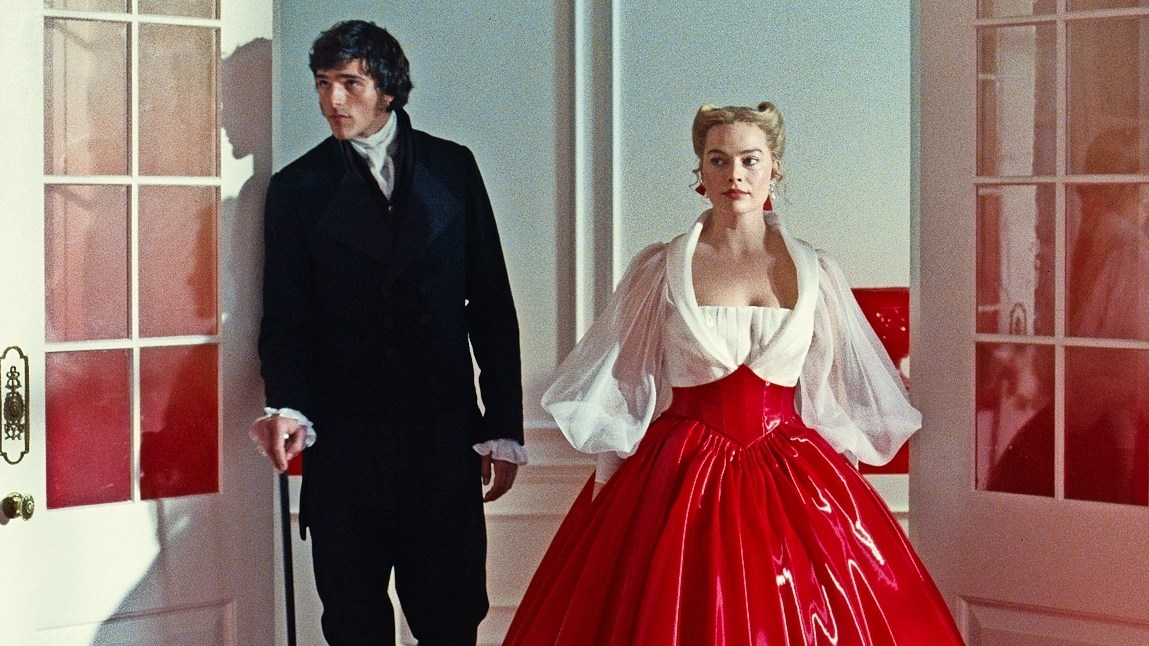
Directed by the Academy Award-winning Emerald Fennell, known for her audacious storytelling in Promising Young Woman and Saltburn, this film is an ambitious endeavor that stumbles out of the gate. The romance-or lack thereof-between an unexpectedly bland Heathcliff, played by Jacob Elordi, and Cathy, a rather too-glamorous Margot Robbie who also moonlights as the film’s producer, fizzles without any discernible chemistry. Spectators are left yearning for the emotional depth that made Brontë’s gothic romance an enduring classic, replaced here by what feels like Instagram-filtered surface gloss.
Let’s talk about Isabella. The heiress of the extravagant Thrushcross Grange is noticeably reimagined-this is no meek character confined to societal traditions. Instead, she embraces a realm of BDSM practices that include some eyebrow-raising canine-themed submission. While it may sound outrageous and a tad gimmicky, it’s a fitting nod to Fennell’s ‘fever dream’ take on the narrative, albeit with only a scanty 10 to 15 percent adherence to the source material. Literary purists, prepare to clutch your pearls.
Fennell has indeed concocted a mishmash of influential styles, channeling the visceral energy of Fifty Shades of Grey as she strips, er, sorry, revisits Heathcliff. Instead of depicting a brooding romantic lead, we find him indulging in topless wood-chopping (as if we needed more eye candy). And, let’s not forget his dazzling transformation, complete with a sun-kissed glow and pirate-inspired accessories. Was this intended as a twist on the original’s darkly poetic energy? Or merely a quest for Instagram fame? One can only wonder.
As our brooding anti-hero flits in and out of melancholy, the film indulges in quirks that tiptoe dangerously close to absurdity. Elordi’s Heathcliff, with his diffuse Yorkshire accent and curious tongue-twisting antics, evokes laughter more than longing. In a spectacle reminiscent of a slightly unhinged wildlife documentary, we witness him licking Cathy’s wallpaper, cheek, and, in a moment that will surely haunt audiences, her neck. This is the same character who famously exhumed his beloved’s corpse in Brontë’s narrative. What a loss of gravitas! One wishes for a ghostly appearance of Brontë herself to roll her eyes at this farce.
And then there’s Cathy-oh dear, Cathy! While Robbie wields a commanding presence in an array of exquisite costumes curated by Jacqueline Durran, her portrayal hovers on the periphery of emotional depth. Stripped of any teenage fervor, her Cathy feels more like Brontë Barbie, lacking the fiery core that makes the character so compelling.
The film’s production design, too, seems lost-a chaotic blend of brutalism meets Tim Burton, marred by a troubling reliance on unwieldy CGI. The climax serves up a lackluster “greatest hits” compilation that feels like a sad musical montage rather than a poignant resolution.
Amidst this cinematic swirl of chaos, Oliver’s Isabella is a breath of fresh air-winking at the audience as if she’s in on the joke. If only the rest of the film could have embraced its absurdities with such zest.
In Wuthering Heights, we find a portrait of what could have been, had the reins of creativity not strayed so far from Brontë’s haunting spirit. Welcome to a disenchanted interpretation of a literary masterpiece that, ironically, reminds us why we fell in love with the original in the first place.
★★☆☆☆