Revolutionizing Sustainability: IIT Guwahati and UK Universities Harness AI for Metal Alloys

Researchers at the Indian Institute of Technology (IIT) Guwahati, in partnership with London South Bank University, the University of Manchester, and the University of Leeds, have unveiled a novel Machine Learning (ML)-based approach to create advanced metal alloys that do not rely on Critical Raw Materials (CRMs). This breakthrough is expected to pave the way for finding high-performance, sustainable materials that are less susceptible to fragile global supply chains.
In recent years, High-Entropy Alloys (HEAs) have emerged as a promising new class of materials, capturing the attention of researchers and industries worldwide. Unlike traditional alloys that incorporate minor amounts of secondary metals, HEAs consist of multiple metals in nearly equal proportions, categorizing them as Multi-Principal Element Alloys (MPEAs). HEAs offer a broader array of combinations compared to traditional alloys, often demonstrating superior strength and stability at elevated temperatures.
However, many of the high-performance HEAs utilized in sectors such as aerospace, gas turbines, and nuclear energy incorporate CRMs like tantalum, niobium, tungsten, and hafnium. These materials are not only costly and challenging to mine but are also available in limited quantities. This excessive reliance on such materials raises import vulnerabilities, places a burden on supply chains, and intensifies environmental pressures from mining practices. Therefore, minimizing the usage of these materials is crucial for sustainable development and long-term industrial resilience.
To tackle this issue, the IIT Guwahati research team devised a machine learning-assisted alloy design framework. This framework aims to identify MPEAs that circumvent the use of the most critical raw materials. The researchers categorized CRMs into three tiers based on their supply risk, economic significance, and global availability. They compiled a comprehensive database of 3,608 alloy compositions, focusing primarily on simpler systems created from elements that are not in short supply.
Using the Extra Trees Regressor model paired with various optimization techniques inspired by natural processes, the team sought alloy compositions that would achieve high hardness without incorporating CRMs. Their efforts led to the discovery of a CRM-free alloy, Ti-Ni-Fe-Cu. This newly proposed alloy was synthesized at a laboratory scale at IIT Kanpur, where its measured hardness closely aligned with the predicted values, validating the effectiveness of their AI-based method.
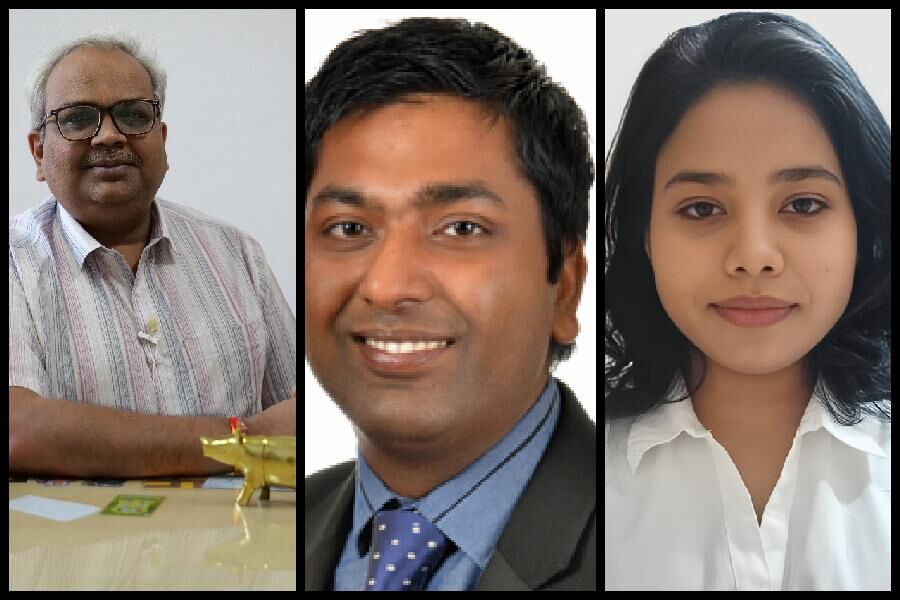
The findings have been published in ‘Scientific Reports,’ a journal under the Nature Publishing Group, in a paper authored by Prof. Joshi and members of his research team, including Dr. Swati Singh from IIT Guwahati, Prof. Saurav Goel from London South Bank University, Dr. Mingwen Bai from the University of Leeds, and Prof. Allan Matthews from the University of Manchester.
Original Source: https://assamtribune.com/assam/iit-guwahati-uk-universities-use-machine-learning-to-create-sustainable-metal-alloys-1606470
Category: Assam
Tags:
Publish Date: 2026-02-04 09:42:00