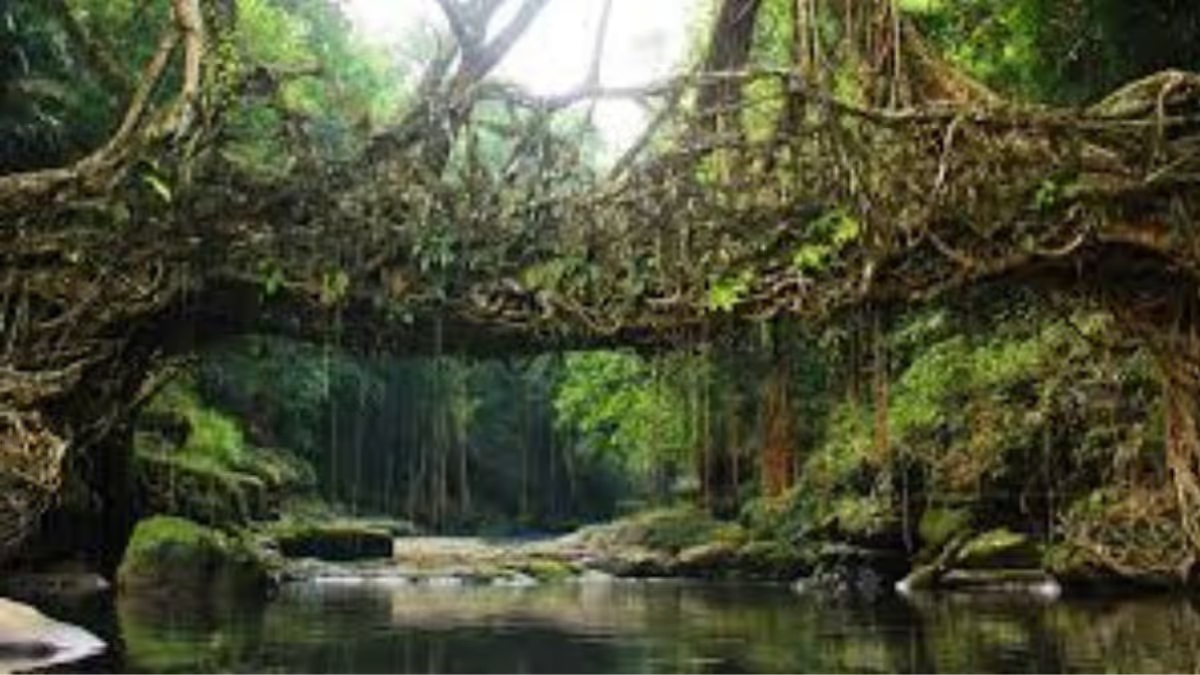

Meghalaya Chief Minister Conrad K. Sangma expressed his delight on January 29 regarding the submission of the Living Root Bridges dossier, known locally as Jingkieng Jri, to UNESCO in Paris for consideration for inclusion in the World Heritage List for 2026–27. This significant documentation was presented by India’s Ambassador and Permanent Representative to UNESCO, Vishal V. Sharma, to Lazare Assomo Eloundou, the Director of UNESCO’s World Heritage Centre.
The submission marks a crucial achievement in Meghalaya’s journey to secure global recognition for this centuries-old tradition maintained by the state’s indigenous communities. Chief Minister Sangma noted that the nomination showcases the Living Root Bridges’ unique cultural, ecological, and engineering value. He highlighted that these bridges symbolize sustainability, resilience, and the indigenous wisdom passed down through generations, calling it a proud moment for both Meghalaya and India.
In a related meeting with Prime Minister Narendra Modi, Sangma expressed his gratitude for the national nomination of Jingkieng Jri. He emphasized that support from the central government has been vital in bringing Meghalaya’s heritage to a global stage, ensuring that this living tradition, which harmonizes with nature, receives international acclaim.
The Living Root Bridges, primarily found in the Khasi and Jaintia Hills, are created by guiding the roots of rubber fig trees to naturally form sturdy bridges over rivers and streams. These remarkable structures are considered exemplary representations of sustainable engineering and cultural continuity.
Original Source: https://www.indiatodayne.in/meghalaya/video/meghalayas-living-root-bridges-dossier-submitted-to-unesco-for-world-heritage-status-cm-sangma-1338462-2026-01-29?utm_source=rssfeed
Category:
Tags:
Publish Date: 2026-01-29 22:07:00