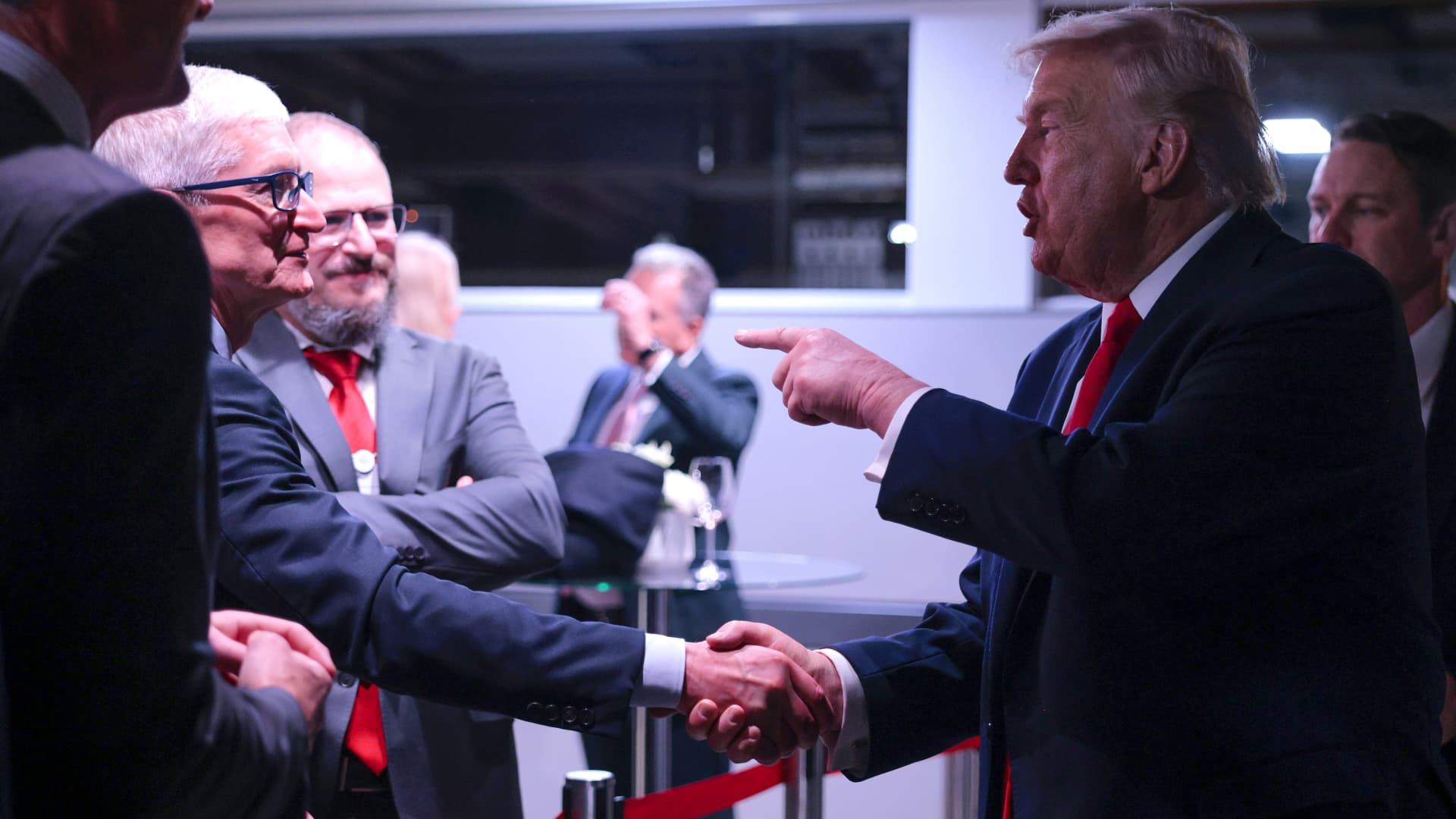

U.S. President Donald Trump made headlines at the World Economic Forum (WEF) Annual Meeting in Davos, Switzerland, on January 21, 2026, where he addressed business leaders, including Apple CEO Tim Cook. The event felt distinctly dual in nature, as attendees moved through bustling hotel lobbies and between panels. On one hand, optimism reigned among executives discussing artificial intelligence (AI) and its rapid progression into practical applications, with buzzwords like “world models” and “physical AI” dominating conversations about the vast financial support poised to back these advancements.
Conversely, discussions took a somber turn as many participants revisited themes of tariffs, Greenland, and geopolitical tensions, reflecting a growing concern over shifting global economic frameworks. Chavalit Frederick Tsao, chairman of Singapore-based Tsao Pao Chee, captured this sentiment, stating, “What Davos highlighted this year is not a crisis of innovation, but a crisis of coherence and loss of trust. Technology is advancing faster than our collective wisdom.” This tension between innovative progress and political unpredictability underscored much of the week.
Trump’s address attracted significant attention, prompting long lines and excitement akin to a concert atmosphere. His speech, marked by humor and unpredictability, shifted dramatically when he asserted that the U.S. should acquire Greenland. Laughter turned to silence as attendees exchanged disconcerted glances, a stark reminder of the policy implications that overshadowed tech discussions. This pivot brought the focus back to trade dynamics and political risks, overshadowing earlier conversations centered on AI infrastructure and energy investments.
The following day saw Elon Musk return to Davos after a hiatus, captivating audiences with his ambitious outlook on robotaxis, humanoid robots, and AI. He predicted substantial deployment of Tesla’s driverless vehicles by the end of 2026, and he asserted that AI could outpace human intelligence this year. Musk’s bold declarations reinvigorated discussions, shifting the focus back to data centers and energy demands as the atmosphere transformed once again from geopolitical anxieties to technological aspirations.
Interviews throughout the week echoed this whiplash effect. Waleed Al Mokarrab Al Muhairi, deputy CEO of Mubadala, summarized the investment landscape for 2026 as “conviction-driven,” acknowledging the chaotic yet fragmented global arena. Meanwhile, Joe Kaeser of Siemens Energy emphasized the industrial potential of AI, stressing Europe’s unique position to harness data from industrialization. However, he warned that the outcome of policy announcements remained uncertain, with global leaders awaiting concrete action.
For finance ministers and policymakers, the key message was reassurance. South Africa’s finance minister, Enoch Godongwana, highlighted credit upgrades and political stability while cautioning about geopolitical risks. Similarly, Saudi Arabia’s Mohammed Al-Jadaan reiterated the necessity for dialogue, advocating for business certainty amid turbulent conditions.
By the week’s end, a pattern emerged. Panels addressing AI and energy transitions drew large crowds, while private discussions focused on long-term prospects and expansion. Yet, informal dialogues between events often reverted to concerns about tariffs, Greenland, and the fragility of policy frameworks. In this duality, one Davos engaged with technological frontiers, while the other wrestled with global uncertainties, both manifesting simultaneously in the same snowy Swiss village.
For further updates on global economics and technology trends, follow CNBC International on Twitter and Facebook.
Original Source: https://www.cnbc.com/2026/01/24/davos-ai-greenland-trump-musk-energy-geopolitics.html
Category :
Tags:
Publish Date: 2026-01-24 18:17:00