
China’s reaction to the recent U.S. capture of Nicolás Maduro has unfolded predictably, with official statements condemning the action as a “brazen” violation of sovereignty and accusing the U.S. of acting as a “world judge.” However, behind the scenes, Chinese leadership is likely deliberating the broader implications of this event. Questions arise regarding how this will influence China’s policy in Latin America, whether it can leverage the incident to enhance its image as an alternative global power, and what the U.S.’s apparent disregard for international law suggests for China’s own regional assertiveness.
As a scholar focused on China’s global stature, I see these concerns highlighting a broader dilemma for President Xi Jinping. He must navigate the longstanding Chinese principle of non-interference in the domestic matters of other nations while simultaneously seeking to bolster strategic alliances and maintain a foothold in resource-rich countries like Venezuela.
In recent years, China has become increasingly assertive in international affairs, especially in Latin America, where it has forged deeper connections with nations such as Venezuela. The relationship is symbiotic: China seeks vital natural resources like copper and lithium, while Latin American countries benefit from Chinese investment in infrastructure, such as the recently inaugurated high-tech Port of Chancay in Peru.
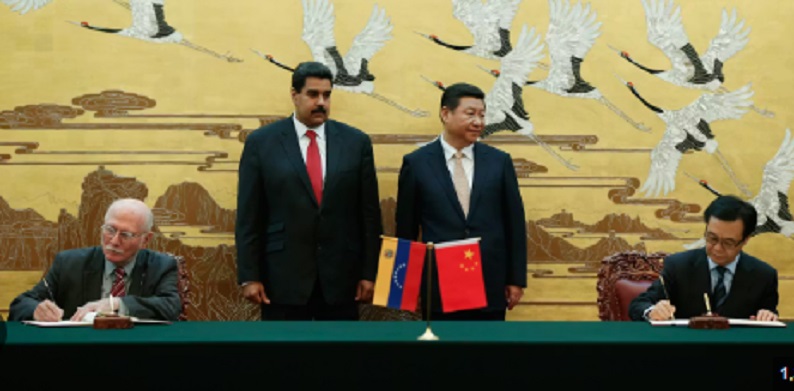
China is currently the second-largest trading partner in Latin America, following the U.S., and the principal partner for South America. Its ties with Venezuela, notably established in the early 2000s, saw China emerge as the leading source of energy finance to the country by 2013. Despite evident mismanagement within Venezuela’s state oil company and its descent into autocracy, China’s investment strategy has not wavered, resulting in China receiving the bulk of Venezuelan oil. Maduro’s final public act, just before his removal by U.S. forces, was a social media post highlighting Venezuela’s strong relationship with China.
Though Beijing can publicly condemn U.S. actions and issue statements at the United Nations, its capacity to counter these moves directly is limited. It is more likely that China will continue its critical stance while swiftly establishing connections with Maduro’s successor, Delcy Rodriguez, underlining its commitment to Venezuela regardless of the evolving political landscape.
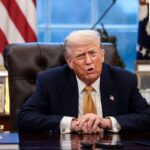
China’s economic engagement with Venezuela remains crucial, having exported around 642,000 barrels of oil daily in 2024, representing a significant portion of Venezuela’s total output. The implications of U.S. oil policies regarding Venezuela, specifically in terms of China’s involvement, remain uncertain. President Donald Trump aims to redirect Venezuelan oil exports towards the U.S., but he could refrain from escalating tensions with China.
Regardless of whether China loses access to Venezuelan oil, the overall trajectory of its Latin American strategy is unlikely to shift dramatically. Venezuelan oil comprises only about 4% to 5% of China’s total crude imports. China maintains solid economic relations across the region, having built partnerships with nearly every Latin American nation, including Argentina, where the current administration expresses interest in maintaining ties with China.
Beijing is aware of Trump’s aggressive Monroe Doctrine approach towards its neighbors and has not engaged in overt military or political manipulation in Latin America, adhering to its stance of non-interference. While China has provided limited military support through arms sales and training exercises, its response to the U.S. operation against Venezuela has called into question any security assurances it may offer.
Critics raise concerns that Chinese infrastructure projects could serve military purposes or pose security risks to host nations and U.S. interests due to Chinese control over utilities like electricity. Yet, despite concerns about China’s influence, it is not Beijing that has intensified military involvement in Latin America.
In essence, U.S. interventions risk driving Latin American nations closer to China. This recent operation against Maduro has drawn sharp criticism from various countries in the region, contributing to a growing disillusionment with the U.S.-led global order. China may view this as an opportunity, having transitioned from a “rule taker” to a “rule maker” in international politics. By establishing entities that offer alternatives to existing Western-dominated institutions, China seeks to redefine global governance in a manner reflecting its own values.
As U.S. disengagement from international governance discussions continues, the Chinese government’s denunciations of U.S. actions emphasize the erosion of international norms. Voices sympathetic to the Chinese government’s perspective highlight a growing view that only China has the capabilities to dismantle what they perceive as pillars of imperialism and hegemony.
While quick to criticize U.S. actions in Venezuela, some observers speculate that this situation might provide China with insights applicable to its ambitions regarding Taiwan. Washington’s push for a “spheres of influence” doctrine may not be entirely unwelcoming to China, which could potentially accept U.S. dominance in Latin America if it aligns with its longer-term goals concerning regional influence.
Original Source: https://nenow.in/neighbour/china/how-is-china-viewing-us-actions-in-venezuela-an-affront-an-opportunity-or-a-blueprint.html
Category: China,Neighbour,Top News
Tags:
Publish Date: 2026-01-15 23:17:00