Empower Your Voice: Vote for Candidates Who Truly Understand the Tamil Community’s Needs in Mumbai

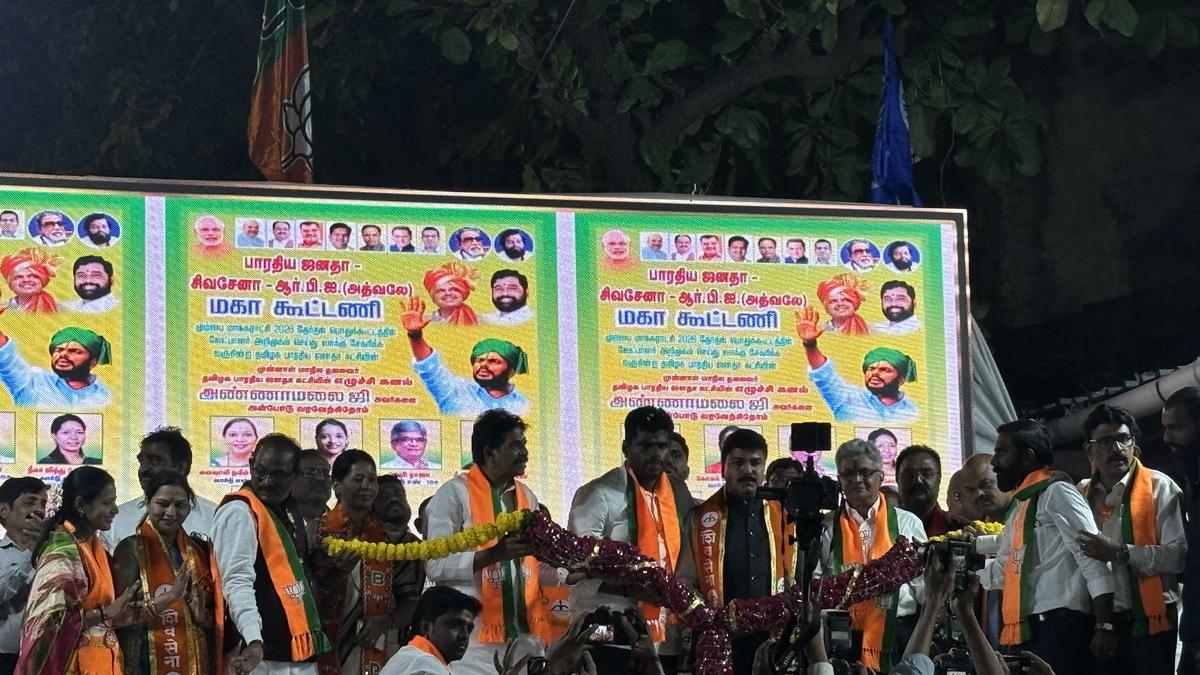
In the bustling Valnai Chowk area of Malad West, approximately 60,000 voters are gearing up to shape the future of their community in the upcoming municipal corporation elections set for January 15. Among them is Ekot Nadar, a 55-year-old resident originally from Tirunelveli, Tamil Nadu, who believes that the choice of candidate, rather than party affiliation, should guide voter decisions. “It is essential to elect someone who understands local issues better,” he asserts, joining a vibrant crowd gathered to support K. Annamalai, vice president of the Bharatiya Janata Party (BJP), as he campaigns for candidate Yogesh Verma in this South Indian-dominated region.
Sulekha, a 35-year-old neighbor, voices a similar sentiment from her cozy spot in a narrow lane adorned with political symbols. She suggests that candidates across the board often appear indistinguishable, advising voters to focus on who could deliver the best results. Benefiting from the Ladki Bahin scheme, she perceives it as a solution that, while potentially helpful, resembles “some sort of bribe.”
As conversations unfold, residents express pressing concerns over inconsistent water supply, clogged drainage systems, and traffic congestion. The ward’s demographics reveal a diverse mix: 12% Tamilians, 38% Gujaratis, 21% Marathi speakers, and 10% North Indians. This blend reflects a broader trend across areas like Charkop and Dharavi, where sizeable South Indian populations play a significant role in electoral outcomes.
In contrast to Sulekha’s indecisiveness, Kalpana, a 46-year-old Dharavi resident from Thoothukudi, has a definitive agenda: support for the redevelopment of Dharavi. “Whichever party promises to make that happen will earn my vote,” she declares. This demographic, which includes roughly 26% South Indian voters, reports deep concerns related to the Dharavi Redevelopment Project (DRP). The ongoing redevelopment discussions stir anxiety among residents, who fear they may be left without adequate housing or compensation for their small businesses.
The political climate in Dharavi is heating up, with the election battle pitting Congress candidate Kamlesh Chitroda against Shiv Sena (UBT) candidate T.M. Jagdish and BJP candidate Ravi Raja, a former opposition leader in the Brihanmumbai Municipal Corporation. Each party proposes solutions to the anxieties surrounding the DRP, seeking to assure voters that their needs will be prioritized.
Kanan, a 45-year-old businessman and father of eight, raises a poignant objection regarding the redevelopment project. “They’re offering us a single room of 300 square feet. How will that accommodate my family?” he asks, reflecting the shared apprehension among his neighbors. A friend of Kanan, choosing to remain anonymous, recalls a promise from officials regarding the cancellation of the annual vacant land tax (VLT) to the BMC, casting doubt on the project’s benefits.
As the electoral dynamics evolve, voters in Malad West and Dharavi are keenly aware that their choices will not only shape their immediate environment but also influence the broader governance strategies affecting Mumbai’s diverse neighborhoods. With emotions high and concerns looming, the January elections represent a pivotal moment for residents ready to exert their influence and secure their community’s needs.
Original Source: https://www.thehindu.com/news/cities/mumbai/residents-in-tamil-dominant-areas-in-mumbai-to-vote-based-on-candidates-who-can-relate-with-their-issues/article70487378.ece
Category : Mumbai
Tags:
Publish Date: 2026-01-09 10:46:00