
In a recent statement from Geneva, Ravina Shamdasani, spokesperson for the UN High Commissioner for Human Rights, criticized the US military intervention in Venezuela, asserting that it has compromised global safety. “This action makes all states less safe around the world,” she said, firmly rejecting the US justification rooted in the Venezuelan government’s alleged human rights violations. Shamdasani emphasized that military intervention cannot bring accountability for human rights abuses and warned that such unilateral actions undermine international law and jeopardize the foundations of global security.
During her briefing, Shamdasani argued that the intervention contravenes the UN Charter, which mandates non-aggression against the territorial integrity or political independence of any state. She highlighted that the UN human rights office, OHCHR, was expelled from Venezuela in February 2024 following its consistent reporting on worsening human rights conditions. Independent investigations by the Human Rights Council have documented ongoing abuses against dissenters in Venezuela.
“Venezuelans deserve accountability through a fair, victim-centered process,” Shamdasani stated, noting that the rights of citizens have long been violated. She expressed concern that the instability resulting from the US intervention could exacerbate the situation. Following the military operation, Venezuela declared a state of emergency, curtailing citizens’ rights to free movement, assembly, and protest. Shamdasani pointed out that such repressive measures often exploit the national security narrative, particularly in a government with a documented history of suppressing free speech.
The High Commissioner urged both US and Venezuelan authorities, as well as the broader international community, to respect international law and human rights. She stressed that the future of Venezuela should be determined solely by its people, highlighting the importance of self-determination and sovereignty over their lives and resources.
Beyond the political turmoil, Venezuela faces a severe humanitarian crisis, with nearly eight million people-one in four citizens-requiring urgent assistance due to years of economic decline and instability. The UN Office for the Coordination of Humanitarian Affairs (OCHA) has noted that approximately $600 million is needed for a response plan to address these urgent humanitarian needs.”OCHA spokesperson Jens Laerke remarked that while the political landscape has significantly deteriorated, the day-to-day humanitarian situation for many Venezuelans remains dire. Out of those needing aid, 900,000 individuals face “very high” multisectoral needs for basics like food, health services, and education, which have been neglected for years due to state failures.
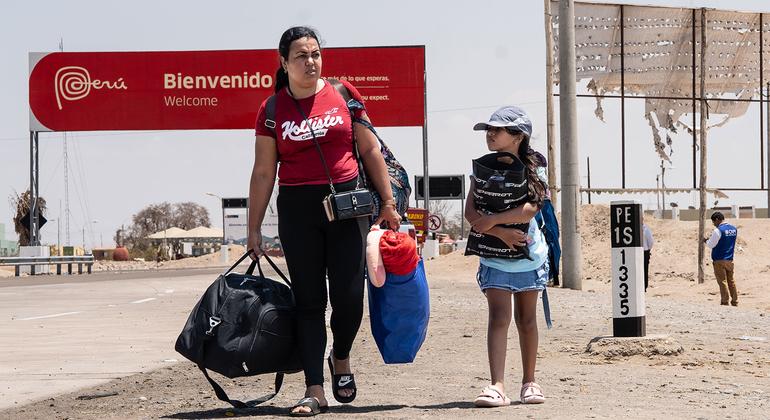
Despite being one of the least-funded aid operations globally, the UN managed to provide assistance to around two million people in 2025. Meanwhile, the situation remains precarious for nearly 7.9 million Venezuelan refugees who have sought better lives outside the country. While there hasn’t been significant displacement linked to the recent military action, the UN refugee agency, UNHCR, is actively monitoring borders and aiding displaced individuals as necessary.
UNHCR spokesperson Eujin Byun confirmed that most Venezuelan refugees-over 6.9 million-have found shelter in Latin America and the Caribbean. The organization is committed to supporting their integration into host communities, promoting stability, and advancing development efforts.
As the situation in Venezuela unfolds, the interplay between humanitarian needs and international intervention continues to draw global scrutiny and concern.
Original Source: https://news.un.org/feed/view/en/story/2026/01/1166707
Category :
Tags:
Publish Date: 2026-01-06 17:30:00