Rubio Reveals Bold Vision for U.S. Leadership in Venezuela Post-Maduro: A New Dawn of Hope and Empowerment

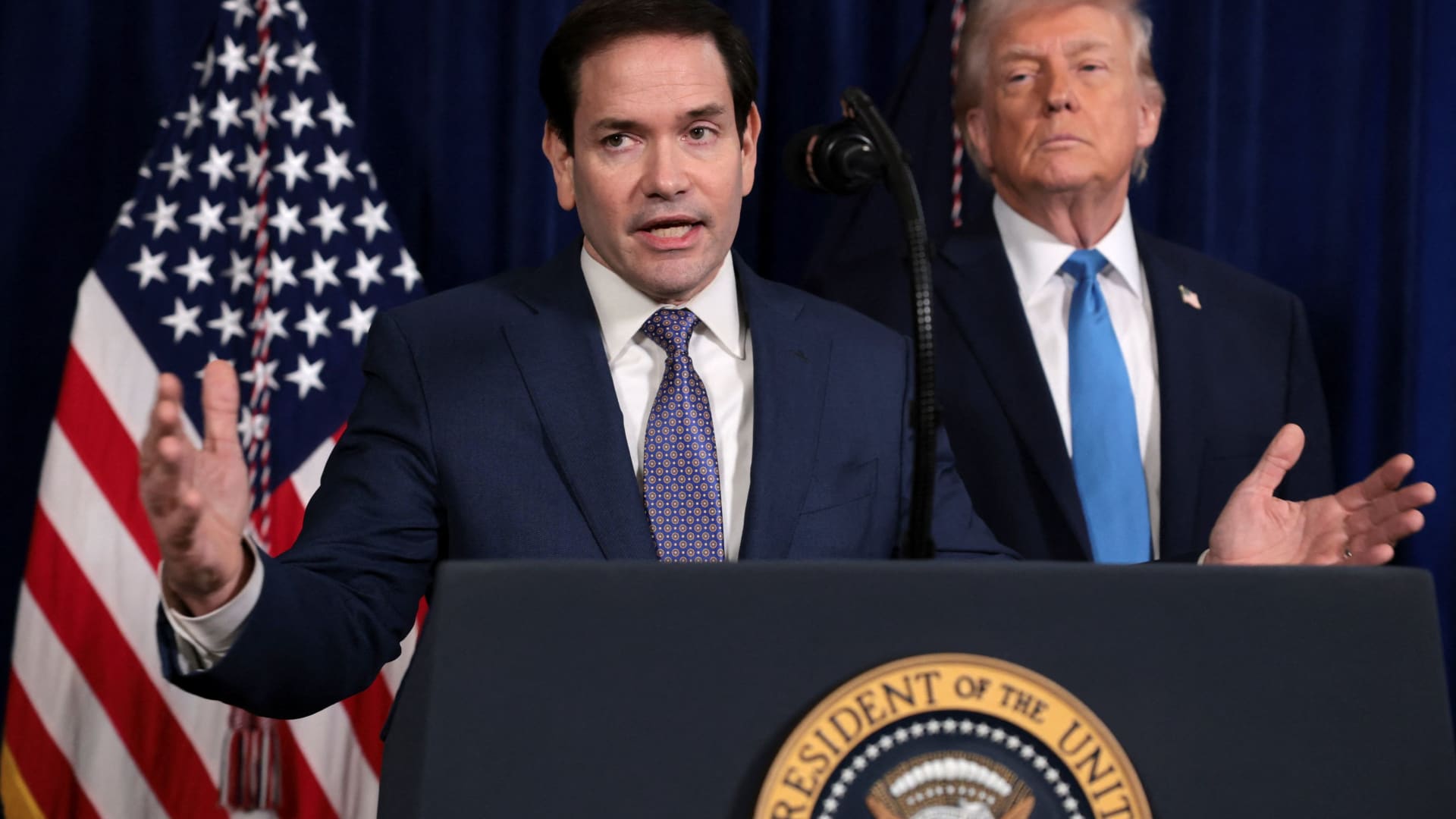
U.S. Secretary of State Marco Rubio clarified President Donald Trump’s remarks about the U.S. role in Venezuela following a military operation that resulted in the capture of Venezuelan President Nicolas Maduro. During a press conference at Trump’s Mar-a-Lago resort in Palm Beach, Florida, on January 3, 2026, Rubio appeared to temper Trump’s earlier claim that the U.S. would “run” the country.
When pressed for details on how the U.S. intends to exert control over Venezuela, Rubio emphasized the importance of leveraging economic sanctions and military presence as tools to influence the nation’s future. He stated that the U.S. intends to use the advantages gained from an ongoing oil blockade and a military buildup in the region to steer policy outcomes favorable to both American interests and the Venezuelan people. However, he notably refrained from asserting that the U.S. would govern Venezuela directly.
“What’s happening here is we’re enforcing a quarantine on their oil,” Rubio explained on ABC’s “This Week with George Stephanopoulos.” He added that this strategy would hinder Venezuela’s economy until conditions deemed vital to U.S. and Venezuelan interests are met, highlighting the ongoing nature of this leverage.
Trump, speaking the same day, reiterated that the U.S. plans to oversee Venezuela until a secure and orderly transition of power can occur. His comments ignited criticism from political opponents and allies alike, who cautioned against the pitfalls of U.S. involvement in regime change and nation-building. “History has shown us that America pays a high price in blood and dollars when it attempts such endeavors,” stated Senate Democratic Leader Chuck Schumer during a separate ABC appearance.
Following Maduro’s capture, Venezuelan Vice President Delcy Rodríguez was sworn in as the new president. Maduro and his wife, Cilia Flores, were taken to New York to face drug trafficking charges.
Rubio’s recent comments suggest a more nuanced U.S. approach than Trump’s earlier declarations about establishing control through a governing coalition. However, he did not rule out the possibility of additional military actions should they be necessary to achieve U.S. goals. In an interview on NBC’s “Meet the Press,” Rubio affirmed that Trump retains full military options.
The Secretary also touched on the U.S. strategic interests in Venezuela’s significant oil reserves. Trump had expressed intentions for U.S. oil companies to invest heavily in revamping Venezuela’s dilapidated oil infrastructure. “This isn’t merely about access to oil fields; it’s about ensuring that no sanctioned oil flows until changes are made within the governance of that sector,” Rubio clarified, mentioning potential collaboration with private firms not affiliated with countries like Iran to revitalize the Venezuelan oil industry.
While only Chevron currently operates in Venezuela, Rubio expressed confidence in the interest Western companies would have in exploring opportunities there. He mentioned that Interior Secretary Doug Burgum and Energy Secretary Chris Wright would assess the situation and engage with potential investors.
The article will be updated with any new developments regarding U.S.-Venezuela relations and the responses from both governments involved.
Original Source: https://www.cnbc.com/2026/01/04/rubio-explains-how-us-might-run-venezuela-after-maduros-ouster-.html
Category :
Tags:
Publish Date: 2026-01-04 23:25:00