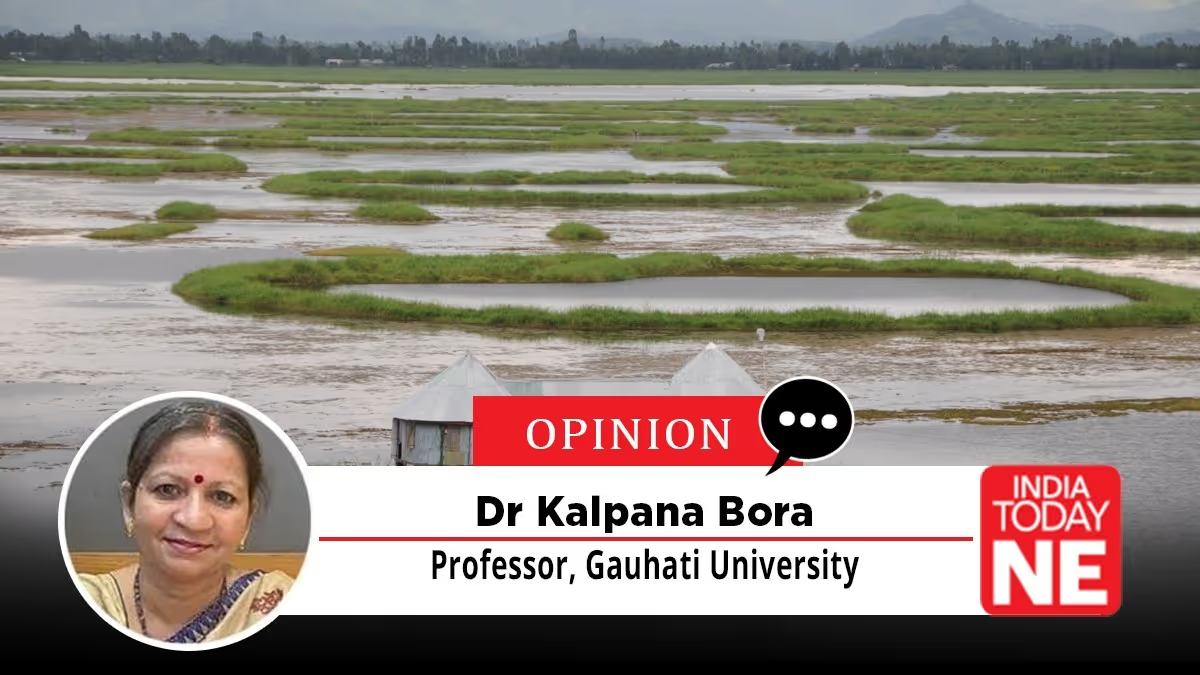

The Manipur I remember is steeped in history and culture, home to the Govindajee Temple, Kangla Fort, Loktak Lake, and the INA Memorial at Moirang. This region is also known for the legacy of Bir Tikendrajit and Thangal General, who were hanged by the British on August 13, 1891. Ancient Kangleipak, reportedly founded in 33 CE by King Pakhangba, was once a thriving kingdom rooted in Sanamahi traditions. Over the centuries, various incursions from the Burmese, Kuki, and Naga peoples have shaped its diverse socio-cultural landscape, yet its cultural richness has weathered many storms.
Manipur is home to 33 Scheduled Tribes, including the Meitei, Naga, and Kuki communities. This vibrant land was historically recognized for its bustling markets, crafts, metalwork, pottery, and fertile fields producing unique crops like black rice, pineapples, oranges, and ginger. The arts flourish here, with traditional activities such as polo, Manipuri dance, and weapon making. Geographically, Manipur borders Assam to the west, Nagaland to the north, Mizoram to the south, and shares an international frontier with Myanmar to the east. Despite its potential, Manipur has faced numerous tribal conflicts and economic challenges, enduring bouts of unrest.
Since May 2023, the ongoing conflict between the Meitei and Kuki communities has severely disrupted social harmony. Thousands have been displaced, education has been halted, and businesses crippled. The imposition of President’s Rule on February 13, 2025, has allowed for some improvements, especially in the capital, Imphal. The mornings reflect a city striving for normalcy-children heading to school, buses back on the roads, and vendors resuming their trades. However, approximately 60,000 internally displaced persons remain in dire conditions.
On my recent visit to the famous Ima Market, or Nupi Keithel, I witnessed the unique spirit of this women-run market, established in the 16th century. “Ima,” meaning mother, denotes a market that has long served as a socio-economic backbone for women, especially when men were engaged in military duties. Today, around 5,000 to 6,000 women showcase textiles, handicrafts, vegetables, fish, and various other goods in a lively setting. The Khwairamband complex, built in 2010, bustles with energy, and I could feel the resilience and warmth of Manipuri women as I navigated through beautifully illuminated streets.
Yet, beneath these signs of life, troubling issues persist. Informal discussions with taxi drivers and street vendors reveal that while progress is visible, the conflict continues to simmer. Hindi remains banned in the state, affecting films, performances, and public events. The recent turmoil has fostered an atmosphere of unease, even among the Meitei community, which traditionally shares roots with Vaishnavite beliefs. External influences appear to stoke sentiments of separatism and confusion regarding ongoing peace efforts between the Meitis and Kukis.
In light of the ongoing tensions, mutual trust between the public and government officials is critical. High profits from the illegal poppy trade, coupled with inflated commodity prices, have made life increasingly difficult. Distrust circulates quickly, highlighting a fragile state of public confidence. Many citizens are left questioning why illegal arms and poppy cultivation remain unchecked. Manipur needs capable leaders with the political will to address these pressing issues. The state could learn from Assam’s successful strategies in handling insurgency, setting an example of effective governance.
Local organizations function akin to civic bodies within communities. Historically, Ima Market served not just as a marketplace but as a forum for women to engage in political discourse. Initiatives like the One Consciousness Foundation aim to foster awareness of Sanatana Dharma through cultural programs targeting the youth. The government’s goal of enhancing cross-border trade at the Moreh gate underscores Manipur’s strategic significance as a gateway to Southeast Asia.
Moving forward, the people of Manipur call for genuine dialogue between the Meitei and Kuki communities. There is an urgent need to seize illegal arms and stop the influx of foreign weapons. Development and job creation in the hilly regions and along the Myanmar border must be prioritized. At the same time, strategies to regulate poppy cultivation are essential to break the cycle of drug addiction. Healing divisions between Sanamahi and Vaishnavite communities, driven by certain vested interests, is vital for unity.
Today, Manipur stands at a crossroads. Imphal shows signs of recovery, yet the persistent threat of violence, external influences, and unresolved grievances loom large. Unless the essential issues of armed groups, separatism, the poppy economy, and mutual distrust are sensitively addressed, peace and prosperity will remain elusive, continuing to be fleeting visitors rather than lasting companions.
Original Source: https://www.indiatodayne.in/manipur/story/manipurs-fragile-calm-life-returns-to-imphal-but-wounds-refuse-to-close-1325082-2026-01-01?utm_source=rssfeed
Category:
Tags:
Publish Date: 2026-01-01 14:53:00