
Many of the year’s most significant news stories have highlighted the darker aspects of humanity. However, the science team at The Times aims to provide a refreshing counterbalance. By focusing on remarkable and unusual discoveries, they showcase humanity’s best qualities: the pursuit of knowledge, the improvement of lives, and the unraveling of some of the universe’s greatest mysteries.
Currently, fewer than 10% of people over 70 are genuinely healthy-only 9.3% according to recent findings. Scientists have compiled a list of straightforward tips that could help more individuals join this select group. In a twist to common belief, spending excessive time on digital devices may not dull the brain, especially for those over 50. In fact, regular use of smartphones and computers seems to slow cognitive decline in older adults.
Speaking multiple languages may also contribute to a slower aging process. Studies suggest that bilingual individuals tend to age more gracefully. Staying active is crucial; aiming for one long walk per day is more beneficial than accumulating short bursts of activity. Additionally, observing changes in your buttock muscles could serve as an early warning sign for type 2 diabetes.
For those with a few billion to invest, there are opportunities to fund efforts aimed at combating aging. A look into the laboratories reveals scientists working to “reprogram” our biology to counteract the effects of time.
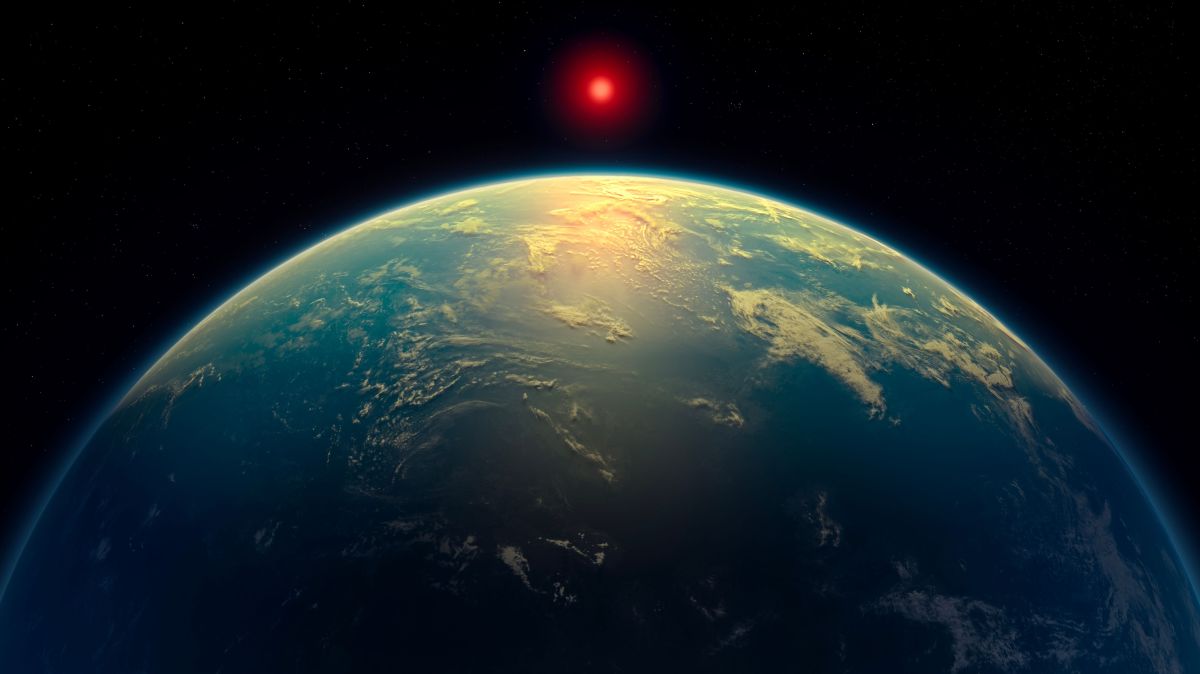
On another front, one of the most promising signs of alien life has been discovered on a planet located 124 light-years from Earth. This revelation raised concerns from the lead scientist on how to deal with such a finding. Furthermore, Michele Dougherty was appointed as the first female Astronomer Royal in 350 years, remarkable for her groundbreaking discoveries about Saturn’s moons.
Next year, a crew of four will embark on a monumental mission, traveling a half-million-mile round trip to orbit the moon aboard Artemis II. This marks a significant leap for humanity since 1972. From the far reaches of our solar system, a mysterious object narrowly passed Earth, the third interstellar entity recorded, albeit with no signs of alien passengers.
John McFall, a former British Paralympian and the first disabled astronaut in history, is set to journey into space following a unique program designed to assess the challenges faced by an amputee with a prosthetic leg in orbit. A competition has also revealed a winning design for a spacecraft that will be capable of sustaining human generations as they venture into the Milky Way.
In the UK, scientists uncovered the oldest evidence of fire-making by humans, dating back 350,000 years earlier than previously believed. This groundbreaking discovery was made at a disused clay pit in Suffolk, offering new insights into our ancestors.
Even in the realm of relationships, a skull found in China-approximately a million years old-calls into question when and where our Homo sapiens ancestors first emerged, suggesting a possible earlier divergence than previously thought. In a chilling narrative, the murder case of priest John Forde from 1337 may finally have been solved after over 688 years.
A newly devised pregnancy test has the ability to ascertain if ancient skeletons were pregnant or had recently given birth at the time of death. On a more speculative note, can a mouse give birth to a mammoth? Scientists are optimistic after creating a woolly mouse, marking a step toward potentially resurrecting these ancient creatures.
There lies an astonishing £13.6 billion worth of treasure on the seabed off Colombia, igniting a race among treasure hunters to uncover what many are calling the “holy grail” of shipwrecks.
Research suggests that dogs may be influencing declining birth rates, as many owners now regard their pets as ‘child surrogates’ instead of opting for human offspring. An investigation into the origins of Britain’s vibrant, exotic parakeets revealed the truth behind their presence, dispelling urban legends that link their existence to Jimi Hendrix.
Scientists traced ancient mosquito ancestry, revealing connections to Egyptian strains-an intriguing yet bizarre prospect for public transportation in London. Contrary to some assumptions, it is now understood that dinosaurs were actually thriving before the asteroid event that seemingly led to their extinction. Meanwhile, dogs also exhibit signs of addiction, growing overly attached to their toys, leading to what some have termed ‘ball junkies.’
In a breakthrough hailed as the future of clean energy, British and Austrian researchers have found a faster, simpler method to simulate nuclear fusion processes. Doctors successfully rewrote the DNA of a baby suffering from a life-threatening genetic disorder, correcting its deficiency with direct treatment. Additionally, a three-year-old boy is making progress after receiving pioneering gene therapy for Hunter syndrome.
A couple recently became the 100,000th and 100,001st participants to join a comprehensive database through full-body scans at the UK Biobank. A man who suffered catastrophic facial injuries after being hit while cycling is among the first to have his face reconstructed using 3D scanning and printing methods.
A significant danger remains in the hands of scientists: the potential creation of ‘mirror microbes’—bacteria rewired from their natural state-which could hold catastrophic consequences for all life on Earth.
Lastly, for those prone to car sickness, upbeat music can significantly alleviate nausea, while chewing gum may help rid the brain of repetitive earworms from tunes that get stuck in one’s head. In more profound findings, the appreciation of certain body types among men has shown to exist beyond cultural influences. The Canary Islands serve as a living laboratory for studying recovery efforts after volcanic eruptions, revealing how life can continue in the aftermath of natural disasters, including the construction of roads through solidified lava where previous landscapes once thrived.
As a final note, Fred Ramsdell, recently awarded a Nobel prize, was blissfully unaware for hours while hiking in the Rockies without phone service. Discussions on whether Elon Musk should remain a Royal Society fellow have surfaced, reflecting on his controversial actions and language during public events. In a spiritual endorsement, the new Pope acknowledged the unprecedented revelations the James Webb Space Telescope has provided, viewing it as a window into the very fabric of the universe and what was once unfathomable.
Original Source: https://www.thetimes.com/uk/science/article/best-new-scientific-discoveries-latest-breakthroughs-2025-22whb9jqs
Category:
Tags:
Publish Date: 2025-12-30 20:00:00