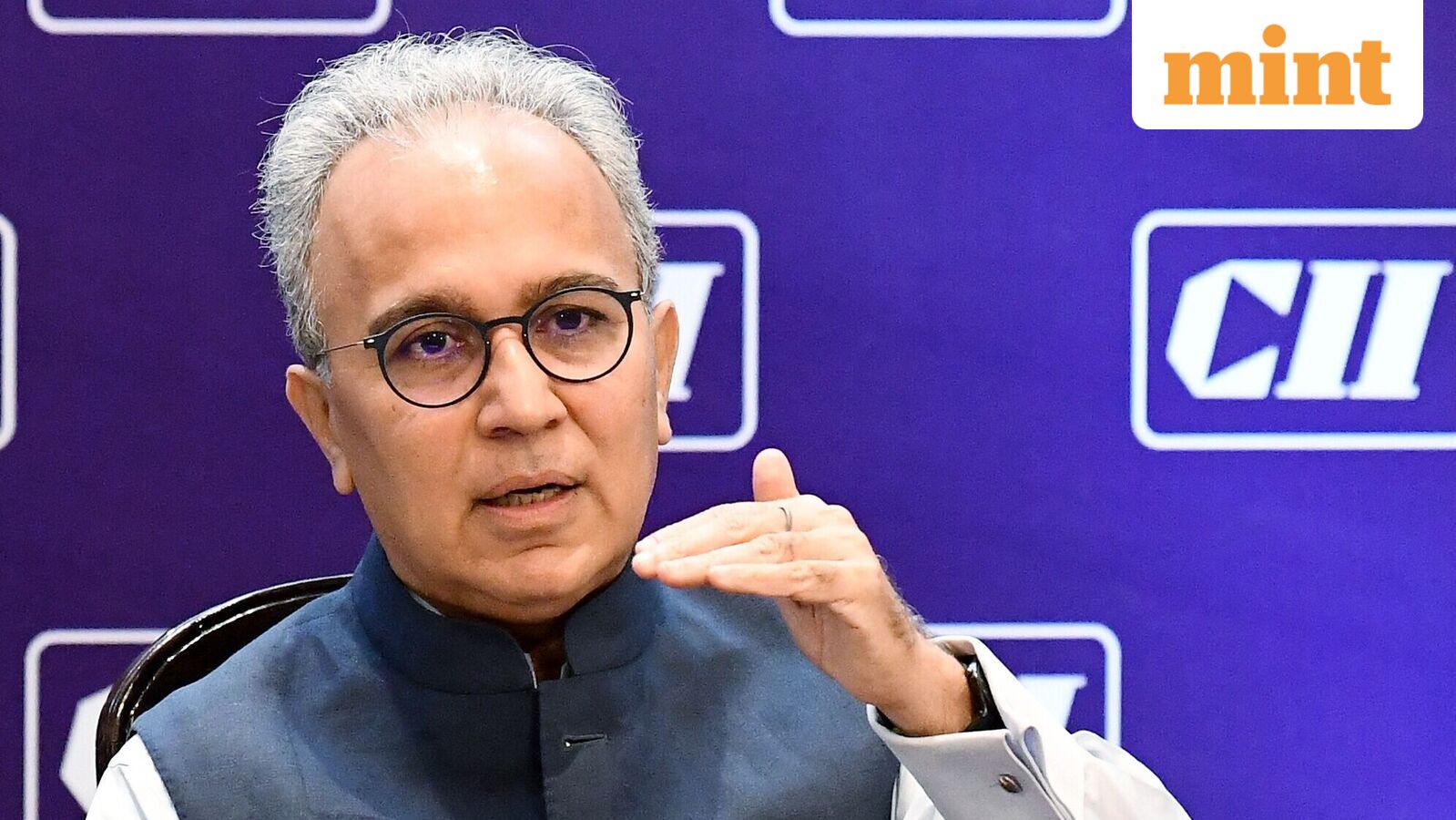
Revitalizing Growth: Rajiv Memani Urges Targeted Manufacturing Strategies and PSU Stake Sales for Strategic Investments

A strategic approach involving targeted incentives, research support, and investments in the 50 most imported products could significantly enhance India’s manufacturing sector, according to Rajiv Memani, president of the Confederation of Indian Industry (CII) and chairman of consultancy firm EY India. In a recent interview, Memani highlighted that key imported intermediate products encompass electronics, components, energy transition equipment, and semiconductors.
Success in boosting manufacturing, Memani noted, hinges primarily on adequate funding. He suggested that the government could fund infrastructure initiatives, such as high-speed rail projects, by ramping up disinvestment efforts, potentially raising ₹2-3 trillion over the next two years from public sector unit stake sales. His remarks coincide with a period in which the central government has passed crucial legislation during a winter parliamentary session aimed at fostering investments in nuclear power and insurance, setting the stage for the upcoming Union budget for FY27.
India’s economy has shown promising signs, expanding by 8.2% in the second quarter and projected to maintain a growth rate of 7% or higher for the year. However, despite efforts since 2011 to elevate the manufacturing sector’s contribution to economic output to 25%, it remains stagnant at 14% as of FY25. The government’s recent disinvestment drives have fallen short; for instance, in FY25, it raised only ₹33,000 crore against a ₹50,000 crore target, with current fiscal year targets also lagging behind.
Creating jobs is inherently linked to boosting economic activity, especially in labor-intensive sectors like manufacturing and tourism, Memani emphasized. He called for initiatives focused on bridging the skilling gap to prepare the workforce for job opportunities beyond academic credentials. A concerted effort must prioritize manufacturing, particularly around goods currently imported or inadequately produced domestically, targeting fields such as electric vehicles, semiconductors, and electronics.
Memani further advocated for more robust integration into global supply chains and promoting labor-intensive industries through partnerships between the central and state governments, alongside targeted schemes like production-linked incentives (PLI). Notably, while India has experienced mixed outcomes with PLI schemes, it has achieved significant success in electronics, with Apple’s production of iPhones in India skyrocketing to $22 billion in FY2025-an increase of 60%—thus raising India’s share in global iPhone manufacturing to 20%.
To streamline strategic initiatives, Memani proposed the formation of an inter-ministerial group to analyze and support the top 50 imports categorized by HSN codes. These imports, often involving high technology, face challenges related to global excess capacity and insufficient domestic demand, necessitating long-term policy and demand planning support.
Despite the robust growth in India’s service sector, Memani acknowledged hurdles in manufacturing, such as the need to expedite approvals, permits, environmental clearances, and inspections. He underscored ongoing government reforms aimed at decriminalizing laws and improving labor codes and construction permits, but stressed that persistent efficiency and production cost issues need addressing. Streamlining logistics through enhanced port and airport capacities and expanding railway networks, including high-speed rail, are also essential for competitiveness.
Memani concluded by asserting that the upcoming FY2027 Union budget should balance fiscal prudence with aggressive economic growth strategies. He urged that disinvestment and privatization require a renewed focus to generate revenue, alongside leveraging public-private partnerships to enhance infrastructure development. As India continues to witness impressive growth led by government spending, particularly in logistics and manufacturing, Memani’s insights underscore the urgent need for strategic planning and execution to secure the country’s economic future.
Original Source: https://www.livemint.com/news/india/india-cii-rajiv-memani-manufacturing-strategy-50-sectors-electronics-11766324811506.html
Category :
Tags:
Publish Date: 2025-12-22 05:05:00