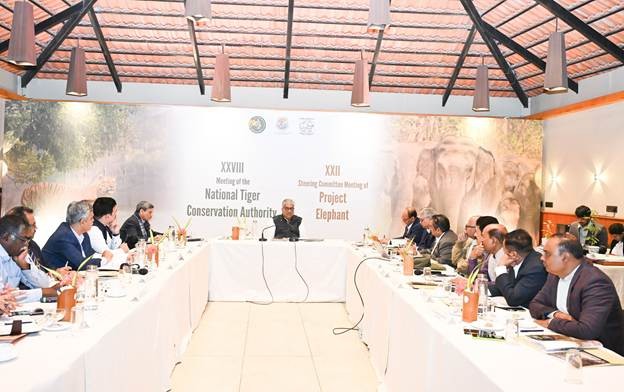

Union Environment and Forest Minister Bhupender Yadav led a crucial review on December 21 regarding the status of human-elephant conflict in India, emphasizing the findings from ongoing studies aimed at understanding conflict drivers and implementing mitigation measures. This review comes in light of a tragic incident where seven elephants were killed, and a calf was injured by the Sairang (Mizoram)-New Delhi Rajdhani Express in the Hojai district of Assam.
The meeting, held at the Sundarbans Tiger Reserve in West Bengal, also focused on refining conservation strategies for both tigers and elephants, engaging experts in brainstorming sessions. It marked the 28th Meeting of the National Tiger Conservation Authority (NTCA) and the 22nd Steering Committee Meeting of Project Elephant, bringing together senior officials, scientists, and field experts from states where tigers and elephants roam, along with key conservation institutions to assess the progress of both Project Tiger and Project Elephant.
Minister Yadav reaffirmed India’s commitment to its renowned tiger conservation model, highlighting the importance of science-based management and collaboration among various stakeholders. The meeting confirmed the minutes of the previous meeting held on April 18, 2025, and reviewed the actions taken since then.
Participants discussed the outcomes of four regional meetings that addressed key challenges faced by tiger reserves. Initiatives to tackle human-tiger conflict were proposed, including a three-pronged strategy and the launch of the project “Management of Tigers Outside Tiger Reserves.” The meeting also tackled concerns regarding staffing shortages, financial limitations, habitat degradation, and invasive species management, directing states to implement necessary follow-up actions.
Decisions made during the NTCA’s Technical Committee Meetings were ratified, covering the approval of Tiger Conservation Plans and the extension of Project Cheetah. The highlights included tiger translocation, prey augmentation, and landscape management planning, as well as training programs for carnivore health management.
In addition, a comprehensive review of human-elephant conflict across the country was conducted. The committee examined findings from ongoing studies on conflict drivers, mitigation strategies, and the adequacy of current compensation mechanisms in states where elephants are found.
Future planning included evaluating methods for estimating elephant populations and enhancing conservation strategies for the Ripu-Chirang Elephant Reserve. Proposed actions involve conducting a Management Effectiveness Evaluation for all Elephant Reserves and studying elephant corridors, habitat use, and conflict hotspots, particularly in the Bandhavgarh region.
The Steering Committee reiterated the Indian government’s commitment to science-based conservation efforts, inter-state coordination, and community-centric approaches, aiming to ensure a sustainable future for both elephants and the communities living alongside them.
Original Source: https://www.morungexpress.com/forest-minister-bhupender-yadav-reviews-human-elephant-conflict-mitigation
Category: India
Tags:
Publish Date: 2025-12-21 16:09:00