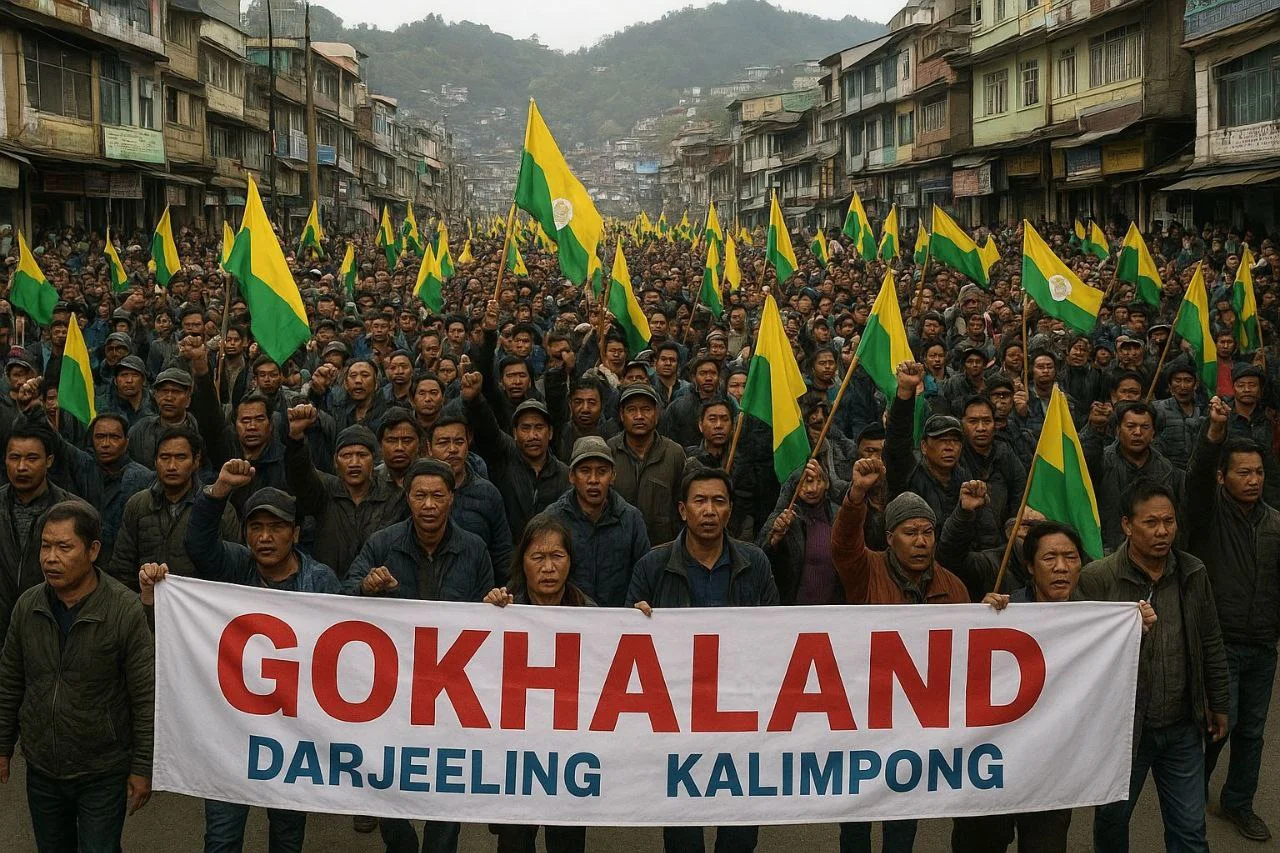

The Queen of Hills, Darjeeling, located in northern West Bengal, India, is renowned as a popular tourist destination, attracting visitors from around the globe. Known for its lush tea gardens, charming toy train rides, stunning views of Kangchenjunga, pleasant climate, and rich biodiversity, it captivates many each year. However, many tourists leave with unfavorable impressions of the area, encountering congested, poorly maintained roads, inadequate infrastructure, waste management issues, and visible poverty. Historically, Darjeeling served as an educational center for the entire Himalayan region and beyond, welcoming students from 28 nations until the 1950s. Unfortunately, many visitors remark that it appears unchanged since British times, suggesting stagnation in development. Such views tarnish Darjeeling’s image and affect its residents. This raises critical questions: what is hindering Darjeeling, and how can its former glory be restored?
Political analysts assert that societal progress hinges on good governance, adherence to the rule of law, justice, informed citizens, and effective economic policies. Bureaucrats and elected officials play pivotal roles in these areas, holding greater responsibility to fulfill their mandates from the public. When leaders neglect this duty, the public has the right to demand accountability, yet such a culture is lacking in Darjeeling. Often, political leaders fail to honor their promises, leaving society in unchanged social and economic conditions. This political environment tends to favor a hierarchical governance structure, benefiting only certain business interests and politicians.
In a community where much of the population is illiterate and struggling for daily wages, political engagement may be overlooked. It becomes the leaders’ responsibility to foster political awareness. According to academics like Almond and Verba, political parties serve as vehicles for both input and output functions, including socialization and rule-making. The success of these functions can promote governance, enforce laws, and facilitate resource distribution, contributing to overall societal progress. However, if leaders diverge from these responsibilities, only a fraction of the populace benefits while the rest are sidelined.
Darjeeling’s political landscape is complex, characterized by aspirational nationalism and cultural autonomy. It thrives on coalition politics, leading to fragmented electoral patterns. Various ethnic groups advocate diverse agendas, complicating political consensus and often resulting in chaotic electoral behaviors. This fragmentation breeds a political culture where parties may not need clear agendas to attract votes. Many choose candidates based on local loyalty, social patterns, or immediate benefits such as food or financial support, demonstrating a lack of awareness regarding the democratic significance of their choices.
When the public perceives the political system as ineffective, apathy towards political parties rises. Politicians are frequently viewed as corrupt and self-serving, contributing to a prevailing cynicism. As a result, many regard politics as a corrupt enterprise, tarnished by deception, bribery, and violence. The shift from a noble political endeavor to a morally deficient spectacle raises serious concerns about the culture of leadership in Darjeeling.
In ancient Vedic society, the Rajan embodied the virtues of valor, righteousness, and protectiveness, ensuring justice and inclusivity. Similarly, historical figures like Plato’s philosopher-king and Confucius’s Huangdi represent the wisdom and moral integrity required for responsible governance. These traits are essential for fostering societal advancement.
Scholars argue that historical experiences, education, and political institutions collectively shape a society’s political culture. Antonio Gramsci emphasized the influential role of leadership in cultivating a prevailing political ideology that often serves the interests of the dominant group. In light of this, the political leaders of Darjeeling bear significant responsibility for creating a culture where leadership is viewed skeptically.
The political challenges in Darjeeling are multifaceted, primarily involving illiteracy, self-serving politics, inadequate leadership, and a dearth of intellectual involvement. Nurturing political awareness takes time and primarily depends on the leaders’ commitment to truly represent and educate their constituents. Constructive political agendas cannot take root in communities focused solely on immediate gains.
Educated segments of society have historically distanced themselves from politics, often due to negative experiences and societal stigmas. Previous efforts by educated individuals to mobilize public awareness have faced challenges, primarily because of a lack of political socialization and the public’s inability to engage with intellectual perspectives. Thus, it becomes necessary for political parties to integrate educated members, facilitating a dynamic where informed individuals can guide political practices.
In the long run, fostering a politically aware populace through literature, academic discourse, and cultural engagement could pave the way for revitalizing Darjeeling’s political landscape, ultimately restoring its dignity and ensuring progress in the Queen of Hills.
Original Source: https://www.thesikkimchronicle.com/title-problem-of-darjeelings-politics-an-opinion/
Category: Darjeeling & North Bengal,National,North-East,Opinions,Politics,Sikkim
Tags:
Publish Date: 2025-12-11 22:46:00