China’s Factory Activity Shows a Slight Glimmer of Hope in November Despite Ongoing Contraction

Factory activity in China showed modest improvement in November, although it marked the eighth consecutive month of contraction. According to data released by the National Bureau of Statistics, the manufacturing purchasing managers’ index (PMI) rose to 49.2, a slight increase of 0.2 points from October. While this aligns with economist predictions from a recent Reuters poll, it remains below the critical 50-point threshold that signifies expansion.
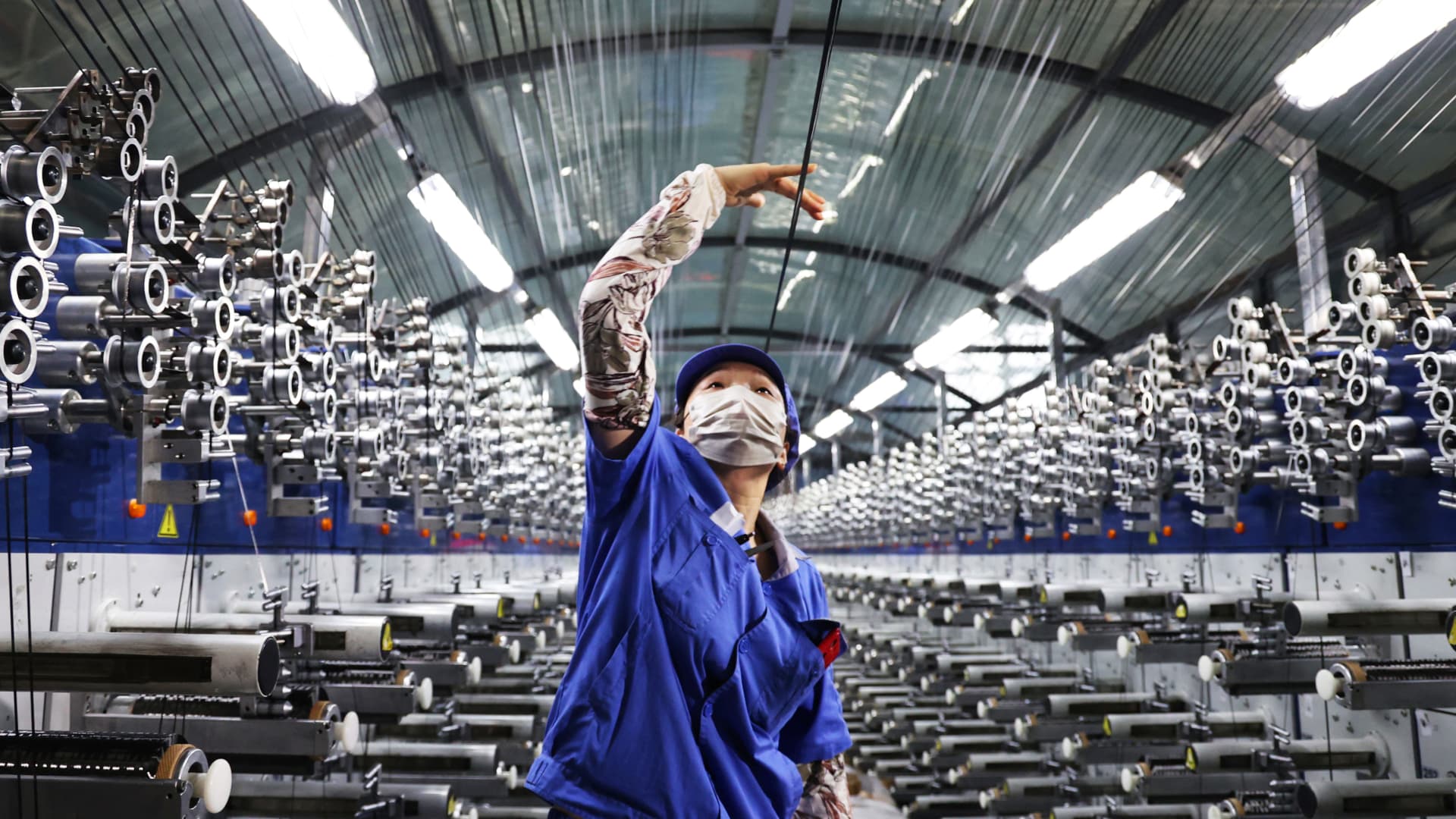
In contrast, the non-manufacturing business activity index dropped to 49.5, a decline of 0.6 points from the previous month. The composite PMI output index also eased to 49.7, signaling a slight downturn in both manufacturing and service sectors. Chief statistician Huo Lihui noted that supply and demand conditions within the manufacturing sector showed modest improvements, with the production index reaching the 50 mark and new orders rising to 49.2. High-tech manufacturing continued to thrive, remaining in expansion for the tenth consecutive month at a score of 50.1, even as other sectors like equipment manufacturing and consumer goods fell below 50.
Small enterprises experienced significant growth, with their PMI surging by 2 percentage points to 49.1, the highest level in nearly six months. Medium-sized firms saw a modest increase to 48.9, whereas large manufacturers experienced a decline, with their PMI falling to 49.3. However, market sentiment exhibited a slight uptick, as the index measuring production and operational expectations rose to 53.1. Specific industries, like non-ferrous metal smelting and aerospace-related equipment, reported particularly optimistic readings above 57.
Despite this uptick in manufacturing activity, non-manufacturing sectors showed signs of weakness, primarily due to the fading impact of the recent Golden Week holiday, which traditionally boosts consumption. Service sector activity declined to 49.5, reduced by 0.6 points from October, though specific areas such as railway transportation, telecommunications, and financial services achieved scores above 55. Real estate and residential services continued to struggle, remaining below the 50 threshold, while construction activity improved to 49.6 as expectations for near-term growth strengthened.
The non-manufacturing new orders index fell to 45.7 amidst weakening demand. Input prices registered an increase to 50.4, while service sector pricing showed a narrowing decline. Employment in manufacturing slightly improved to 48.4, while non-manufacturing employment remained low at 45.3. Supplier delivery times for manufacturers also showed improvement, ticking up to 50.1.
China’s manufacturing sector has been in decline since April, following the imposition of new tariffs by the United States under the Trump administration, which have placed additional pressure on producers. October saw industrial profits fall by 5.5%, the steepest decline since June, reversing earlier gains. Overall economic growth has cooled to 4.8% in the third quarter, exacerbated by heightened trade tensions with the U.S. that peaked in October, though a late-month agreement yielded some relief.
The ongoing property slump and weak labor market continue to dampen consumer spending, even as policymakers aim to enhance consumption and improve technological self-sufficiency. Nevertheless, there has been no major stimulus introduced, as the economy is still expected to meet its 5% growth target for the year.
This economic landscape poses challenges for various sectors, as businesses and consumers navigate a complex combination of external pressures and domestic market realities.
Original Source: https://www.cnbc.com/2025/11/30/china-factory-activity-edges-up-in-november-but-remains-in-contraction.html
Category :
Tags:
Publish Date: 2025-11-30 14:21:00