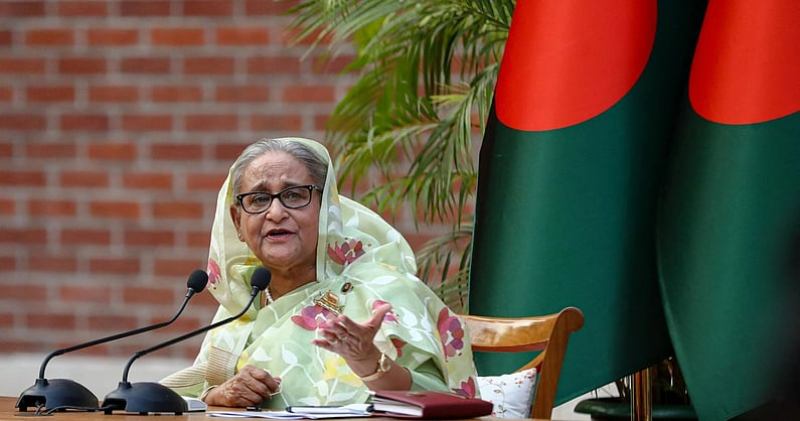

The crisis in Bangladesh has intensified as the International Crimes Tribunal, influenced by anti-Awami League factions after the fall of the Sheikh Hasina government last August, sentenced the former prime minister to death for alleged crimes against humanity. This decision plunges the nation into a precarious state of uncertainty.
The trial of Sheikh Hasina was conducted in her absence, raising genuine concerns about its fairness from the outset. The regime and prosecutors made it clear that impartiality was not a priority. Over the past fifteen months, media reporting has been severely restricted, further compromising the integrity of the judicial process.
Derogatory remarks by prosecution figures before the verdict indicated that the outcome was predetermined. The situation escalated absurdly as the Yunus regime sought to swiftly convict Hasina. Even her defense attorney showed a lack of resolve, laughing about his inability to mount a proper defense, highlighting the trial’s absurdity. Inside a packed courtroom, a partisan crowd erupted in cheers when the verdict was announced, illustrating the trial’s biased atmosphere.
The regime went so far as to broadcast the tribunal’s decision live on state-run television, blatantly disregarding the principles of law and justice. Initial unverified accusations against Hasina were met with a hasty judgment that many deemed lacking in credibility. This concern has been echoed by international organizations, particularly human rights institutions, which question the tribunal’s methods.
Compounding the situation is the growing outcry against the death penalty, especially in light of worldwide movements against capital punishment. The trial’s execution, characterized by vengeance and improper investigative processes, limited Hasina’s ability to defend herself against the charges, further eroding the tribunal’s legitimacy. Citizens aware of due process have dismissed the ruling as futile.
Historically, similar judgments have failed to hold significance. The Yunus regime lacks the means to extradite Hasina from India to enforce the death sentence. Previous attempts at politically charged trials have produced little real consequence, as seen in the Agartala Conspiracy Case against Sheikh Mujibur Rahman, which was withdrawn amid popular uprising.
The current political landscape indicates that the verdict against Hasina, orchestrated by a regime lacking constitutional legitimacy, may ultimately hold little weight. Recently, Hasina reaffirmed her significant influence on Bangladeshi politics through interviews with major media outlets.
She articulated a vision for the nation’s future, emphasizing the need to reclaim governance from those violating constitutional norms. The upcoming months will be critical to reversing the turmoil caused by mob actions supported by the Yunus administration. Meanwhile, the BNP is eager for elections in February, hoping to suppress the Awami League’s power.
For Hasina and her party, the challenge now is to create conditions for the removal of Muhammad Yunus and his advisors before any fair elections can transpire. Much hinges on the Awami League’s forthcoming strategies to counter the Yunus regime.
The international community, dissatisfied with how hastily the Yunus administration moved against Hasina, must recognize the broader implications. With Bangladesh experiencing deep crises across its history, politics, and social fabric, decisive actions are needed to liberate the nation from anti-state forces undermining its core values.
Elections can be postponed, but the priority must be the restoration of Bangladesh to its people and ensuring accountability for those exacerbating its decline since August 2024. The country, now at the brink, must recover its foundational principles, ensuring an end to the anarchy of the past fifteen months by forces committed to the nation’s ideals established over fifty years ago.
Original Source: https://nenews.in/opinion/flawed-verdict-further-deepens-bangladeshs-crisis/36467/
Category: Opinion,Bangladesh,International Crimes Tribunal
Tags:
Publish Date: 2025-11-21 17:00:00