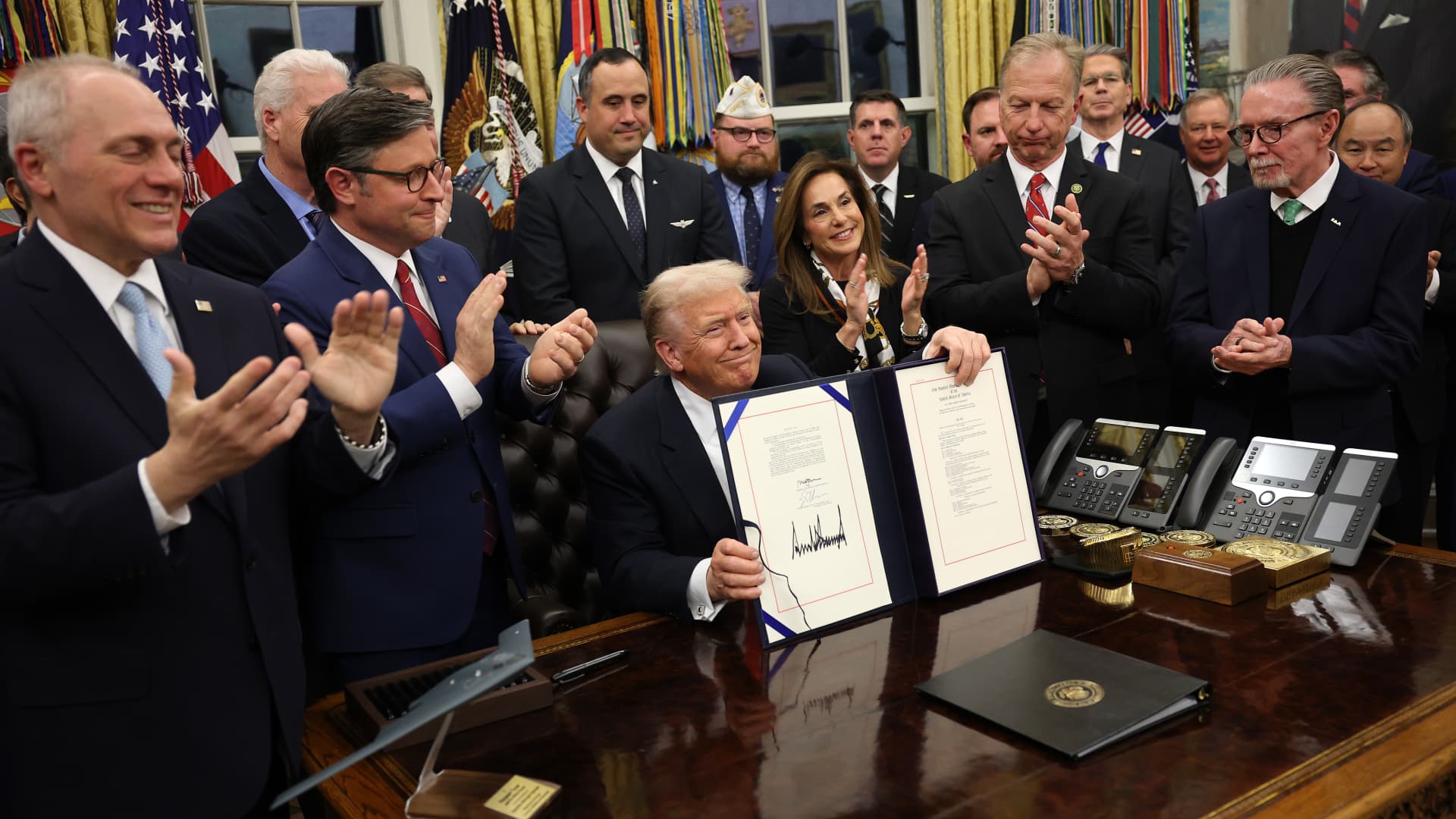

President Donald Trump signed a funding bill late Wednesday, officially ending the longest federal government shutdown in U.S. history, which had lasted 43 days. The bill, passed by the House in a narrow 222-209 vote, allocates government funding through the end of January 2026. Trump’s signing ceremony took place in the Oval Office, where he was joined by key Republican leaders, including House Speaker Mike Johnson and House Minority Leader Steve Scalise.
“This shutdown should never have happened,” Trump said, highlighting the negative impact felt by over one million furloughed federal workers and the disruption to government services. He accused Democrats of attempting to “extort our country” by blockading essential funding until last-minute negotiations saw Senate Democrats agree to a new measure. Notably, this compromise did not include an extension of Affordable Care Act (ACA) tax credits, a sore point for many in the party.
After signing the legislation, Trump reiterated his desire for the Senate to reconsider the filibuster rule requiring 60 votes for funding resolutions. The president did not entertain questions from the media regarding the earlier release of documents linked to Jeffrey Epstein, despite journalists raising queries about the implications of the news.
In the House, only two Republicans — Thomas Massie of Kentucky and Greg Steube of Florida — voted against the bill, while a significant majority of Democrats opposed it. Six Democrats crossed party lines to support the measure, with House Speaker Johnson urging Congress to “get this done” on the House floor prior to the vote.
The Office of Management and Budget announced that federal employees should return to work on Thursday, alleviating some of the immediate operational disruptions caused by the shutdown. Meanwhile, the U.S. Department of Transportation temporarily halted planned flight cuts, which had reached a 6% cancellation rate at airports nationwide due to air traffic controller shortages stemming from the shutdown.
The standoff began on October 1, primarily fueled by Democratic resistance to a funding bill that lacked provisions to extend increased subsidies under the ACA. These subsidies help about 20 million Americans afford health insurance, and House Democrats have warned that without them, many could face significant premium increases.
While the Senate managed to approve the funding bill after securing support from several Democrats and an independent senator, it was a last-minute compromise. The deal ensures that all federal employees will receive their full salaries retroactively, and it funds critical programs like the Supplemental Nutrition Assistance Program (SNAP), which aids 42 million Americans.
House Majority Leader Scalise emphasized the Republican push to prevent the shutdown, asserting that “millions of Americans have had to endure pain and suffering” from the 42-day impasse. He accused Democrats of prioritizing extreme party interests over the needs of the country, contrasting proposed health spending for undocumented individuals with cuts to established funds beneficial to rural healthcare.
As federal agencies begin to resume normal operations, the focus will shift toward reaching a lasting budget agreement that avoids future shutdowns, a concern echoed by both parties as they navigate the political landscape ahead.
This coverage reflects the ongoing challenges within U.S. government funding negotiations and the implications for everyday Americans, all while aiming for stability and progress in federal services.
Original Source: https://www.cnbc.com/2025/11/12/government-shutdown-house-vote-trump.html
Category :
Tags:
Publish Date: 2025-11-13 11:07:00