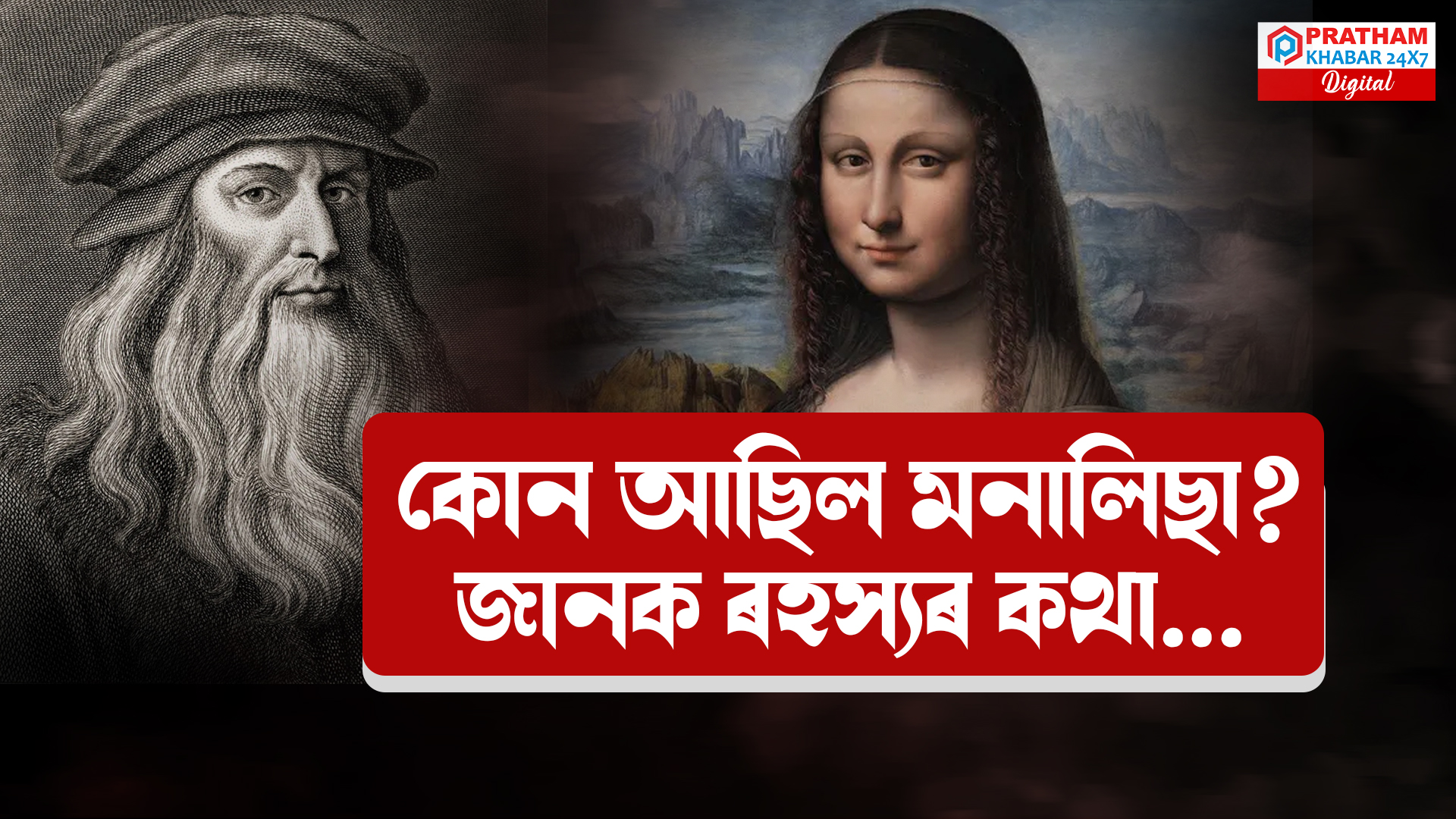

The deep mysteries of the Mona Lisa extend far beyond mere smiles and expressions; they delve into scientific, mathematical, psychological, philosophical, and even supernatural realms. Leonardo da Vinci challenged the boundaries of human knowledge with this iconic painting.
One of the remarkable techniques he employed is called Sfumato Beyond Visibility. Da Vinci applied over 3,000 extremely thin layers of oil glazes, each thinner than a single micron. These layers create varying wavelengths of light reflection, making the smile of the painting more pronounced at dusk. Under UV light at night, the face appears entirely different.
Scientific evidence supports this: a 2006 multispectral scan at the Louvre revealed that 40% of the colors fall beyond the visible range for the human eye.
In 2010, Italian researcher Silvano Vinceti made a significant discovery-hidden letters were found behind the eyes under 100x magnification. The left eye contains the letters L and V (possibly for Leonardo Vinci), while the right features C and E or B (perhaps for Caterina or Cecilia Gallerani). A micro-portrait, just 0.02 mm in size, resides near the eye, visible only through an electron microscope. This could be Da Vinci’s “artist’s signature” or a hidden memory of a muse.
Additionally, the painting embodies the Golden Ratio and fractal geometry. The facial dimensions adhere to the proportion φ (phi = 1.618), where the length-to-width ratio equals φ. This ratio is evident in twelve different measurements. The mountainous background mimics a Mandelbrot set, with each elevation being a fraction of φ from the previous one, reflecting a mathematical principle of nature that Da Vinci grasped 400 years ago.
The asymmetrical perspective in the background is also intriguing. Analysis from 2014 by Harvard researchers indicated that the left horizon is viewed from a height of 150 meters while the right side is from below at 50 meters. This reflects the brain’s differing viewpoints of the left and right eyes, symbolizing the fusion of past and future.
Moreover, there is a subtle indication of pregnancy, as a slight uplift is apparent under the arm, previously dismissed as a “fold in the cloth.” X-rays show a small bulge beneath. Lisa Gherardini, who was pregnant in 1503, might have inspired this concealment to comply with social norms. Some speculate that this alludes to Da Vinci’s mother, Caterina, whom he never knew.
Hidden symbols abound too. A lion’s head is discernible in the left mountain, while a buffalo’s head is seen in the river on the right. An eagle appears in the sky. These represent Da Vinci’s personal symbols: Lion for Leonardo, Buffalo for strength, and Eagle for freedom. Infrared reflectography confirms these shapes, moving beyond pareidolia.
A 2015 University of Florence study showed that the angle of the head at 15° makes the smile 100% clear, disappearing at 30°. The effect in the brain’s fusiform facial area mimics that of a living person, as fMRI scans indicate a spike in dopamine release among viewers.
Additionally, the Mona Lisa is protected by seven invisible varnish layers added since the 18th century. A 2022 discovery found micro-diamond dust in one layer that functions as a UV reflector. This raises questions about whether this was Da Vinci’s intent or the work of later conservators.
The painting itself evolved over time, with Da Vinci working on it from 1503 to 1519. Infrared scans reveal five distinct layers of facial features, each representing different ages, thereby illustrating a woman’s life cycle from youth to old age.
Lastly, esoteric theories hint at deeper meanings. Da Vinci studied Hermeticism and Kabbalah, with the painting’s triangular structure symbolizing Merkabah, or the vehicle of the soul. Dr. Walter Isaacson’s 2017 interpretation suggests that the Mona Lisa embodies “Anima Mundi,” signifying the soul of the universe, with her smile representing the convergence of creation and destruction.
Ultimately, the Mona Lisa is not just a painting but a living symbol loaded with mysteries and scientific proofs, echoing the sentiment: “The mystery of the Mona Lisa’s smile is not merely a mystery but a reflection of our minds.” This was penned in Leonardo da Vinci’s notebook in 1517.
Original Source: https://prathamkhabartv.com/monalisha-painting/
Category: চিত্ৰকলা,ফটো,বিজ্ঞান,বিশ্ব,#newstimeassam #prathamkhabar24X7 #prathamkhabartv #assamesenews
Tags:
Publish Date: 2025-11-06 12:35:00