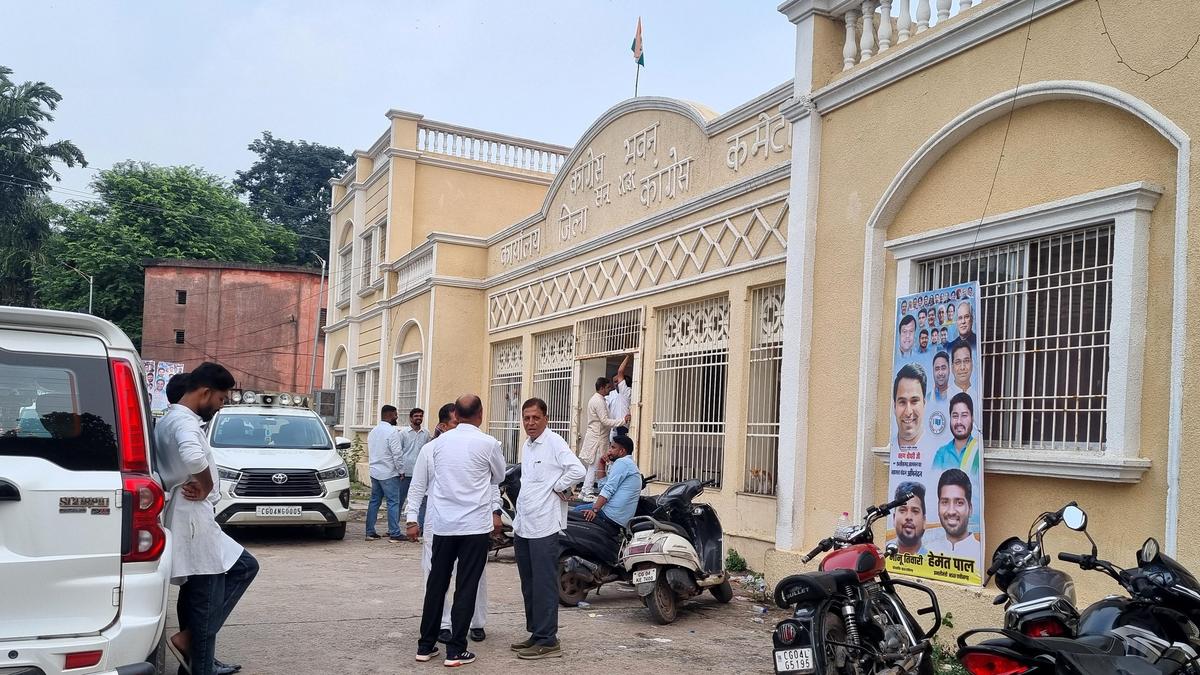

Khilesh Dewangan, a 40-year-old Congress leader from Chhattisgarh, is navigating a challenging political landscape with renewed optimism as he seeks to become the Raipur Rural district president. His confidence stems from the Sangathan Srijan Abhiyan (SSA) initiative, a novel leadership selection process that aims to empower grassroots workers and break down entrenched hierarchies within the party. “In normal circumstances, my age and relative stature would have worked against me,” Dewangan notes, while recognizing that this new approach offers a rare platform for individuals like him.
Implemented in April during the All India Congress Committee meeting in Ahmedabad, the SSA functions as a hybrid between traditional nominations and full organizational elections. Neutral observers from various states will shortlist six candidates for the District Congress Committee (DCC) president positions, underscoring a shift toward democratizing leadership selection in a party that has faced both internal and external challenges. Once heralded as the dominant political force in India, the Congress Party has seen its influence wane, particularly since losing power at the Centre in 2014. Critics point to its centralized leadership and dynastic tendencies as factors limiting grassroots empowerment.
Despite having approximately six crore members, the Congress Party currently governs only three states – Karnataka, Telangana, and Himachal Pradesh. Through the SSA, the party aims to revitalize its structure by ensuring youth involvement and addressing performance-based leadership reviews. “Under the Udaipur Declaration, it was determined that 50% of district presidents would be under the age of 50,” explains former Rajasthan Chief Minister Ashok Gehlot, expressing hope that this initiative will truly prioritize merit over connections.
The empowerment of DCCs extends beyond political decision-making; these bodies will also bear financial responsibilities and be held accountable for their performance. With a focus on grassroots engagement, the SSA initiative has already launched in ten states and seeks to energize a party that has experienced consecutive electoral setbacks.
Dewangan, who acknowledges that previously, candidates were often predetermined by party hierarchy, emphasizes the importance of inclusivity. “Traditionally, only those close to senior leaders were considered,” he observes, adding that the current process allows candidates to significantly elevate their stature. In Raipur, discussions have begun to shortlist candidates for the upcoming elections, creating an atmosphere of excitement and anticipation.
However, not all reactions are universally positive. Critics highlight the minimal representation of women in leadership roles and express concerns that appointments may still favor certain elite individuals. Gehlot insists that no leader should influence the final decisions of appointing DCC presidents, a sentiment echoed amid disputes within various state chapters.
Meanwhile, Congress leader K.C. Venugopal is busy coordinating revival efforts specifically in Punjab, where leaders are reviewing the party’s organizational strategies. This renewed focus encompasses large-scale training sessions aimed at reinforcing the party’s ideology and community engagement efforts.
The Congress’s last significant presence in Odisha dates back to 1995, and its decline has posed serious challenges. New DCCs are now being introduced under the SSA framework, as part of a broader strategy to rejuvenate the party. While optimism prevails, grassroots leaders underline the necessity for full execution of the organizational structure and transparency in appointments.
Ultimately, the SSA represents not just a strategy for leadership selection but a concerted effort to reinvigorate the Congress Party at every level. As it strives to reclaim its political influence, the success of this initiative remains a subject of keen observation among party members and political analysts alike.
Original Source: https://www.thehindu.com/news/national/the-internal-rewiring-of-a-grand-old-party-congress-focuses-on-dccs-for-revival/article70215989.ece
Category : India
Tags:
Publish Date: 2025-10-31 04:00:00