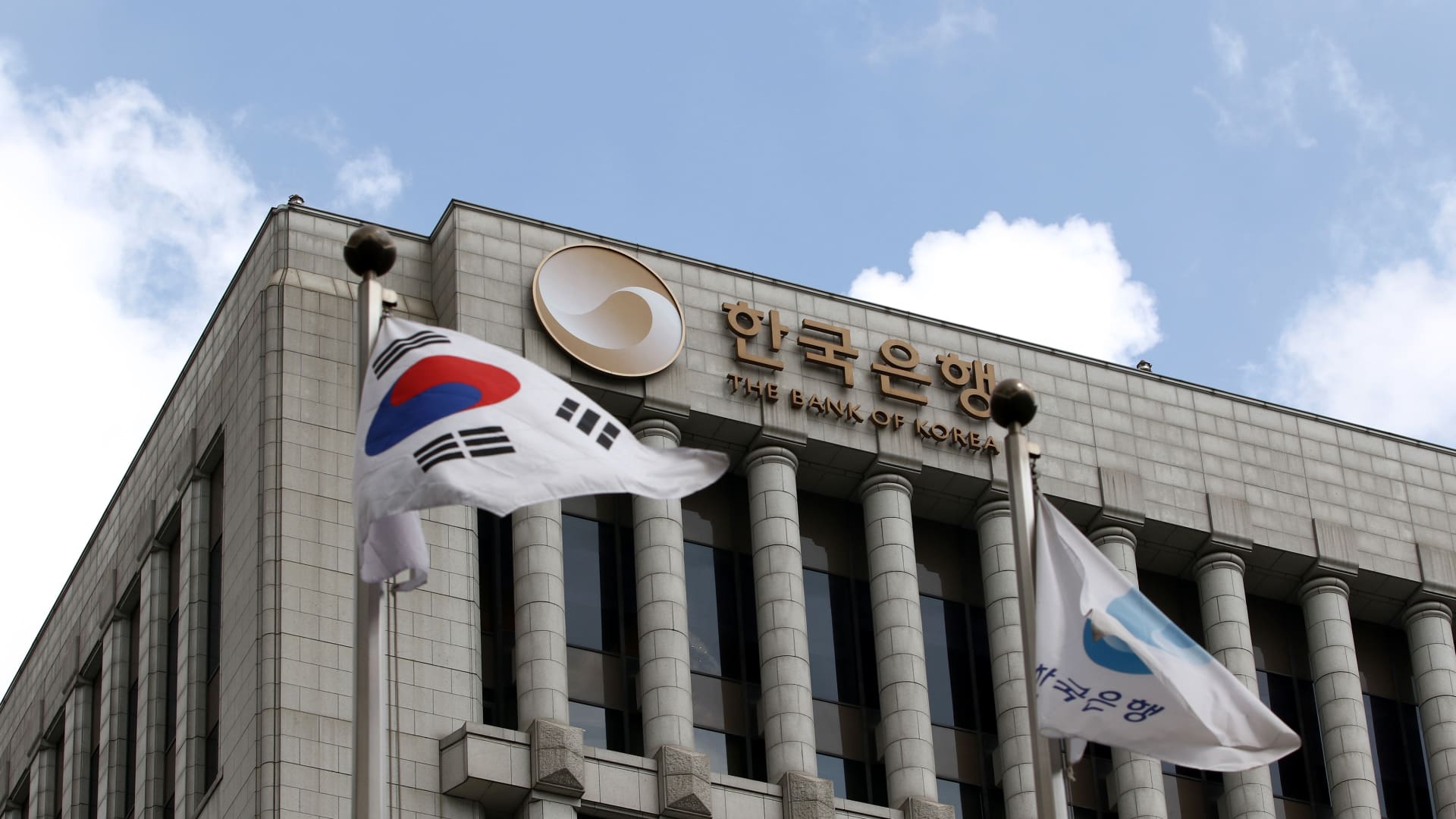

The Bank of Korea (BOK) has maintained its benchmark interest rate at 2.5%, marking an ongoing pause since May. This decision aligns with expectations from economists surveyed by Reuters and comes in response to significant domestic concerns surrounding household debt. In a statement on Thursday, the central bank cited stabilized inflation and a positive outlook for economic growth as key reasons for sustaining the current rate, while also emphasizing close monitoring of housing market stability and burgeoning household debt levels.
As domestic consumption begins to recover, bolstered by a favorable semiconductor export sector, the BOK warns, however, that economic uncertainties are rising due to ongoing trade negotiations with the United States. The central bank noted that the implications of U.S. tariffs on South Korean exports are expected to gradually escalate. The BOK’s Monetary Policy Board expressed that it will maintain its cautious stance on potential rate cuts to mitigate economic growth risks and carefully assess the timing and pace of any future adjustments.
Despite the supportive factors, household debt remains a significant worry, limiting the BOK’s willingness to lower rates further. A report on October 15 indicated that stricter property regulations-including tighter loan limits-will now apply across all districts of Seoul and additional areas in Gyeonggi Province, expanding from previously applied restrictions in only four districts. Analysts from Bank of America highlighted in an October 20 note that housing inflation has been a primary concern for policymakers and poses a significant barrier to easing measures. They observed that home prices in central Seoul have begun to rise once more, despite earlier attempts to cool the market.
In light of these developments, BofA economists anticipate a possible interest rate cut from the BOK in November to support economic growth, especially if progress is made in trade discussions and housing policies. Following the BOK’s announcement, South Korea’s Kospi index and the smaller Kosdaq remained relatively flat, while the Korean won experienced a slight decline, weakening 0.19% against the U.S. dollar to reach 1,434.70, its lowest level since May.
The rate decision occurs amid heightened uncertainty regarding South Korea’s trade relationship with the U.S., as negotiations struggle to finalize details from an agreement reached on July 30. Under this proposed deal, South Korea is expected to invest $350 billion in the U.S. in exchange for a reduced tariff rate of 15% on products shipped to the U.S. President Lee Jae Myung has cautioned that fulfilling this investment could risk a financial crisis reminiscent of the 1997 Asian Financial Crisis. The preliminary agreement also includes reduced tariffs on the nation’s auto exports.
Negotiators are reportedly set to visit Washington this week to finalize terms before the APEC Summit scheduled for October 31 in South Korea. In its last meeting in August, the BOK adjusted its 2025 inflation forecast upward to 2% and revised its GDP growth outlook for the year from 0.8% to 0.9%. Consumer inflation in South Korea rose to 2.1% in September, up from 1.7% in August, while core inflation reached 2%. The BOK anticipates a modest recovery in domestic demand driven by a supplementary budget and improved consumer sentiment, but expects export growth to slow as the effects of U.S. tariffs unfold.
This ongoing economic landscape underscores the BOK’s challenging balancing act of fostering growth while managing household debt and navigating international trade complexities.
Original Source: https://www.cnbc.com/2025/10/23/bank-of-korea-policy-interest-rate-tighter-property-rules-household-debt-seoul-bok-borrowing.html
Category :
Tags:
Publish Date: 2025-10-23 07:57:00