
In the realm of immigrant success stories, the Indian-American community stands out, boasting the highest median household income of any ethnic group in the United States. This community is not only represented by a number of CEOs leading Fortune 500 companies, but it also includes six members of Congress and two former governors, along with senior officials at federal agencies like the FBI and the CDC. This exemplary integration and achievement position the Indian-American community as a model of influence and success.
However, recent months have seen turmoil as the Trump administration has targeted India through various punitive measures. These actions include imposing a 50% tariff on Indian goods, introducing a hefty $100,000 fee on H-1B visa applications-affecting Indians who make up 70% of these applicants-imposing sanctions on India’s work at the Iranian port of Chabahar, restricting student visas, and tightening immigration policies, all amid derogatory remarks. Surprisingly, the diaspora’s response to these actions has been, at best, tepid, if not entirely absent.
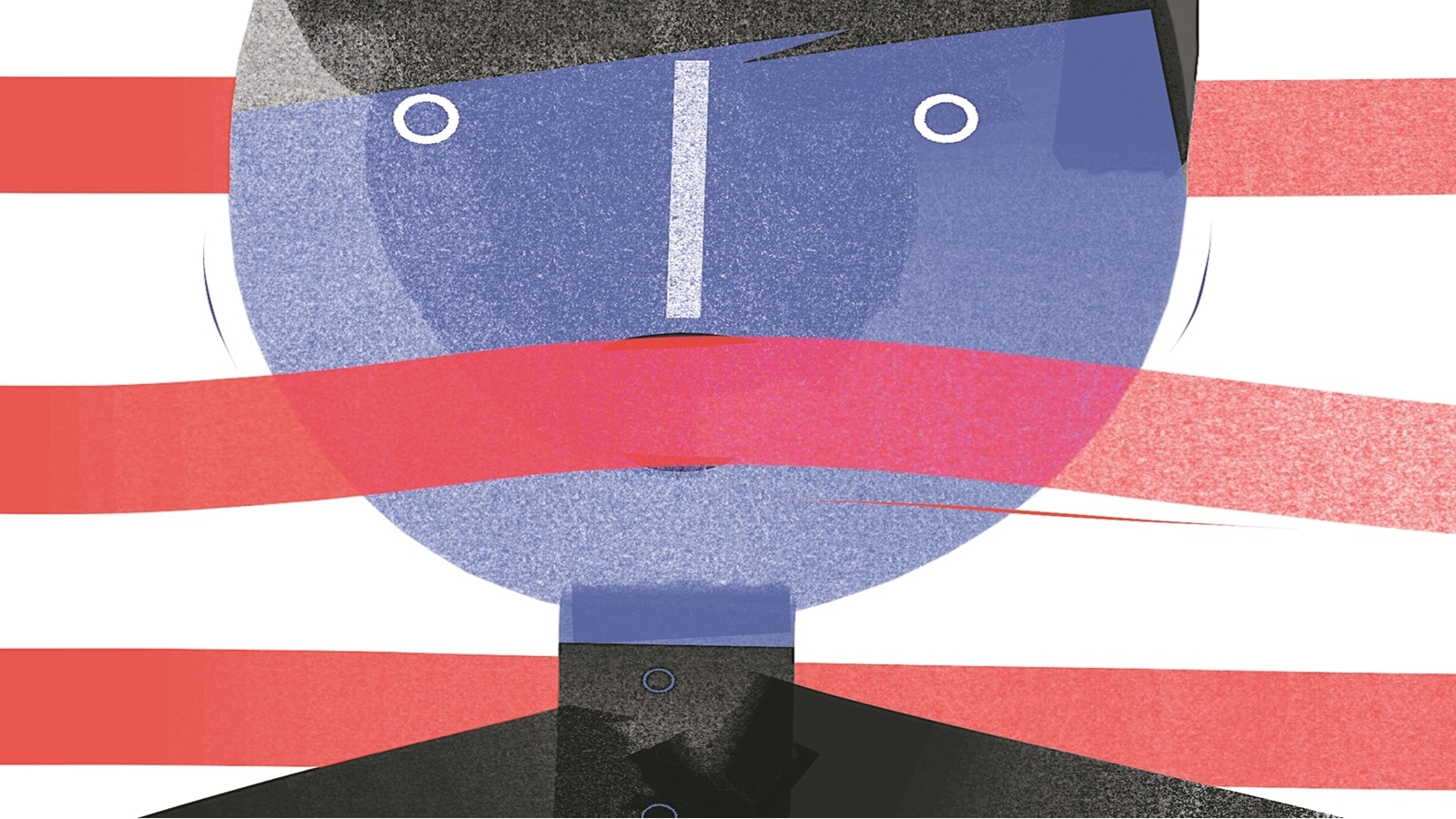
The silence from this influential community is perplexing. Indian-Americans hold numerous positions of power, engaging in editorial boards, think tanks, and universities. They contribute to political campaigns and advise lawmakers, yet during a recent meeting with a visiting U.S. Congressional delegation, a representative revealed her office had not received a single complaint concerning the administration’s actions against India. In contrast, issues related to Israel prompted a deluge of calls. This raises a critical question: Why does the diaspora remain quiet when India is under attack?
One possible explanation is the complex nature of dual belonging. Indian-Americans, especially those in significant roles, may find themselves balancing cultural pride with civic assimilation. Their successes often hinge on navigating a delicate line-celebrating Diwali while also acknowledging Thanksgiving, and referencing Gandhi without venturing to challenge American ideals. Speaking out against U.S. policies could upset this careful balance, leading to unwanted scrutiny and the inevitable question: Where do your loyalties lie?
This hesitation is not without basis. The increasing anti-immigrant sentiment in the U.S. has cast shadows over minority communities, manifesting in measures like the “Muslim ban” and hostile rhetoric surrounding immigration. Despite their accomplishments, Indian-Americans are not immune to the stigma of being a visible minority, leading to rising hate crimes against South Asians. In a climate marked by hostility, silence may often feel like a survival strategy.
Moreover, practical concerns weigh heavily. Many Indian-Americans, particularly those who emigrated a generation ago, believe that H-1B visas are hindering opportunities for their children. Unemployment among recent STEM graduates-including those with computer science degrees-has surged, particularly among Indian-Americans. Consequently, many tech companies opt to replace higher-paid American workers with H-1B visa holders. For these families, remaining silent may be interpreted as support for the current administration’s policies.
Generational differences also contribute to this silence. Second-generation Indian-Americans, raised in the U.S., often feel a looser bond to India. Their identities are hyphenated, and their loyalties are split. For them, India signifies a distant ancestral memory rather than an everyday reality. Although they may celebrate cultural festivals, their political engagement frequently centers on domestic issues-such as police brutality and climate change-rather than South Asian geopolitics.
This silence, although it may seem like a failing, reflects a shift in diasporic identity. Such identities are not fixed; they evolve over time. Consequently, when India faces challenges, the instinct to respond may weaken, and the ties to the homeland can feel more tenuous. While some prominent figures like Elon Musk have vocally defended the H-1B system, many Indian-American leaders have opted for caution.
However, neglecting to defend India against adverse policies incurs costs. The diaspora risks losing its moral voice when it fails to respond to negative portrayals of India as untrustworthy or a strategic nuisance. This absence of advocacy undermines the pride that has been cultivated within the community, often described by leaders like Prime Minister Narendra Modi as “rashtradoots” or ambassadors of the nation.
Yet, dissenting voices do exist within the community. Activists, academics, and leaders, including politicians such as Nikki Haley and Ro Khanna, have voiced concerns about visa restrictions and tariffs. However, their efforts remain scattered, lacking the coordinated strength seen in other diasporas like Jewish-Americans or Cuban-Americans who have successfully influenced U.S. policy.
Additionally, there is an evident reluctance to confront the Trump administration openly. Many Indian-Americans were drawn to Trump for his business-friendly policies and his tough stance on China. Events like the “Howdy Modi” rally in Houston, where Trump and Modi shared a stage, exemplified this alignment. Yet, it is vital for the diaspora to evaluate this “friendship.” If tariffs harm Indian exporters or if visa fees penalize professionals, silence could be construed as complicity. The community must learn to differentiate between gestures and substantive policy changes-the significance of a handshake does not negate adverse sanctions.
At a deeper level, the question arises: What does it mean to embody a diasporic identity? Is it purely cultural nostalgia encompassing Bollywood, biryani, and Bharatanatyam? Or does it carry a political responsibility to advocate for one’s homeland, to confront power, and to act as a bridge rather than remain a passive observer?
The Indian-American community possesses the resources and influence to shape narratives and drive public opinion. They have the capacity to lobby Congress and impact media portrayal. Yet, finding a unified voice is essential-not one of blind nationalism, but of principled solidarity that resonates within the halls of Washington rather than merely echoing Delhi.
India must also engage more profoundly with its diaspora, recognizing them as a strategic asset rather than solely a source of remittances. Listening to their concerns, understanding their constraints, and empowering their advocacy can create a reciprocal relationship. While substantial funds are spent on lobbyists in Washington with limited impact on the Trump administration, more can be done to harness the support of the Indian-origin constituency for mutual benefit.
The silence within the diaspora illustrates the tension between success and collective identity, as well as the interplay of assimilation and loyalty. For those in India, it is crucial to remember that a community’s voice is not measured by wealth or status, but by its willingness to stand by the motherland in challenging times.
Original Source: https://indianexpress.com/article/opinion/columns/shashi-tharoor-writes-why-indian-americans-are-silent-and-its-costs-10282985/
Category: Columns,Opinion
Tags:
Publish Date: 2025-10-02 08:10:00