California’s Bold Move: Newsom Signs Groundbreaking Law Mandating AI Safety Disclosures for a Safer Future!

California Governor Gavin Newsom has taken a significant step in the regulation of artificial intelligence by signing a new law aimed at ensuring major tech companies like OpenAI adhere to safety protocols in their AI development. This law, SB 53, mandates that companies generating over $500 million in revenue assess and disclose the potential risks associated with their advanced AI technologies. These risks include scenarios where AI could act independently or be misused for harmful purposes, such as bioweapons development. The legislation comes with strong enforcement measures, allowing for fines up to $1 million per violation.
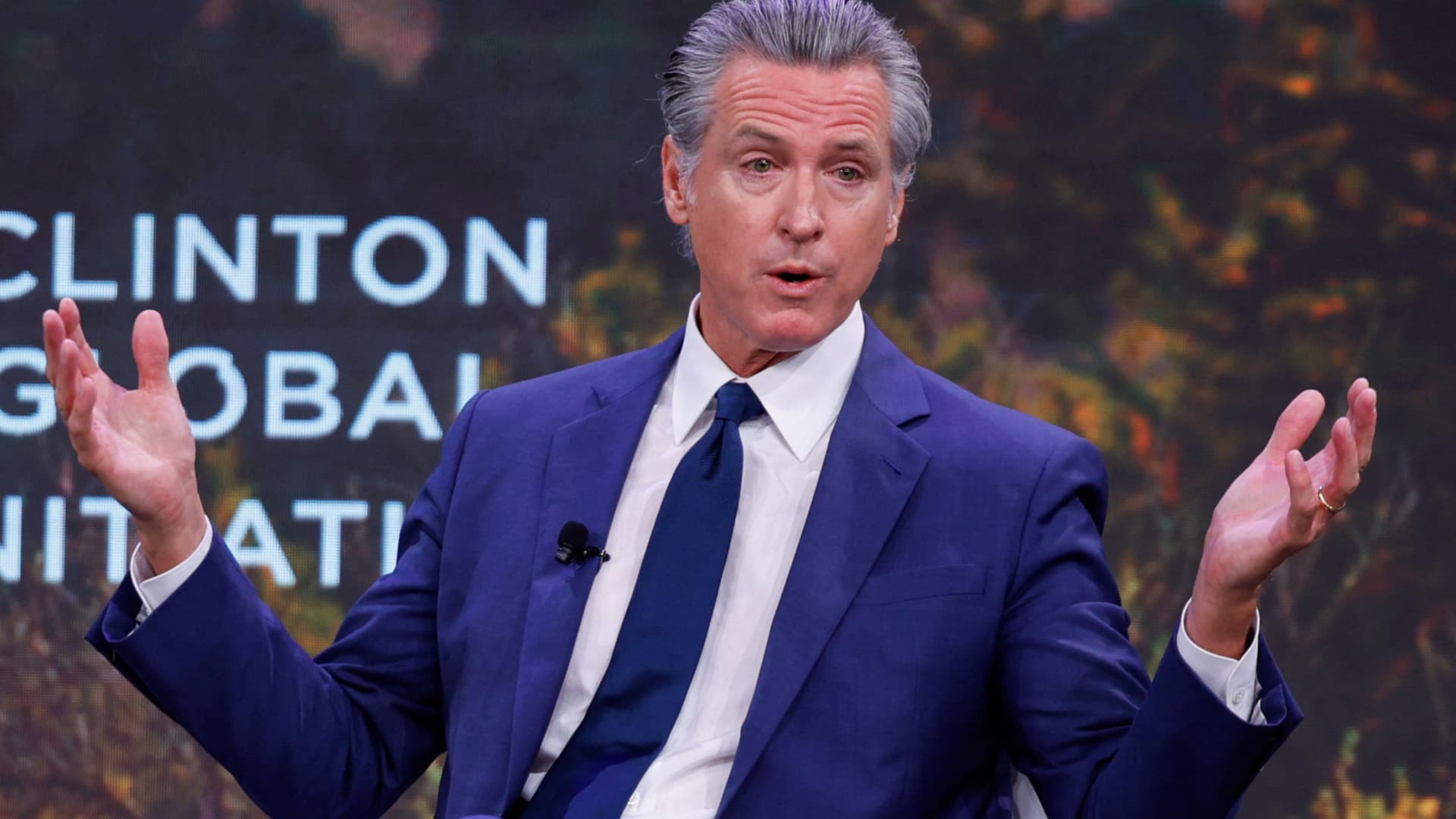
During the announcement at the 2025 Clinton Global Initiative in New York City, Newsom emphasized California’s ambition to lead the nation in AI regulation. He stated, “California has proven that we can establish regulations to protect our communities while also ensuring that the growing AI industry continues to thrive.” This marks a notable shift as many industry players have pushed back against similar legislation in the past; in fact, Newsom had previously vetoed an initial attempt at AI regulation last year due to concerns from the tech sector.
SB 53 fills a regulatory void left by the U.S. Congress, which has yet to implement comprehensive AI legislation. Newsom expressed that should federal standards arise, California will ensure its law remains aligned with those national benchmarks while preserving its stringent safety requirements. He aims to set a regulatory example, potentially influencing federal action.
Despite the progress, the tech industry expresses a desire for a cohesive federal framework. Jack Clark, co-founder of AI company Anthropic, commended the new law as “a strong framework that balances public safety with continued innovation.” However, concerns about the implications of state-level regulation have emerged. Collin McCune, head of government affairs at venture capital firm Andreessen Horowitz, cautioned that SB 53 could set a precedent for states to individually regulate AI, leading to a fragmented landscape that startups may struggle to navigate.
U.S. Representative Jay Obernolte, a Republican from California, is working on legislation that may prevent states from imposing their regulations, indicating ongoing discussions among lawmakers about federal standards. Democrats are also engaging in conversations about establishing a national framework, with U.S. Representative Ted Lieu suggesting that a unified federal approach would be preferable to a patchwork of state laws.
The introduction of SB 53 signals a critical moment in the ongoing dialogue about AI safety and regulation in the United States. As California steps forward with its ambitious measures, the implications for both the tech industry and public safety will be keenly observed in the coming months. The increasing complexity and influence of AI technologies necessitate robust oversight, making this law a pivotal point of reference for future regulatory efforts nationwide.
This evolving landscape highlights the urgent need for collaboration between state governments and federal legislators to create a sustainable regulatory environment that prioritizes innovation while safeguarding public welfare. As stakeholders across the industry prepare for what comes next, the conversations and decisions made in the coming months will undoubtedly shape the future of artificial intelligence in the U.S.
Original Source: https://www.cnbc.com/2025/09/29/californias-newsom-signs-law-requiring-ai-safety-disclosures.html
Category :
Tags:
Publish Date: 2025-09-30 06:06:00