Celebrating a Decade of Discovery: AstroSat, India’s First Multi-Wavelength Astronomy Observatory, Transforms Our Understanding of the Cosmos!

India’s pioneering multi-wavelength astronomy satellite, AstroSat, has marked a significant milestone, completing a decade of ground-breaking scientific observations, according to the Indian Space Research Organisation (ISRO). Launched on September 28, 2015, via the PSLV-C30 rocket from the Satish Dhawan Space Centre in Sriharikota, AstroSat boasts a lift-off mass of 1,515 kg and orbits the Earth at an altitude of 650 km.
Over the past ten years, AstroSat has unveiled remarkable cosmic phenomena, including the detection of far-ultraviolet (UV) photons from galaxies located approximately 9 billion light-years away. This discovery was made possible by the satellite’s advanced imaging capabilities, which represent the sharpest and most extensive UV observations yet made in space. ISRO highlighted that AstroSat has been instrumental in uncovering fast-spinning black holes and has generated numerous insights into X-ray emissions from binary star systems within our galaxy.
In a statement shared on the social media platform X, ISRO reflected on the impact of AstroSat, stating, “From black holes to neutron stars, from the nearest star Proxima Centauri to the very first detection of FUV photons from galaxies 9.3 billion light-years away, AstroSat has enabled groundbreaking insights across the electromagnetic spectrum.” The satellite serves as India’s first dedicated astronomy observatory, brilliantly bridging gaps in our understanding of celestial phenomena.
AstroSat’s scientific journey began by addressing a mystery that had puzzled astronomers for 20 years-an unusually bright red giant star in both UV light and infrared. Among its most astounding discoveries is the emission from the Butterfly Nebula, which was found to extend three times beyond previous measurements. The satellite has also contributed to X-ray polarization studies, observed a rejuvenating star, and tracked the mergers of galaxies.
In addition to its scientific accomplishments, AstroSat has played a crucial role in popularizing space science within India, engaging astrophysics researchers in 132 universities. Approximately half of the satellite’s user base consists of Indian scientists and students, fostering the development of a new generation of astronomers. AstroSat’s international reach is also noteworthy, with around 3,400 registered users from 57 countries.
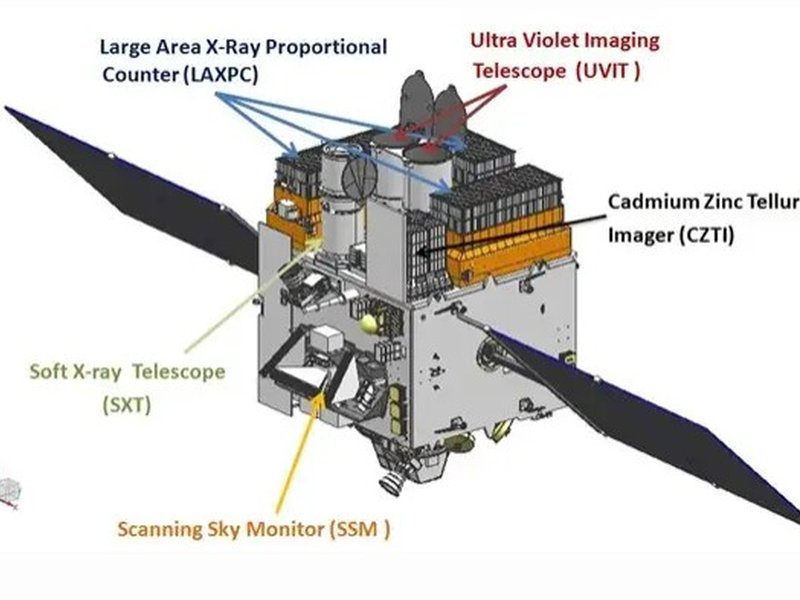
The satellite operates five scientific payloads, meticulously gathering data to explore a variety of cosmic phenomena, including black holes, quasars, and supernovae, thereby enriching our understanding of the universe. Originally designed for a lifespan of just five years, AstroSat has far surpassed these expectations. ISRO confirmed that all five scientific experiments onboard are functioning well, promising continued exciting discoveries in the years ahead.
As AstroSat embarks on its next chapter, it stands as a testament to India’s growing prowess in space science and its commitment to advancing our knowledge of the cosmos. By engaging a global audience, the satellite continues to inspire curiosity and intent in the field of astronomy.
Original Source: https://ianslive.in/indias-1st-multi-wavelength-astronomy-observatory-astrosat-completes-a-decade–20250929152921
Category :
Tags:
Publish Date: 2025-09-29 15:31:00