Unseen Threat: How a Devastating Cyberattack on European Airports Shattered Security and Public Trust

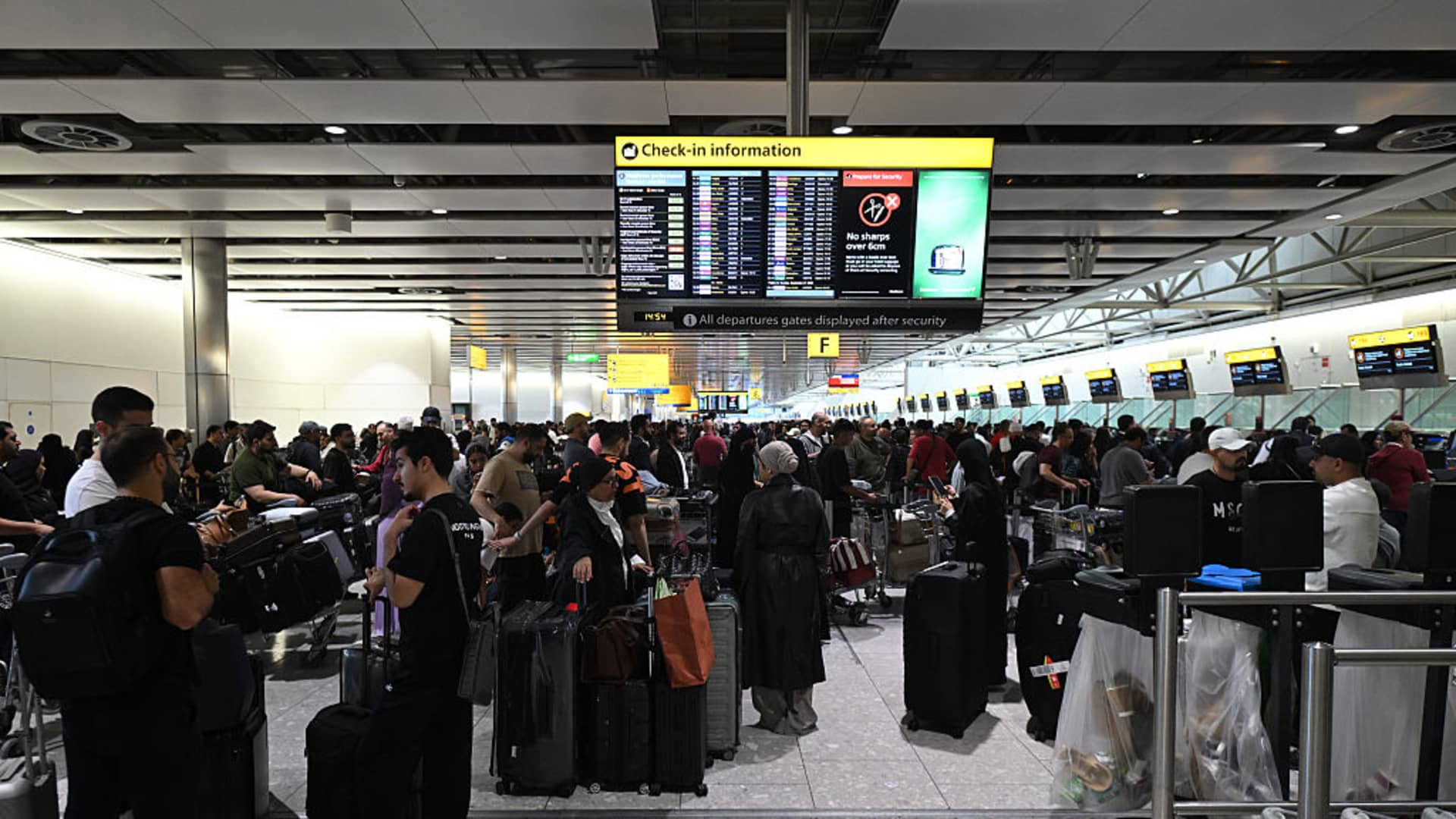
Travelers faced continued disruptions at major European airports, including Heathrow, Berlin, and Brussels, following a cyberattack on Collins Aerospace, a leading provider of check-in technologies. The incident, which began on September 20, 2025, forced numerous flight cancellations and long wait times for passengers seeking to check in or drop off luggage.
Heathrow, the UK’s largest airport, confirmed in a post on X that their operations were impacted by the cyber-related disruption affecting Collins’ MUSE software. RTX, the parent company of Collins Aerospace, acknowledged the issues but noted that the impact was primarily on electronic check-in and baggage drop systems. “The situation can be mitigated with manual check-in operations,” the company stated, expressing its commitment to resolving the issue promptly. A request for additional comments from RTX is currently pending with CNBC.
As of Sunday morning, aviation analytics provider Cirium reported that 38 departures and 33 arrivals had been canceled across the affected airports by 10 a.m. London time. This follows a troubling Saturday, which saw 35 departures and 25 arrivals scrapped, with Brussels experiencing the highest number at 15 cancellations. Amid these complications, operators at all three airports issued updated communications to inform passengers of ongoing challenges.
In a statement, Heathrow said they are diligently working to recover from the disruptions. “We apologize to those who have faced delays, but working collaboratively with airlines has allowed the majority of flights to continue operating,” they mentioned on X. They advised passengers to verify their flight status before arriving and to limit arrival times to three hours prior for long-haul flights and two hours for short-haul journeys.
Brussels Airport echoed these concerns in a weekend update, mentioning significant impacts on their flight schedules due to the cyberattack. Travelers were urged to check the status of their flights before heading to the airport. Berlin Airport also cautioned passengers regarding extended wait times due to “systems outage at a service provider.” Meanwhile, Dublin Airport reported some operational disruptions, although they anticipated resuming a full flight schedule.
This cyberattack on Collins Aerospace is part of an alarming trend of cybersecurity breaches affecting key sectors. Last week, Jaguar Land Rover announced a production halt until September 24 as they continued to investigate a related incident. Earlier this year, British retailer Marks & Spencer reported substantial losses from a cyberattack that severely disrupted their supply chains.
Charlotte Wilson, head of enterprise at cybersecurity firm Check Point, emphasized the aviation industry’s vulnerability due to its reliance on interconnected digital systems. “These attacks often exploit third-party platforms used by multiple airlines and airports,” she explained in an email statement. The ripple effect from a single vendor compromise can lead to widespread disruptions across regions.
To bolster resilience against such incidents, Wilson suggested that aviation companies implement regular software updates and maintain reliable backup systems. She also advocated for improved information-sharing between technology providers, airlines, and governments. “Cyberattacks rarely stop at national borders. The quicker one country identifies and reports an attack, the faster others can take action to mitigate its effects,” she added, underscoring the need for a unified defense strategy.
As European airports navigate the fallout from this cyber-related disruption, travelers are reminded to remain vigilant about their flight statuses and prepare for potential delays.
Original Source: https://www.cnbc.com/2025/09/21/what-we-know-about-the-cyberattack-that-hit-major-european-airports.html
Category :
Tags:
Publish Date: 2025-09-21 15:55:00