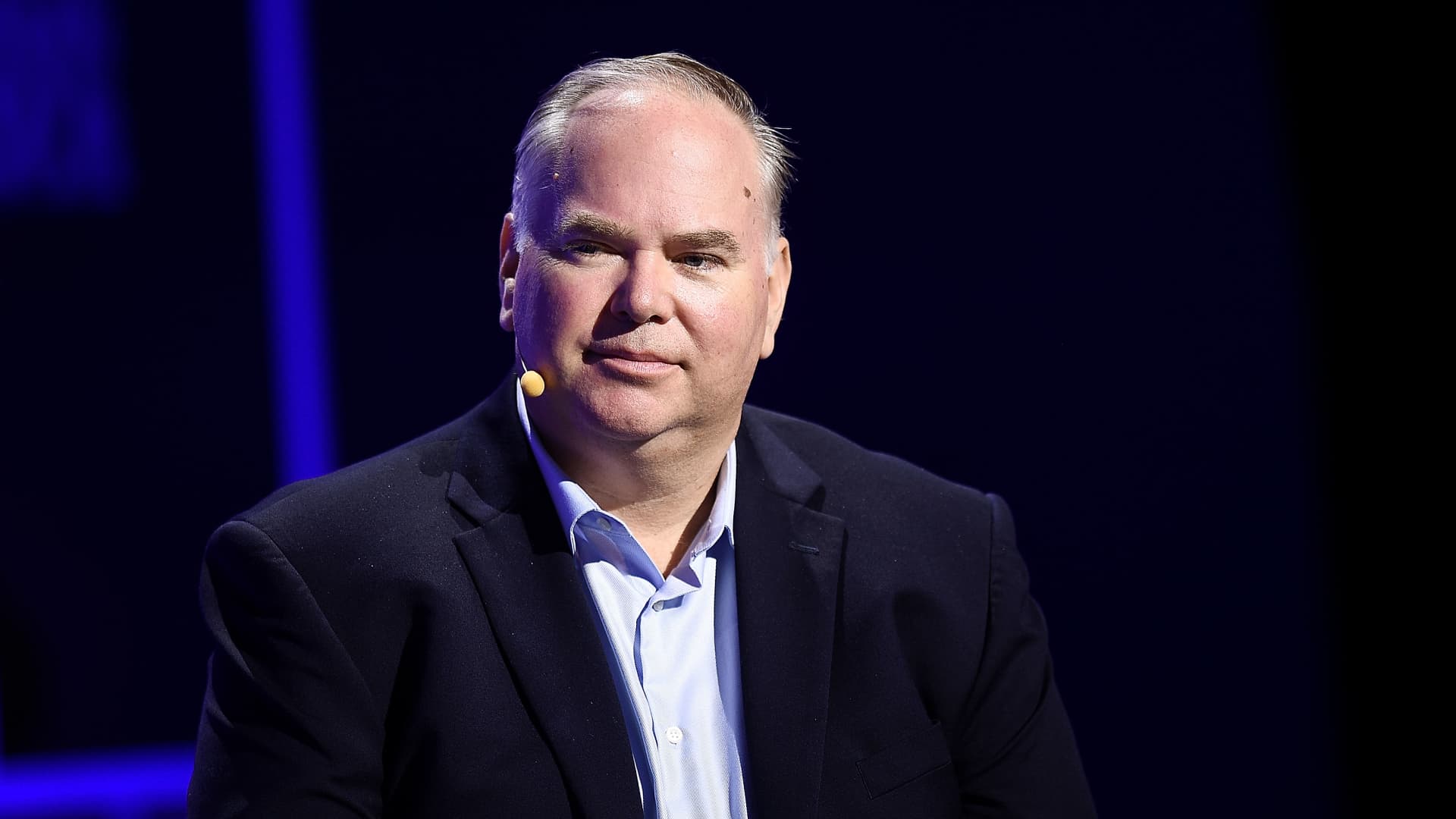

Frontier Airlines CEO Barry Biffle recently rebutted comments made by United Airlines CEO Scott Kirby regarding the viability of the ultra-low-cost airline business model in the U.S. Speaking at the Skift Global Forum in New York, Biffle dismissed Kirby’s assertion that the deep-discount model is obsolete, stating, “That’s cute.” He emphasized the ongoing oversupply of flights in the U.S. market, which he believes undermines Kirby’s argument.
Kirby, in a previous appearance at an airline conference in Long Beach, California, expressed skepticism regarding the future of Spirit Airlines, the largest discount carrier in the U.S., predicting its eventual demise. Spirit has faced financial upheaval, marking its second bankruptcy within a year after struggling to stabilize its finances. When asked why he foresaw Spirit’s failure, Kirby confidently declared, “Because I’m good at math,” suggesting that the numbers don’t favor the budget airline.
In his response to Kirby’s critique, Biffle highlighted Frontier’s competitive edge regarding operational costs. He noted that Frontier’s unit costs stand at 7.50 cents per available seat mile (ASM) — significantly lower than United’s 12.36 cents per ASM recorded in the second quarter. Biffle asserted that Frontier serves a unique customer base, catering not only to budget-conscious travelers but also to those who prioritize cost-saving flights, allowing them to spend more on other travel experiences like luxury accommodations.
When probed about whether Frontier benefits from surplus capacity left by United, Biffle likened the situation to “the CEO of Nordstrom saying ‘I allow customers to buy jeans from Walmart,'” emphasizing the distinct value proposition Frontier offers.
Both Frontier and United, alongside other competitors like JetBlue, have recently indicated plans to expand their routes to attract customers from Spirit, which is currently facing challenges. The pressures of rising operational costs stemming from the pandemic and an influx of domestic flights have led to more competitive fares, disrupting the ultra-low-cost model.
Kirby, reflecting on budget airlines, remarked, “Customers care about value, and they don’t get value on a [ultra-low-cost carrier].” His observation taps into the evolving landscape, where traditional airlines have begun to emulate budget carriers by offering stripped-down fare options and basic economy tickets.
In response to its current setbacks, Frontier reported a net loss of $70 million in the second quarter but maintained a positive outlook, projecting unit revenue growth in the mid-to-high single digits for the third quarter. Biffle expressed optimism about setting a strong foundation for profitability by 2026.
As the competitive dynamics of the airline industry continue to shift, both budget and legacy carriers are adapting their strategies to meet consumer needs. The dialogue between airline executives underscores a broader narrative in the travel sector: the battle for market share amid changing consumer preferences and economic pressures.
Investors and travelers alike will be watching closely as these developments unfold, shaping the future of air travel in the United States.
Original Source: https://www.cnbc.com/2025/09/17/frontier-united-discount-airlines-barry-biffle.html
Category :
Tags:
Publish Date: 2025-09-18 00:15:00