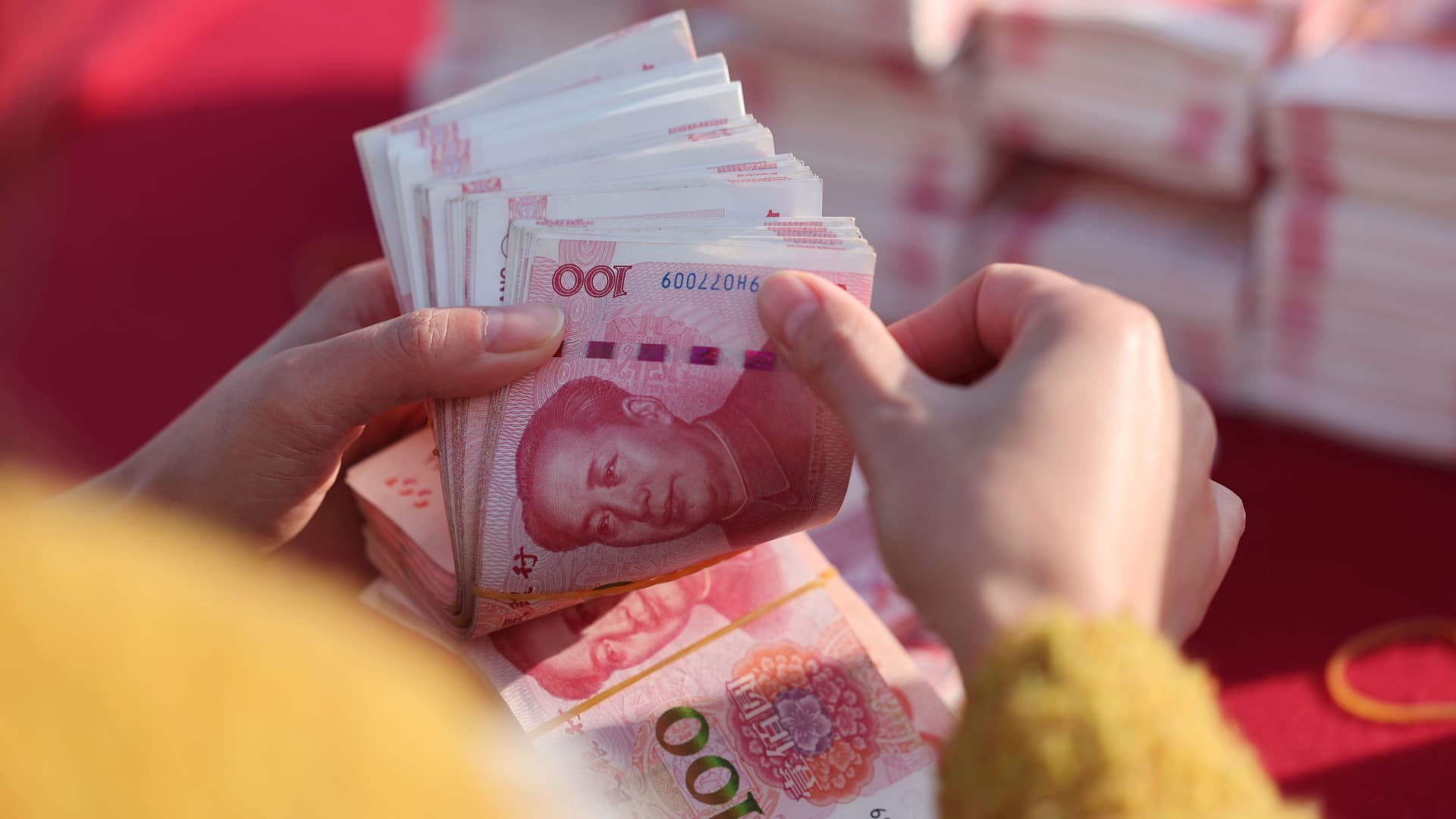

China’s yuan is experiencing a notable rally against the U.S. dollar, driven by Beijing’s strategic guidance and a prevailing sentiment of delaying further interest rate cuts. Despite this upward trend against the dollar, the yuan’s depreciation against other major currencies is reigniting trade concerns. This year, the offshore yuan has appreciated about 3% against the dollar as the American currency has declined sharply, falling over 10% and on track for its worst performance in more than 20 years due to factors like economic slowdown, rising debt, and geopolitical uncertainties.
As of Monday, the offshore yuan was trading at 7.118 per dollar, its strongest level since the aftermath of Donald Trump’s election. Economists predict that the yuan could strengthen to 7.0 per dollar by year-end, fueled by China’s efforts to stimulate economic growth and attract more domestic investment. However, the yuan has weakened significantly against other currencies: it’s down over 10% against the euro, 5% against the British pound, and 3% against the Japanese yen, making Chinese exports more competitive in regions outside the U.S. As trade tensions with Washington persist, China is shifting its export focus; just 10% of shipments went to the U.S. in August, a decline from 15% last year, while exports to Southeast Asia, the EU, Africa, and Latin America have surged.
The yuan’s rise against the dollar is influenced by increasing expectations of a Federal Reserve rate cut later this week, paired with dipping U.S. yields that have narrowed the interest rate gap between the U.S. and China, thus enhancing the appeal of Chinese assets. Current estimates show a 94.2% chance of a quarter-point rate cut from the Fed, according to CME Group’s FedWatch tool. A booming stock market is posing a dilemma for the Chinese central bank; while it could opt for rate cuts to stimulate the economy, there are fears this may lead to an unsustainable market bubble, reminiscent of the mistakes made in 2014-2015.
As liquidity in the onshore market surges, the CSI 300 Index has skyrocketed more than 43% since its September lows, prompting concerns over excessive retail speculation. Analysts suggest that while the People’s Bank of China (PBoC) is leaning toward careful monetary easing, any cuts could be modest, reflecting market corrections rather than aggressive measures. The PBoC is currently reinforcing a stronger daily reference rate, encouraging further yuan appreciation against the dollar. It set the latest reference rate at 7.1056 on Monday.
Tommy Xie from OCBC Bank expects the offshore yuan to strengthen to 7.08 per dollar by year-end, contrasting with earlier expectations of a weaker yuan aimed at offsetting U.S. tariffs. Goldman Sachs economists view the PBoC’s daily rate fixing as a potential goodwill gesture amid ongoing trade discussions with Washington.
Growing trade friction remains a concern for Beijing. The yuan’s significant depreciation against major currencies has made Chinese exports more competitive, yet this has raised trade imbalance issues, particularly with formidable trading partners like India and Mexico. In fact, China posted a $77.7 billion trade surplus with India within the first eight months of the year, an increase of 16% year-on-year. Mexico is contemplating raising tariffs on Asian imports, particularly from China, due to mounting trade pressures.
As Stephen Jen from Eurizon SLJ Capital notes, China’s approach resembles “opportunistic devaluation” to manipulate its currency’s value against others, underscoring the need for a more stable and fair exchange rate policy. A more appropriately priced yuan could foster better international relations and mitigate trade tensions as China navigates its dynamic economic landscape.
Original Source: https://www.cnbc.com/2025/09/16/chinese-yuan-chuan-rmb-cny-cnh-china-onshore-offshore-usd-euro-renminbi-currency-exports-imports-trade.html
Category :
Tags:
Publish Date: 2025-09-16 07:41:00