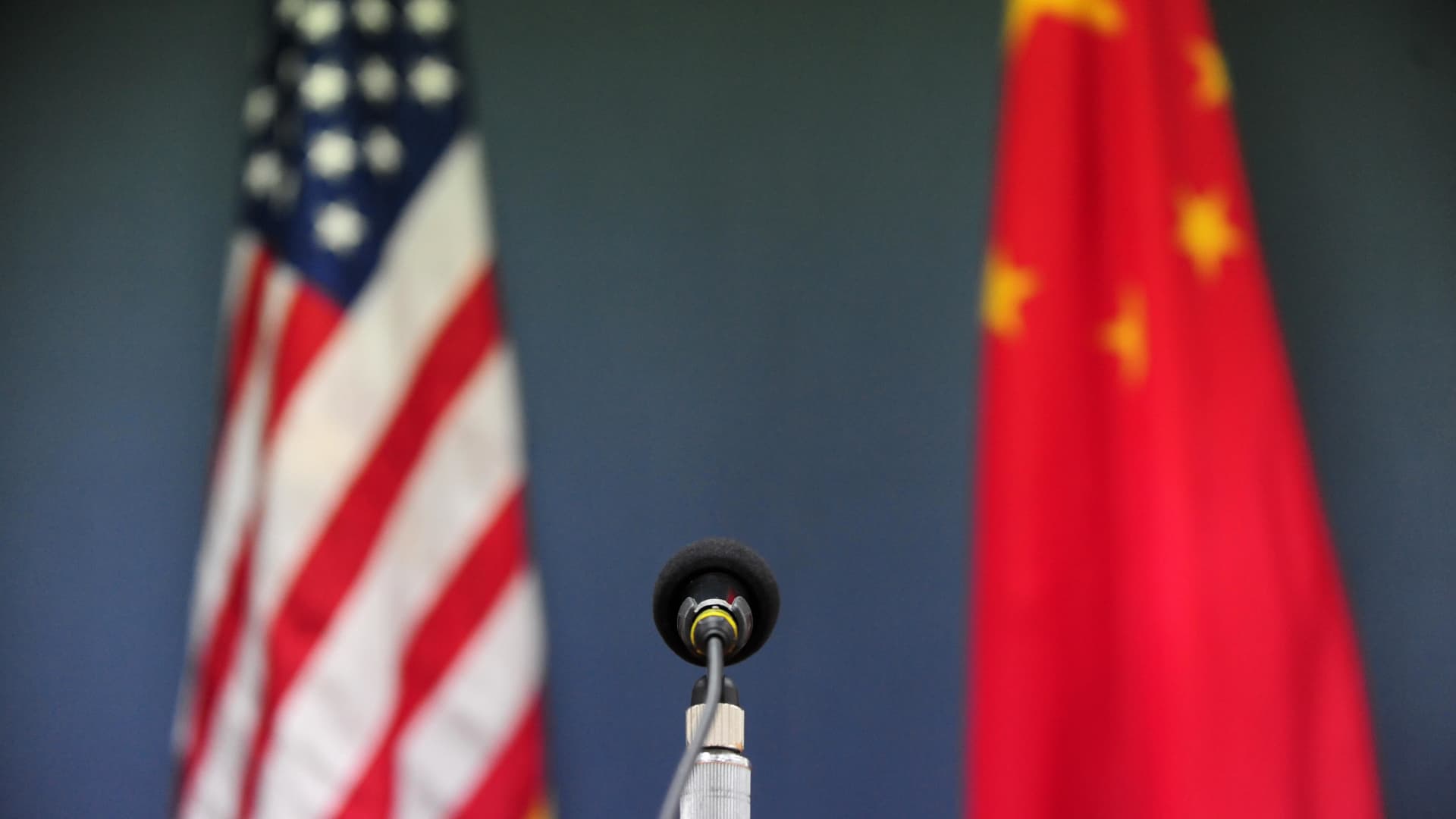

U.S. and Chinese officials met in Madrid on Sunday to address ongoing trade disputes, a deadline looming over the Chinese short video app TikTok, and Washington’s calls for G-7 and European allies to impose tariffs on Chinese imports to pressure Beijing to cease its purchases of Russian oil. This meeting represents the fourth such gathering in four months as U.S. Treasury Secretary Scott Bessent and U.S. Trade Representative Jamieson Greer engage with Chinese Vice Premier He Lifeng in a concerted effort to stabilize the increasingly fragile U.S.-China trade relationship amid President Donald Trump’s tariffs.
The officials last convened in Stockholm in July, where they agreed to a 90-day extension of a truce that temporarily reduced steep retaliatory tariffs and reinstated the flow of rare-earth minerals from China to the U.S. Trump has since approved extending the current U.S. tariff rates on Chinese goods, hovering around 55%, until November 10. Trade analysts suggest that significant breakthroughs are unlikely from the Madrid discussions, particularly as Spain’s Prime Minister Pedro Sanchez has aimed to improve diplomatic ties with Beijing.
A key issue likely to emerge from this round of talks is the potential extension of the September 17 deadline for TikTok’s Chinese parent company, ByteDance, to divest its U.S. operations or face potential ban. While an official deal is not anticipated, an insider from the Trump administration indicated that yet another delay would be forthcoming, particularly as TikTok hadn’t been a discussed item during prior negotiations in Geneva, London, and Stockholm. Including TikTok in the Madrid agenda may provide political justification for this extension, yet may also frustrate lawmakers who have insisted on a sale to mitigate national security risks.
Wendy Cutler, a former USTR trade negotiator, emphasized that any substantial agreements are more likely to be reserved for a potential meeting between Trump and Chinese President Xi Jinping later this year, possibly during the Asia-Pacific Economic Cooperation summit set for October in Seoul. Such agreements could range from resolving national security concerns surrounding TikTok to lifting restrictions on Chinese soybean purchases and adjusting tariffs on fentanyl-related goods. However, Cutler noted that addressing core U.S. economic grievances regarding China’s export practices will be a lengthy process.
On another front, the Treasury underlined that the Madrid discussions would also tackle collaborative measures to combat money laundering, referring to persistent U.S. demands for China to clamp down on illicit technology shipments to Russia amid its ongoing conflict in Ukraine. Bessent made a compelling case for G7 nations to enforce “meaningful tariffs” on imports from China and India, aiming to halt their acquisition of Russian oil and consequently diminish President Vladimir Putin’s revenue streams, which fuel the ongoing conflict.
The Spanish government aims to maximize the visibility of these talks, with Spanish Foreign Minister José Manuel Albares publicly welcoming the delegations before their discussions. This meeting is seen as an opportunity for Spain to solidify its position as a hub for high-level diplomatic negotiations, particularly as Madrid seeks to address the Israel-Palestinian conflict. The Spanish government also hopes to use the occasion to strengthen bilateral relations with the U.S., especially after a recent period of tension surrounding criticisms of its handling of defense commitments in relation to NATO.
In sum, while the Madrid talks promise to address several pressing issues, expectations remain tempered regarding any immediate resolutions, reflecting the complexities of U.S.-China relations amidst broader geopolitical shifts.
Original Source: https://www.cnbc.com/2025/09/14/us-chinese-officials-talks-in-spain-on-trade-tiktok-deadline.html
Category :
Tags:
Publish Date: 2025-09-14 15:34:00