Strength in Unity: India Urges BRICS Partners to Combat Trade Deficits Amid China’s Call for Solidarity

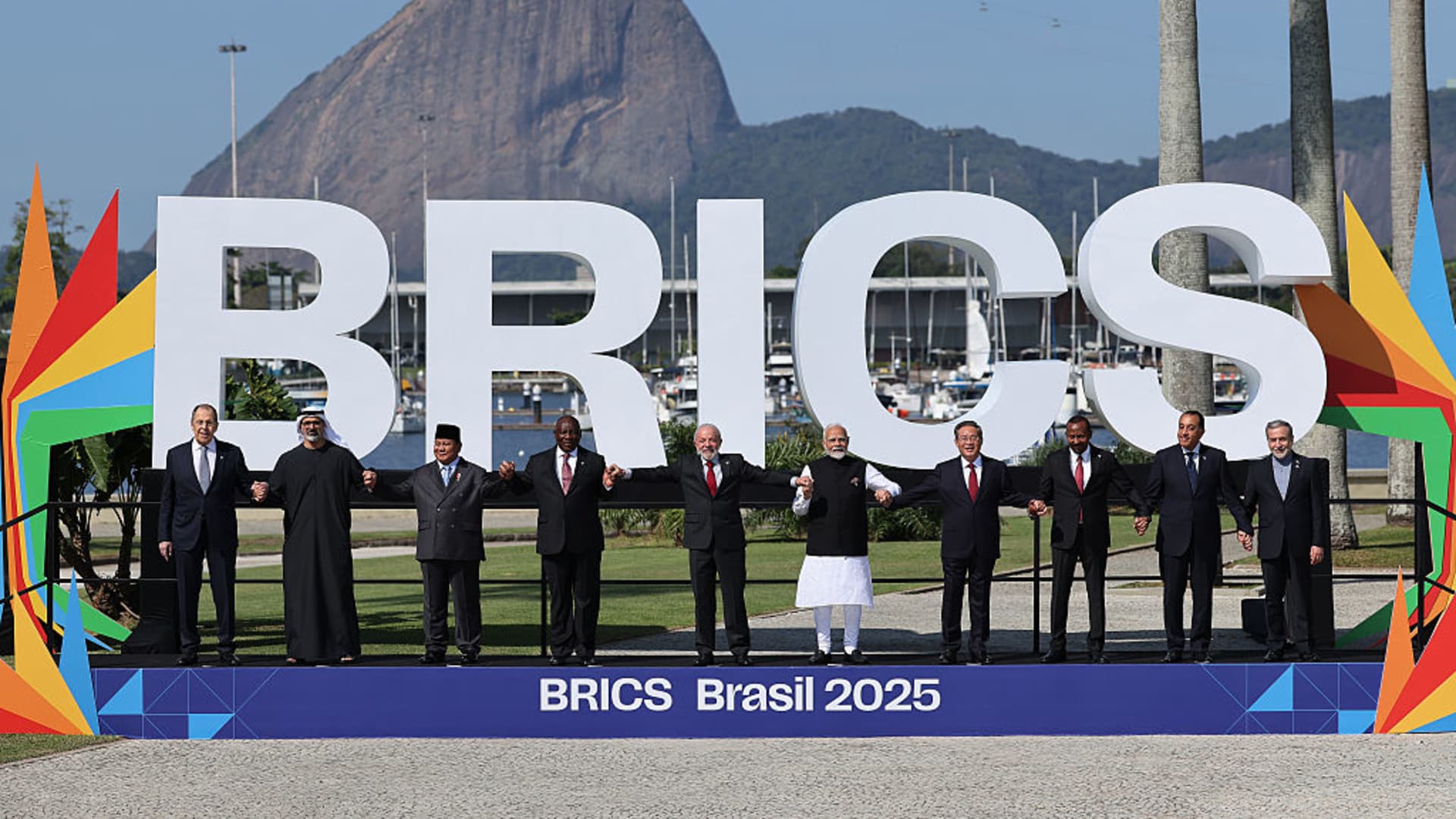
India has called on its BRICS partners to address significant trade imbalances, marking a pivotal moment in the bloc’s dynamics during the ongoing geopolitical tensions with the United States. At a virtual summit on July 6, India’s External Affairs Minister S. Jaishankar emphasized that India’s “biggest trade deficits are with BRICS partners.” This statement underscored the need for member nations-including Brazil, Russia, India, China, and South Africa-to reassess their trade relations amid U.S. tariffs that have unsettled both allies and adversaries.
While Jaishankar took the lead at the summit, Prime Minister Narendra Modi was absent due to his participation in the Shanghai Cooperation Organization summit in China-a move interpreted as an effort to warm ties with Beijing even as relations with Washington remain strained. Brazil, hosting the summit, leveled accusations of “blackmail” at the U.S., aligning itself with India as nations hit hard by President Donald Trump’s tariffs, which have soared as high as 50%.
China joined the chorus of criticism against U.S. trade policies, with President Xi Jinping warning against “hegemonism, unilateralism, and protectionism.” He highlighted that trade wars severely disrupt global economies and urged BRICS members to maintain solidarity in the face of external pressures.
The contrasting views within BRICS illustrate a complexity in its purpose: while India focuses primarily on economic cooperation, China and Russia add geopolitical dimensions to the organization’s goals. New Delhi has advocated for initiatives like the New Development Bank and a financial framework for emergency liquidity within the bloc. The Carnegie Endowment for International Peace noted that China aims to integrate BRICS with its Belt and Road Initiative, enhancing its global influence.
India’s call for more fluid trade among BRICS nations echoed discussions from a trade ministers meeting in May, where enhanced cooperation was also a focal point. However, trade data reveals a stark reality: India’s trade deficit with China reached a record $99.21 billion in the fiscal year ending March 2025, as imports surged. Chinese customs reported that China amassed a trade surplus of $77.7 billion with India in 2025, reflecting an uptick of 16% compared to the previous year.
Jaishankar stressed the importance of the BRICS platform for addressing these trade disparities, advocating for swift initiatives to enhance export capabilities. A report by the Indian think tank Natstrat highlighted the missed opportunities for India in tapping into BRICS markets, despite significant increases in imports from these countries over the past decade.
On the U.S.-India front, relations have soured notably due to a 50% tariff imposed by the U.S. on Indian goods, which far surpasses the 30% tariffs applied to Chinese products. Current negotiations have faltered, particularly as Washington seeks to limit Indian oil purchases from Russia and has criticized India’s protectionist policies in agriculture and dairy sectors. Trump alleged that India had offered to eliminate tariffs on American imports, although he deemed the proposal too late.
Despite these challenges, signs of a thaw have emerged. Trump recently acknowledged a “special relationship” with India and praised Modi as a “great prime minister.” Modi reciprocated these sentiments on social media, indicating a recognition of the enduring strength in U.S.-India ties.
Analysts like Chietigj Bajpaee suggest that both leaders’ conciliatory remarks illustrate the robust structural foundations of India-U.S. relations, despite ongoing tensions. As India seeks a stronger economic stance within BRICS and navigates its complex relationship with the U.S., the upcoming months will be critical in shaping its international trade landscape.
Original Source: https://www.cnbc.com/2025/09/09/india-china-brics-brazil-trade-trump-deficit.html
Category :
Tags:
Publish Date: 2025-09-09 14:28:00