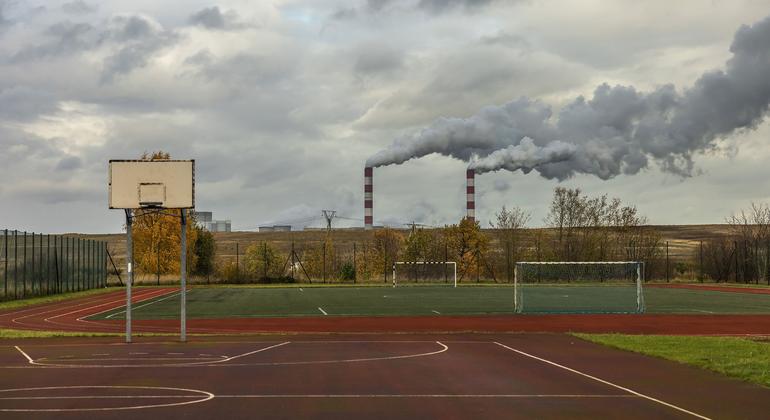

Air quality knows no boundaries, as highlighted by Lorenzo Labrador, Scientific Officer at the World Meteorological Organization (WMO). He commented on the alarming reach of pollution from the Iberian Peninsula’s wildfires, now impacting air quality across Western Europe and potentially across the broader European continent. In sharing insights from the latest WMO Air Quality and Climate Bulletin, which integrates data from various global sources, Labrador emphasized an ongoing trend of worldwide pollution deterioration.
A global map from 2024 showcased significant concentrations of fine particulate matter, known as PM 2.5, primarily emanating from wildfires in regions such as Chile, Brazil, Ecuador, Canada, central Africa, and Siberia. This data corroborates disturbing patterns of air quality degradation observed in recent years. “The wildfire season is growing stronger and longer every year, driven by climate change,” Labrador explained.
On a brighter note, the WMO also pointed out encouraging developments in air quality improvements in certain regions, particularly eastern China and Europe. Paolo Laj, Head of WMO’s Global Atmosphere Watch (GAW) Programme, remarked, “When regions implement measures to combat poor air quality, positive changes can be seen.” Eastern China, especially cities like Shanghai, has implemented initiatives like planting more trees and developing parks, significantly enhancing air quality despite ongoing vehicular traffic. Clare Nullis, a WMO spokesperson, noted a shift towards electric vehicles in these urban areas.
However, Laj cautioned that despite these positive changes, most cities worldwide still struggle to meet air quality standards set by the UN World Health Organization (WHO). He stated, “This indicates that, even with recent improvements, air quality continues to pose a substantial public health risk.” While primary pollutants such as sulfur dioxide (SO₂) and nitrogen oxides (NOₓ) are decreasing due to stricter emission regulations, ground-level ozone levels-key contributors to smog-have not shown similar declines. Laj linked this stagnation to global warming, explaining that ground-level ozone is a secondary pollutant formed through chemical interactions requiring sunlight.
Covering issues related to wildfires, urban pollution, and shipping emissions, the WMO air quality bulletin underscores the intricate relationship between climate change and air quality. Ko Barrett, WMO’s Deputy Secretary-General, reiterated that addressing climate change and air quality must occur in tandem to safeguard public health and environmental integrity.
As part of broader UN initiatives, efforts to combat household air pollution-one of the most significant public health threats, especially for children-are gaining momentum. Martina Otto, Head of the Secretariat of the Climate and Clean Air Coalition under the UN Environment Programme (UNEP), highlighted the availability of cleaner cooking technologies that are both affordable and lifesaving. “The challenge now is to make sure this technology reaches more individuals,” Otto emphasized.
Through awareness and actionable solutions, there is hope for a future where clean air is a reality for all, but significant work remains ahead to mitigate the effects of climate change and improve air quality globally.
Original Source: https://news.un.org/feed/view/en/story/2025/09/1165779
Category :
Tags:
Publish Date: 2025-09-05 17:30:00