
Assam Chief Minister Himanta Biswa Sarma delivered a lengthy Independence Day address at Khanapara on Friday, yet notably omitted key issues concerning wildlife and environmental crises facing the state. His speech concentrated on concerns related to demographics and identity, failing to address the rising human-wildlife conflict, the threat of international poaching, diminishing wetlands, drying rivers, and ongoing deforestation.
Activists expressed disappointment, with a representative from Nagaon stating, “When the state’s forests are vanishing and wetlands are dying, silence from the top only deepens the crisis.” The speech was criticized for its political focus, presenting identity safeguards and development initiatives without concrete plans for wildlife preservation or ecological restoration.
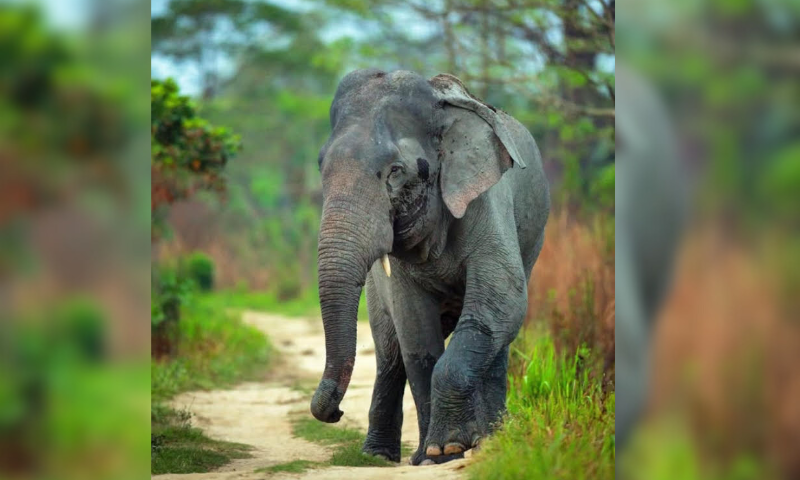
An environmental researcher in Guwahati commented, “It felt like nature had been left out of the Independence Day vision entirely.” The state is witnessing a surge in human-elephant conflicts, with recent images showing injured elephants straying into villages as their habitats shrink. Experts attribute this crisis to fragmented wildlife corridors resulting from agricultural expansion, infrastructure development, and tree loss. A conservation volunteer remarked, “Elephants aren’t invading our villages; we’ve invaded their homes.”
Poaching remains a significant issue. During ‘Operation Falcon’, authorities successfully dismantled six major rhino-poaching gangs linked to Myanmar, apprehending numerous individuals. While this enforcement is commendable, conservationists warn that “without community vigilance and cross-border cooperation, the poachers will always return.”
The reduction of wetlands, from Majuli’s beels to smaller lakes, is disrupting local fisheries and ferry operations. Conservationists blame embankments, siltation, and changing rainfall patterns, with a fisher leader from Lakhimpur asserting, “A dead wetland means dead livelihoods.” In addition, deforestation in Karbi Anglong and surrounding areas continues to threaten species reliant on uninterrupted forest cover, with forestry researchers noting that “even a 2% loss here has devastating effects.”
Experts advocate for urgent measures such as early-warning and patrol systems for wildlife conflicts, more robust anti-trafficking intelligence, comprehensive wetland restoration programs, reforestation efforts, and effective river-basin management for the Brahmaputra. An environmental policy analyst in Jorhat emphasized, “These aren’t luxuries; they’re survival measures.”
Although the successes of Operation Falcon have reportedly decreased poaching by 2025, analysts stress that sustainable enforcement requires long-term funding and ecological planning. A Kaziranga ranger pointedly stated, “You can’t arrest your way out of habitat loss.” Conservationists unanimously agreed that Sarma’s address was an opportunity lost to prioritize ecological security for Assam’s future. A senior activist from Digboi cautioned, “If we ignore nature now, it will ignore us later-and the cost will be unbearable.”
Original Source: https://nenow.in/north-east-news/assam/silence-on-the-wild-assams-independence-day-address-skips-alarming-wildlife-wetland-deforestation-crises.html
Category: Assam,Northeast News,Top News
Tags:
Publish Date: 2025-08-15 23:28:00