Unleash Awe: 5 Essential Facts Students Must Know for the Spectacular Perseid Meteor Shower 2025!

Each year, the night sky graces us with a stunning display that has captivated observers for millennia. The Perseid Meteor Shower, renowned for its vibrant streaks of light, promises an impressive cosmic show on the night of August 12-13, 2025. Despite the anticipated challenge posed by a bright moon, skywatchers can still enjoy the spectacle, even in the days following the peak. For students eager to witness this celestial event, there are several key points to consider.
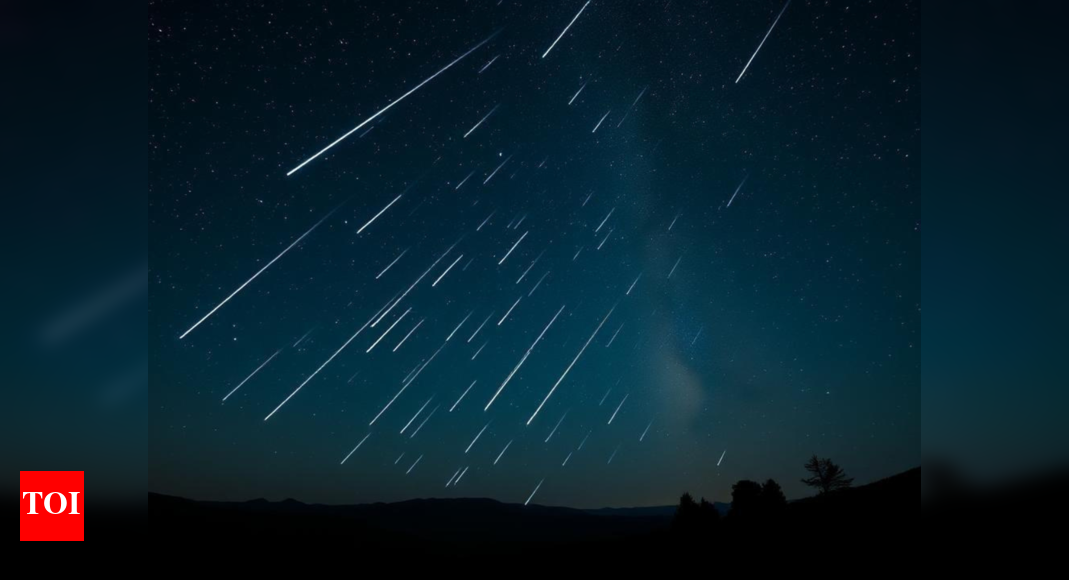
Meteor showers occur when Earth intersects the debris trail left by comets or asteroids. The Perseids are associated with Comet Swift-Tuttle, which sheds tiny rock fragments as it orbits the Sun. When these particles enter Earth’s atmosphere at speeds exceeding 59 kilometers per second, they ignite due to atmospheric friction, resulting in what we commonly refer to as “shooting stars.” The Perseids are especially notable for their high visibility and frequency, making them a favorite among stargazers in the Northern Hemisphere.
Typically, the Perseids peak each summer between August 11 and 13, coinciding with Earth passing through the densest segment of Swift-Tuttle’s debris. This year, while the Perseids usually generate 50 to 100 meteors per hour under ideal conditions, the bright waning gibbous moon-84-86% illuminated-might overshadow many fainter meteors, especially for observers in urban areas. Those in light-polluted settings may only witness 10 to 20 meteors per hour; however, they can still expect to see some bright fireballs and longer “earth-grazing” meteors cutting through the moonlight.
Adding to the astronomical allure, a rare conjunction of Venus and Jupiter will also occur in the pre-dawn sky, presenting a stunning sight as these two planets appear less than one degree apart-roughly the width of a pinky finger at arm’s length. This close alignment near the constellation Gemini allows even amateur astronomers to potentially spot Venus’s phases and Jupiter’s Galilean moons through binoculars or telescopes, enhancing the viewing experience.
The optimal viewing window for the Perseids stretches from midnight to dawn, particularly between 2 a.m. and 5 a.m., when the radiant point in Perseus is highest in the sky. If moonlight proves too disruptive on the peak night, stargazers may find success viewing a few nights later, as the moon’s brightness diminishes, although meteoric activity decreases rapidly after the peak. Ideal locations include dark, rural areas far from city lights, with higher altitudes such as hills or mountain overlooks offering clearer visibility, provided weather conditions cooperate.
For the best meteor shower experience, it’s advisable to forgo telescopes or binoculars, which restrict the field of view. Instead, gaze up after allowing your eyes to adjust to the dark for 15 to 30 minutes. Lying back on a reclining chair or a mat while facing northeast is a great way to maximize your comfort and enjoyment. Staying warm with a hot drink can also enhance the experience; the most remarkable meteor sightings often follow a period of patient observation.
Meteor showers have fascinated humanity for centuries, with records of the Perseids dating back to at least 36 A.D., when ancient Chinese astronomers documented their appearances. This long-standing tradition connects modern observers to generations past, all awed by the same celestial performances. Beyond the spectacle, meteor showers spark curiosity and invite reflection on our planet’s place within the universe. Watching the Perseids can ignite a passion for astronomy and provide a magical moment worth savoring. As August 13 approaches, prepare to witness this extraordinary event-find a quiet spot, bundle up, and let the Perseids illuminate your night sky.
Original Source: https://timesofindia.indiatimes.com/education/learning-with-toi/perseid-meteor-shower-2025-5-things-students-should-know-ahead-of-tonights-celestial-spectacle/articleshow/123269222.cms
Category :
Tags:
Publish Date: 2025-08-13 07:10:00