U.S. Takes a Tough Stance on Tariffs Deadline as EU Fights for a Breakthrough Deal: A Battle of Economic Titans!

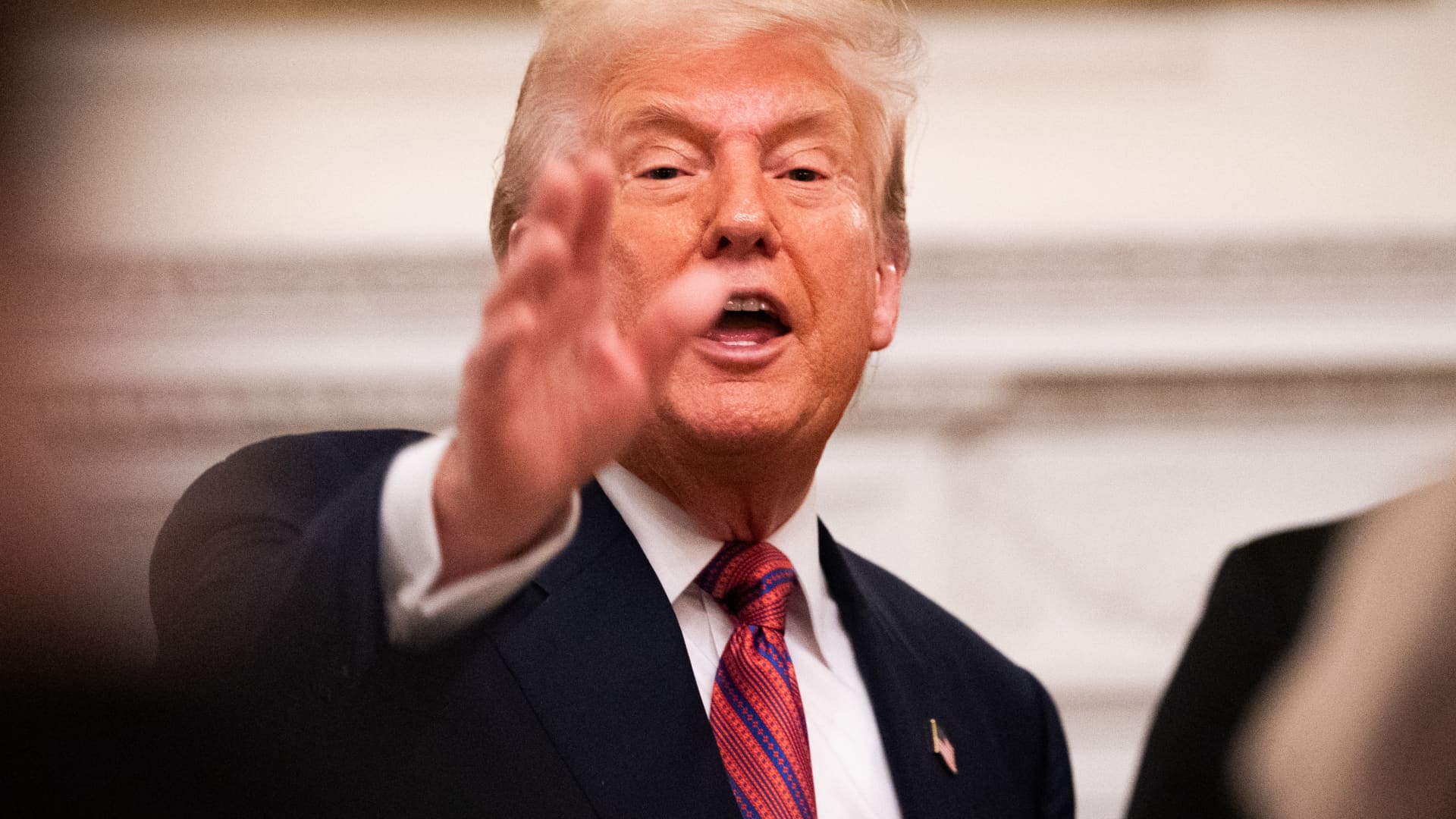
President Donald Trump recently addressed Republican senators during a White House dinner, reinforcing the U.S. government’s firm stance on increasing tariffs on European Union imports by the August 1 deadline. U.S. Commerce Secretary Howard Lutnick expressed optimism about the possibility of reaching a trade agreement with the EU, but stressed that the 30% tariff rate is non-negotiable. “That’s a hard deadline, so on August 1, the new tariff rates will come in,” Lutnick stated during a CBS News interview.
However, he indicated that discussions could persist beyond the deadline, remarking, “These are the two biggest trading partners in the world, talking to each other. I’m confident we’ll get a deal done.” He clarified that while dialogue can continue post-deadline, tariffs will take effect on August 1.
In response, the EU has signaled its intention to enact retaliatory measures against the U.S. should the higher tariffs be applied. Lutnick downplayed concerns that the EU might target strategic U.S. exports like Boeing aircraft and Kentucky bourbon, asserting, “they’re just not going to do that.” Ongoing negotiations aim to achieve a more favorable tariff rate, with the EU looking to establish a deal similar to the one made with the U.K., which features a baseline tariff of 10% with specific exceptions for car, steel, and aerospace imports.
Analysts are growing wary of the EU’s chances of reaching a comparable agreement, as the dynamics with the Trump administration differ significantly from those the U.K. enjoys. Trump has repeatedly criticized what he perceives as a lopsided trade relationship, a point the EU disputes. In 2024, total trade between the U.S. and the EU reached approximately 1.68 trillion euros ($1.96 trillion), with the EU posting a trade surplus in goods but a deficit in services, culminating in an overall surplus of roughly 50 billion euros.
Recent reports indicate Trump is advocating for a minimum tariff of 15% to 20% on EU imports, while maintaining a 25% duty on the auto sector. This move would disproportionately impact German car exporters.
As the White House adopts a tougher approach toward the EU, member states are reassessing how to respond to a potential 30% tariff, escalating from the current 10% that took effect earlier this year. An EU official noted a notable shift in sentiment regarding collective responses among member countries, with the exception of Hungary, whose leader Viktor Orban is a Trump ally.
Possible countermeasures under consideration include levies on U.S. imports valued at 21 billion euros, with actions on hold until August 6. Additionally, the European Commission is crafting a second wave of potential tariffs targeting trade worth 72 billion euros, affecting a range of products from clothing to agricultural goods.
Reports from the Wall Street Journal and Bloomberg suggest that a growing number of EU member states support invoking the bloc’s anti-coercion instrument, which would empower the European Commission to take vigorous retaliatory actions against the U.S. As negotiations unfold, the global trading landscape hangs in the balance, highlighting the significance of the U.S.-EU trade relationship in an increasingly tense economic climate.
Tags: US-EU Trade Relations, Tariffs, Donald Trump, European Union, Trade Policy, Economy.
Original Source: https://www.cnbc.com/2025/07/21/us-doubles-down-on-aug-1-tariffs-deadline-as-eu-battles-for-a-deal.html
Category :
Tags:
Publish Date: 2025-07-21 14:52:00