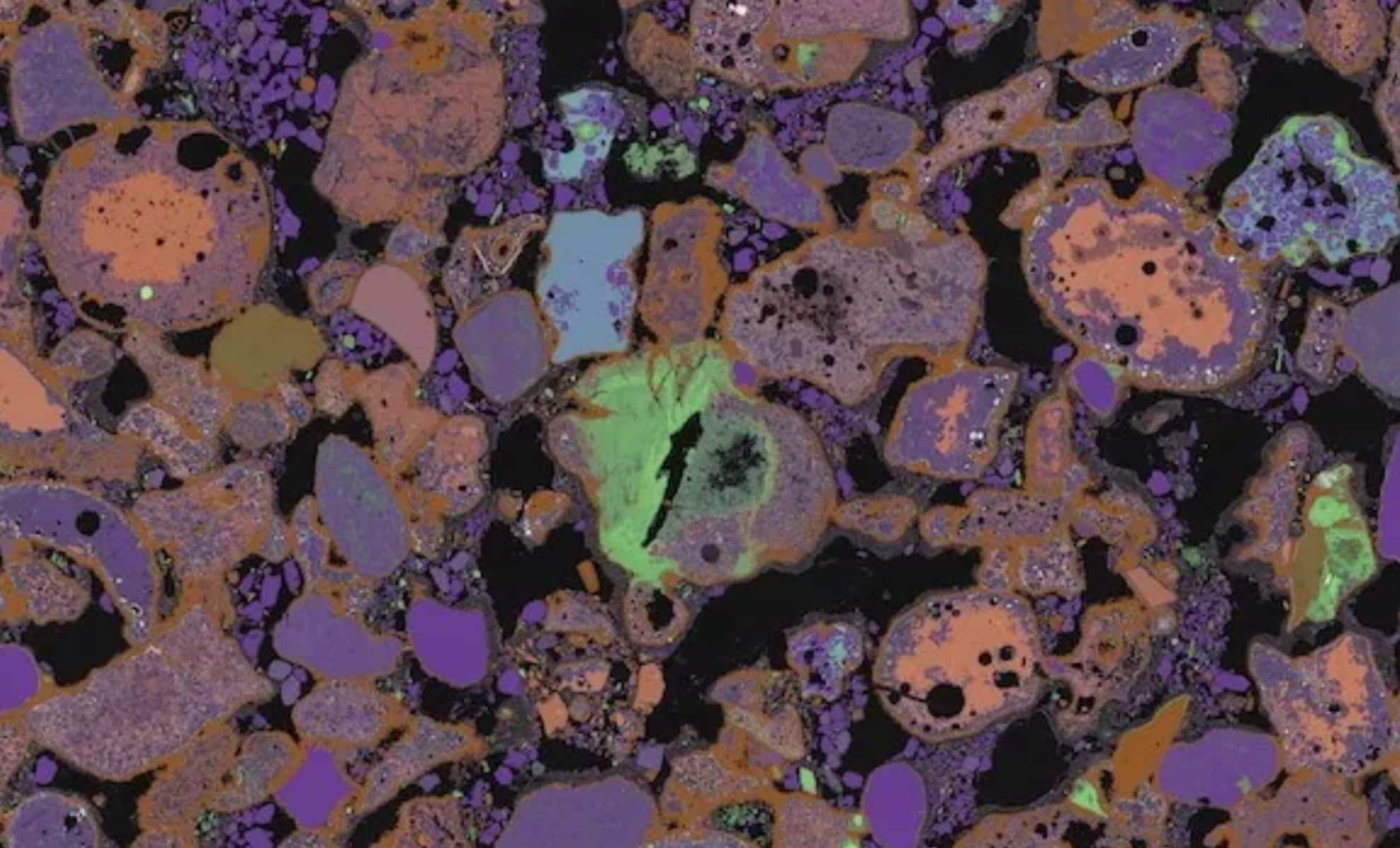

Researchers on the Cumbrian coast of England have made a groundbreaking discovery that could redefine our understanding of geological processes: a new type of rock formed from industrial waste. A recent study published in Geology reveals that steel slag, a byproduct of steel production, has solidified into rock within just 35 years-an astonishingly quick transformation compared to natural geological processes that normally span millions of years. This phenomenon raises critical questions about how human activities are altering Earth’s geological timeline.
The study highlights the emergence of a "glassy blue-gray" rock along the Derwent Howe shoreline, marking the beginning of what researchers have termed the "anthropoclastic rock cycle." This newly identified cycle mirrors the traditional rock formation processes but operates at an unprecedented speed, driven by the unique chemical properties of industrial waste that accelerate cementation. Dr. Amanda Owen from the University of Glasgow, who led the study, stated, “For a couple of hundred years, we’ve understood the rock cycle as a natural process that takes thousands to millions of years.” The findings suggest that human-generated materials can drastically shorten this timeline.
Steel slag is inherently suited for rapid rock formation due to its chemical composition, which promotes cementation in favorable environmental contexts. What typically requires extensive geological timeframes is occurring in mere decades when industrial byproducts are involved. Co-author Dr. John MacDonald noted the study offers a maximum timeframe of just 35 years for rock formation, challenging the perception of industrial waste as merely an environmental burden and instead framing it as a contributor to new geological formations.
The implications for coastal ecosystems extend beyond geology. As this newly formed rock replaces sandy environments critical for many marine species, concerns have arisen regarding its effect on local biodiversity. Dr. David Brown, another co-author, expressed urgency: “We don’t have as much time as we thought to find somewhere to put it where it will have minimal impact on the environment.” The hardening of slag can alter wave interactions along coastlines, affecting sediment drift and acceleration of erosion. Some studies even indicate that alkaline leachate from slag deposits could raise pH levels in nearby waters, reinforcing hostile conditions for sensitive marine species.
Despite the potential challenges, the research team is also investigating whether these anthropoclastic formations can serve as environmental solutions. The cementation process utilized in creating these rocks could absorb atmospheric carbon dioxide, posing the possibility that curated slag reefs might act as cost-effective carbon sinks. However, the potential leaching of harmful metals like chromium and vanadium necessitates thorough monitoring before any extensive application can be considered.
Going forward, the Glasgow team aims to expand their research through surveys of European slag shores, utilizing drones and ground-penetrating radar to monitor the evolution of these formations. This ongoing work may provide insights into controlling the anthropoclastic rock cycle for environmental benefit, further underscoring the dynamic interplay between human activity and natural processes. As we deepen our understanding of these rapidly forming rocks, we gain essential insights into our changing relationship with the Earth and the lasting impacts of industrial endeavors.
This discovery serves not only as a testament to human influence on geological timelines but also as a call to action for sustainable management of industrial waste, with the potential to redefine how we approach environmental issues.
Original Source: https://indiandefencereview.com/earth-new-rock-formed-unprecedented-speed/
Category :
Tags:
Publish Date: 2025-07-12 23:30:00