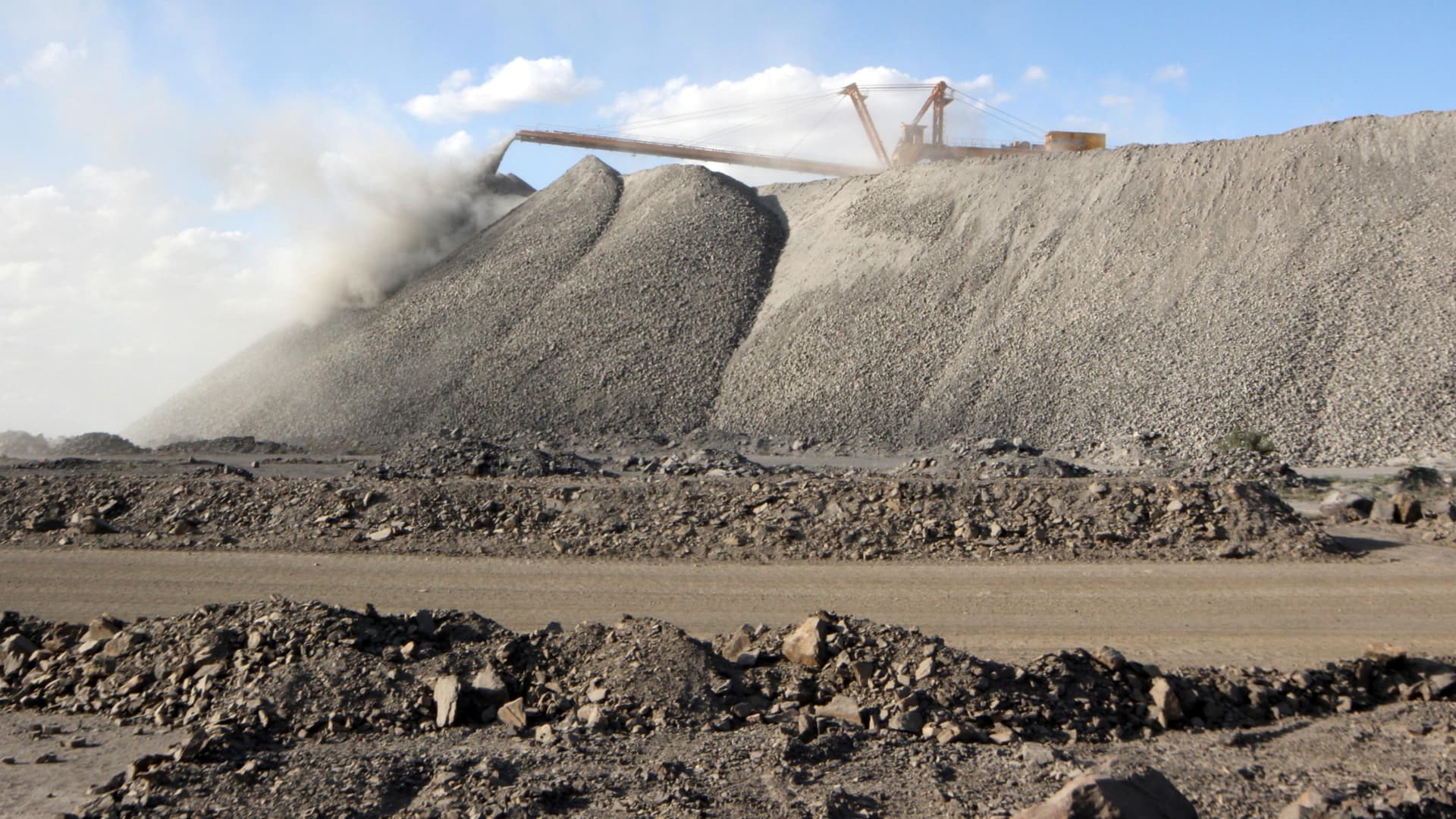

In April 2025, China implemented strict export controls on seven vital rare earth elements, including those essential for the high-performance magnets used in fighter jets, electric vehicles, and renewable energy technologies. These actions reveal not only China’s industrial might but also the alarming dependence of the United States and the global community on these critical minerals. By tightening the reins on exports, China has demonstrated its potential to weaponize this dependency, leaving the U.S. vulnerable.
This ongoing issue has been known for years, as the U.S. has recognized the fragility of its mineral supply chains, especially those heavily reliant on Chinese sources. Yet, both Democratic and Republican administrations have failed to act decisively. The repercussions of this laxity are now affecting both commercial and defense sectors, making it clear that a cohesive strategy is desperately needed.
Amid discussions in London, the U.S. and China recently established a new trade framework, allowing China to resume approving export licenses for rare earths over the ensuing six months. While U.S. officials hailed this as a breakthrough, the lack of transparency regarding trade-offs raises concerns. What commitments did the U.S. make, and how will this deal be enforced? As skepticism grows, the immediate impact is underscored by incidents like Ford’s production halt in Chicago due to a magnet shortage, highlighting the real-world consequences of supply chain disruptions.
The export licensing process imposed by China is seen as invasive, requiring detailed disclosures from companies about their production processes, end-use applications, and customer identities. Executives have equated this to "official information extraction," warning that the withholding of sensitive information could lead to significant delays, particularly alarming for firms involved in the defense sector.
The U.S. has been aware of its dependence on rare earth minerals since as early as 2010, when China notably cut off exports to Japan over a territorial dispute. Despite a 2014 WTO ruling against China’s restrictive practices, the U.S. assumed that legal victories would deter future manipulation. During the Trump administration, rare earths were identified as a critical industry, yet tariffs in 2018 allowed them to escape scrutiny, signaling ongoing dependence. President Biden has made strides through various executive orders and initiatives, yet progress has been stunted due to permitting delays and inconsistent commitments from allies.
The discourse surrounding rare earths has escalated, as exemplified by comments from European Commission President Ursula von der Leyen at the recent G7 summit, where she accused China of weaponizing its resource control. The resulting G7 Critical Minerals Action Plan seeks to bolster standards, collaborate on resource management, and promote sustainability among member nations, indirectly targeting China’s dominance.
China’s grip on rare earth mining is formidable, controlling approximately 70% of global supply and over 90% of refining capacity. The Chinese government has strategically invested in mining and refining infrastructure worldwide, outpacing U.S. initiatives that have struggled to gain momentum. While American efforts exist, such as the Mountain Pass and Round Top sites, they fall short of addressing the full supply chain challenges.
The recent six-month reprieve in export restrictions is not a sustainable solution. Instead, it serves as a test of the U.S.’s ability to respond strategically or risk falling back into complacency. Ensuring national security and economic stability regarding critical minerals requires a long-term commitment to developing a robust, independent supply chain. This involves international partnerships, investment in new technologies, and a unified strategy that transcends political cycles.
The stakes are high. If the U.S. can unify its approach, it could leverage its relationships to mitigate dependence on China. However, failure to act decisively could enhance China’s geopolitical leverage, risking significant consequences for both the U.S. and its allies. The time for action is now.
Categories: Technology, Trade, Geopolitics
Tags: Rare Earth Elements, China, U.S. Supply Chain, Critical Minerals, Geopolitical Strategy
Original Source: https://www.cnbc.com/2025/06/29/us-china-rare-earth-minerals-metals-geopolitics-power.html
Category :
Tags:
Publish Date: 2025-06-29 19:54:00