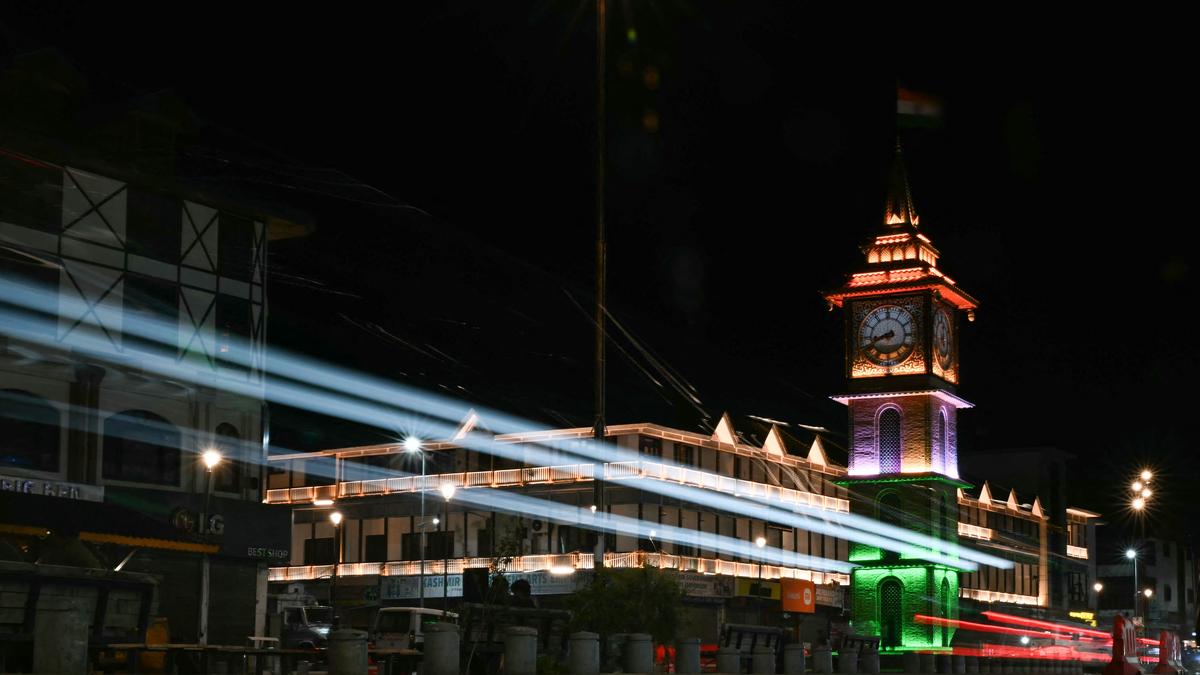

Clock towers, iconic structures that have adorned cities across India, emerged during the British colonial period as symbols of power and authority. Their mechanical clocks were once scarce, and these towers served not only to tell time but also to reflect a captivating blend of architectural styles, from Gothic to Mughal. Today, they continue to stand tall, accessible to all, irrespective of caste, creed, or gender. Here are some notable and still functional clock towers across the country.
The Ghantaghar in Udaipur, constructed in 1887, serves as the city’s first public clock tower and has become a beloved tourist destination. Its inception stemmed from a community dispute; rather than impose fines, local leaders decided to build a clock tower as a unifying symbol of peace. The tower also commemorates the Royal Family of Mewar. Interestingly, before its construction, locals relied on jal ghadis, or water clocks, to tell time.
In Lucknow, the Hussainabad Clock Tower is a remarkable 221-foot-tall structure showcasing the beauty of British architecture. Completed in 1881 during the reign of Nawab Nasir-ud-Din Haider, its stunning design features intricate details and a dome-shaped top. Legends suggest that its dome rotates during earthquakes, adding to its mystique. This clock tower harmonizes Mughal and Victorian architectural styles, although it stopped functioning in 1984. Following a restoration in 2010 by Paritosh Chauhan and Akhilesh Agarwal, the clock’s comforting chimes returned to the city. Notably, it remains the tallest clock tower in India, inspired by London’s Big Ben.
Moving to Secunderabad, the Secunderabad Clock Tower was constructed around 1860 and completed in 1896, serving as the city’s timekeeper when wristwatches were a rarity. Standing at 120 feet, this historic structure was commissioned by the British, with its clock donated by businessman Dewan Bahadur Seth Lachmi Narayan Ramgopal. A proposal for demolition in 2003 raised concerns among residents, but the tower was ultimately restored in 2006, preserving a piece of Secunderabad’s heritage.
In Mumbai, the Chhatrapati Shivaji Maharaj Terminus, formerly known as Victoria Terminus, stands as a splendid example of Victorian Gothic Revival architecture infused with Indian elements. Built between 1887 and 1888, it features soaring turrets and pointed arches, defining Mumbai as the “Gothic City.” Its clock, illuminated at night by mercury light bulbs behind acrylic sheeting, plays a crucial role in the city’s historical landscape. Recognized as a UNESCO World Heritage Site in 2004, the terminus continues to be a vital hub for rail travel.
Lastly, the Royapettah Clock Tower in Chennai, erected in 1930 in the Art Deco style, remains one of the city’s unique standalone clock towers. Amid the bustling city life, it serves as a nostalgic reminder of Chennai’s colonial past. Once a reliable timekeeper for the public, it now invites reflection on an era when such structures were integral to daily life. Historically, British officers would fire cannonballs at 8 p.m. to mark time, an intriguing fact that adds to its heritage.
From Udaipur’s Ghantaghar to Mumbai’s Chhatrapati Shivaji Maharaj Terminus, these clock towers are more than just time indicators; they weave together tales of history, culture, and community, inviting both locals and tourists to pause and reflect.
Original Source: https://www.thehindu.com/children/iconic-clock-towers-of-india/article69686468.ece
Category : Children
Tags:
Publish Date: 2025-06-13 10:00:00