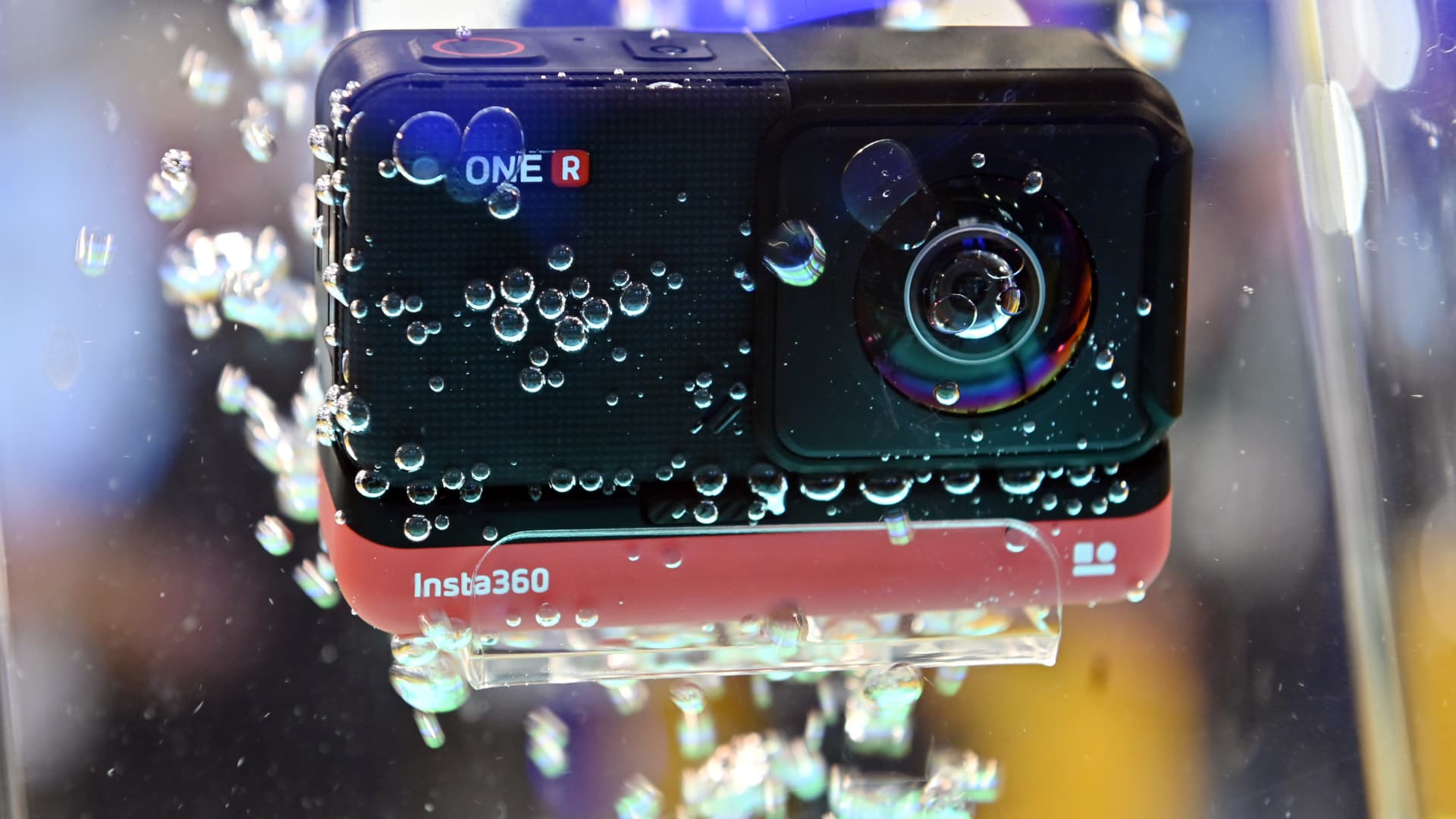

Chinese companies are on a robust trajectory of global expansion, with Insta360 at the forefront, reflecting a notable trend among emerging tech firms. On January 8, 2020, the Shenzhen-based camera manufacturer, recognized for its 360-degree devices, made headlines by raising 1.938 billion yuan ($270 million) in its listing on Shanghai’s STAR Market under the name Arashi Vision. This impressive move saw its shares skyrocket by 274%, elevating the company’s valuation to 71 billion yuan ($9.88 billion).
Insta360’s fiscal health underscores its global aspirations, with the United States, Europe, and mainland China each contributing over 23% to its revenue. Since launching in Apple Stores in 2018, the company has steadily established a diverse portfolio of cameras, paired with innovative video editing software. Co-founder Max Richter expressed optimism about sustaining U.S. demand despite geopolitical tensions, emphasizing their commitment to consumer-centric research and development.
The Shanghai STAR Market, inaugurated in July 2019, facilitates growth for tech companies while implementing stringent investor guidelines to mitigate speculative investments. A report indicated that only 12% of companies on the STAR board reported at least half of their revenue from international markets. This figure increased to over 14% by 2024, signaling a shift as more Chinese firms venture beyond domestic borders. King Leung, of InvestHK, highlighted this transitional phase, noting that companies like CATL are leading the charge, but many capable tier-two and tier-three firms are also primed for global engagement.
Additionally, Roborock, another STAR board success story, plans to list in Hong Kong, with over half of its revenue generated from international sales. The company’s recent showcase at the Consumer Electronics Show in Las Vegas featured an innovative robotic vacuum equipped with a robotic arm, underscoring its commitment to cutting-edge technology and market relevance.
As tensions between China and the U.S. escalate, many Chinese brands remain undeterred. Hisense, a prominent home appliance manufacturer, aims to become the top seller of televisions in the U.S. within two years. Similarly, Bc Babycare recently announced its official entry into the U.S. market, using its global supply chain as a buffer against potential tariff disruptions.
Chinese companies have increasingly targeted international markets, especially as domestic growth has plateaued post-pandemic. According to Charlie Chen of China Renaissance Securities, these firms are evolving into their third phase of global expansion: establishing standalone international brands with local teams rather than merely manufacturing for foreign labels or partnering with outside businesses.
Insta360, primarily manufacturing in Shenzhen, has strategically placed offices in Berlin, Tokyo, and Los Angeles. Richter noted that the Los Angeles office focuses on marketing and services, having successfully hosted its first significant offline product launch in New York’s Grand Central Terminal.
Looking ahead, Chen anticipates a diversification in product offerings from Chinese firms. While home appliances and electronics have dominated, there’s a palpable shift towards toys, with the Beijing-based company Pop Mart making waves in the global toy market. Its Labubu figurine series has gained widespread popularity, bolstered by impressive sales figures-4.49 billion yuan domestically in 2021 and exceeding 5.1 billion yuan overseas in 2024, a staggering 373% increase year-over-year.
With a growing number of U.S. locations, Pop Mart exemplifies Chinese companies’ adeptness in character-driven products, particularly appealing to consumers during periods of economic uncertainty. As these firms continue to leverage innovation and market insights, their global expansion narratives are likely to resonate strongly in the coming years.
Original Source: https://www.cnbc.com/2025/06/12/trade-tensions-not-stopping-chinese-companies-from-pushing-into-us.html
Category :
Tags:
Publish Date: 2025-06-12 11:36:00