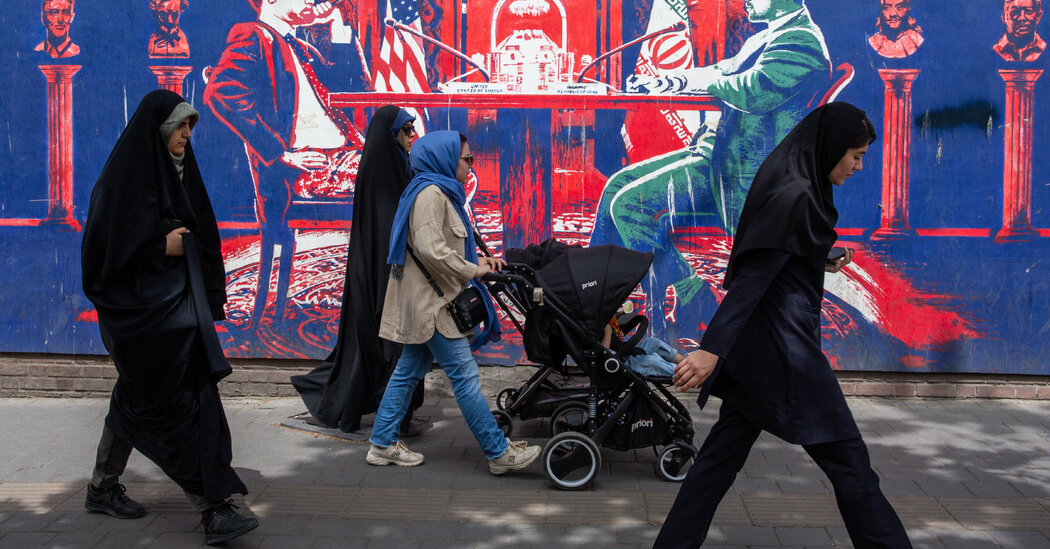

The ongoing standoff between the United States and Iran hinges on a pivotal question: Will the U.S. allow Iran to continue its nuclear fuel production, or will the fear of war in the Middle East outweigh the risks? President Trump and his special envoy, Steve Witkoff, face a tough negotiation landscape as Iran firmly asserts its right to enrich uranium, threatening a deal that Trump had previously viewed as imminent.
This situation mirrors the complexities that President Barack Obama navigated a decade ago. Obama’s administration ultimately concluded that any viable agreement would require Iran to maintain a level of nuclear fuel production, leading to the controversial 2015 accord that was met with bipartisan opposition in Congress. That deal managed to contain Iran’s nuclear ambitions for three years until Trump withdrew the U.S., prompting Iran’s compliance to unravel.
Now, Trump finds himself revisiting options that initially confounded his predecessor. Like Obama, he faces strong resistance from Iranian hawks in the U.S. and from Israeli Prime Minister Benjamin Netanyahu, who previously urged Congress to reject Obama’s agreement. Recently, Netanyahu has advocated for a preemptive strike against Iran’s nuclear facilities, intensifying the stakes.
“There is a bit of déjà vu here,” remarked Wendy Sherman, the lead negotiator of the 2015 agreement. She highlighted the ongoing pressure from U.S. lawmakers and Israeli officials advocating for Iran’s complete nuclear dismantlement, a challenge they also faced. Sherman expressed concern over the negotiations, emphasizing that Iran is unlikely to budge on its enrichment program.
In a recent address, Trump acknowledged the difficulty in negotiations, expressing frustration with Iran’s demands, particularly its insistence on maintaining enrichment capabilities. Witkoff has proposed a compromise allowing Iran to enrich at low levels while establishing a regional consortium to provide nuclear fuel-a plan that Iran’s leaders have dismissed unless it occurs on their territory.
Despite the challenges, neither side is openly declaring the talks a failure, given the risks of escalating tensions. Recently, negotiations resumed in Oman, where the focus remained on avoiding deadlock. Iran’s Deputy Foreign Minister Majid Takht-Ravanchi reiterated in a state news interview that enrichment must occur in Iran, declaring it a “red line.”
Trump is caught in a precarious position as Iran’s nuclear capabilities have expanded since the last deal, with estimates suggesting they could develop enough fuel for multiple nuclear weapons in the short term. The situation is further complicated by Israel’s vulnerabilities following recent missile attacks, which Netanyahu argues presents a critical window for a military action against Iran’s nuclear sites.
At Camp David, Trump and key advisors, including Witkoff and Secretary of State Marco Rubio, met to discuss available diplomatic and military strategies, though the outcome of those discussions remains unclear. Trump has had ongoing dialogues with Netanyahu, aimed at keeping Israel informed while also appealing for restraint.
The rift within Trump’s own party remains apparent, with factions arguing over how to approach Iran: one side advocating for complete disarmament, and the other prioritizing the avoidance of another Middle Eastern conflict. As Iran continues its nuclear activities, the urgency for a solution grows, with inspectors noting that its centrifuges remain operational and active.
In this high-stakes negotiation, the paths forward for Trump and Iran are fraught with complexity, with the potential for both diplomatic breakthroughs and dangerous escalations hanging in the balance.
Original Source: https://www.nytimes.com/2025/06/10/us/politics/trump-iran-nuclear-talks.html
Category : United States International Relations,United States Politics and Government,International Atomic Energy Agency,Trump, Donald J,Witkoff, Steven,Khamenei, Ali,Grossi, Rafael,Ravanchi, Majid Takht,Iran,Nuclear Energy,Nuclear Weapons
Tags:
Publish Date: 2025-06-11 06:52:00