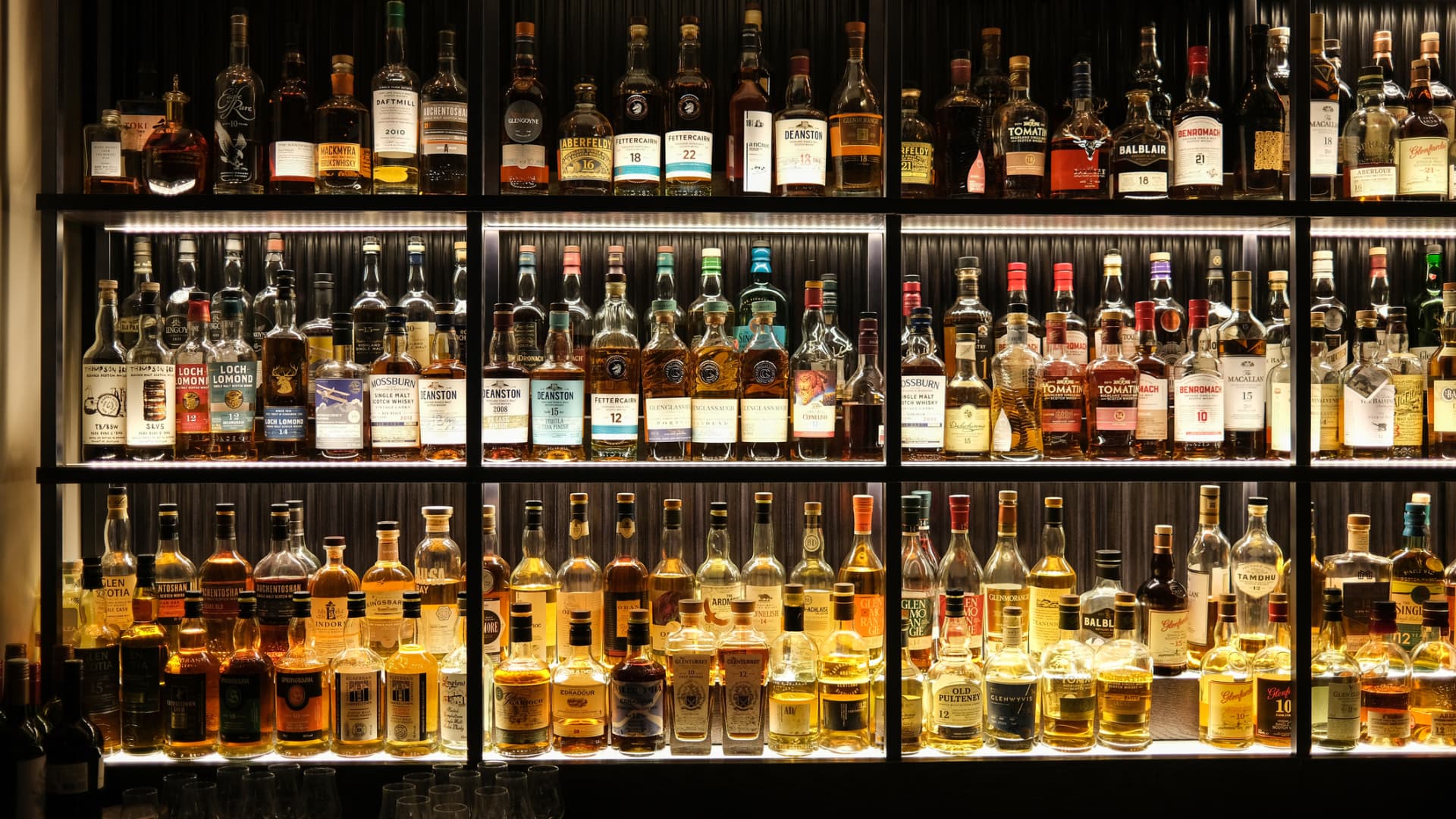

Global spirit manufacturers are facing a challenging landscape as tariffs and brand boycotts complicate shifting drinking habits. Rémy Cointreau, a prominent French cognac producer, has joined the ranks of industry giants like Diageo and Pernod Ricard in retracting its sales forecasts due to increasing economic and trade uncertainties. In a recent statement, the company highlighted a continued lack of visibility in macroeconomic conditions and geopolitical tensions, particularly surrounding U.S.-China tariff policies. This reassessment follows a notable 22% decline in full-year sales for Rémy Cointreau’s cognac division, primarily driven by reduced consumption in the U.S. and “complex market conditions” in China.
Cognac brands, particularly Rémy Martin, have felt the brunt of U.S.-Sino tensions, with LVMH reporting a 17% decrease in sales of its Hennessy brand in the first quarter. This downturn extends beyond cognac, as the overall spirits market grapples with rising trade barriers that diminish demand. LVMH’s wine and spirits segment now ranks as the weakest among its luxury divisions, while Diageo has noticed considerable declines in brands such as Tanqueray, Gordon’s, and Smirnoff during the same period, despite a surge in Irish stout Guinness.
The current situation has prompted a reevaluation of the spirits market in the U.S., where tariffs add a layer of uncertainty. Spirits and wines rely heavily on local production to meet legal requirements, making them particularly vulnerable to import tariffs. Analyst Sanjeet Aujla from UBS stated that the geographical nuances, or terroir, involved in spirits production increase their exposure to geopolitical tensions. Rémy Cointreau estimates that existing tariffs could cost the company around €65 million ($55 million) after taking mitigation measures into account. Diageo projects that approximately 25% of its business will be affected by these duties.
In contrast, beer production appears less affected, with major brewers like AB InBev, Heineken, and Carlsberg maintaining full-year guidance amid brewing trade divisions. This difference signifies that wines and spirits are also at risk from potential brand boycotts, as consumers opt for locally produced alternatives for political reasons.
These tariff impacts coincide with a general slow down in the spirits sector following years of robust growth during the pandemic. Consumers, who spent more on premium alcohol during lockdowns, are now approaching their purchases with caution due to changing economic conditions. With many still holding onto supplies accumulated during the pandemic, individuals may now shy away from investing in high-end spirits.
Additionally, the market’s evolution is influenced by rising trends in health and wellness, with increased numbers of consumers becoming “sober curious” or experimenting with lower alcohol consumption. This shift has driven many producers to introduce low- and no-alcohol products. The emergence of weight-loss drugs, which have shown promise in reducing alcohol cravings, could further challenge traditional spirits consumption.
As analysts debate the implications of the current downturn, opinions diverge on whether the demand slump is cyclical or structural. RBC Capital Markets analyst James Edwardes Jones noted the fluctuating nature of the market as it navigates both economic headwinds and shifts in consumer behavior. While some argue the current issues are mainly cyclical, others note that when these pressures subside, growth in the U.S. spirits industry may settle at 1-2%—lower than the historical average of 4-5%. Thus, the spirits industry stands at a crossroads, grappling with immediate challenges while potentially redefining future consumer engagement.
Original Source: https://www.cnbc.com/2025/06/07/diageo-pernod-remy-global-spirit-makers-face-cocktail-of-challenges.html
Category :
Tags:
Publish Date: 2025-06-07 09:03:00