Unlocking Emotions: Discover How the New Tear Test Kit Detects Diseases with Insightful Precision

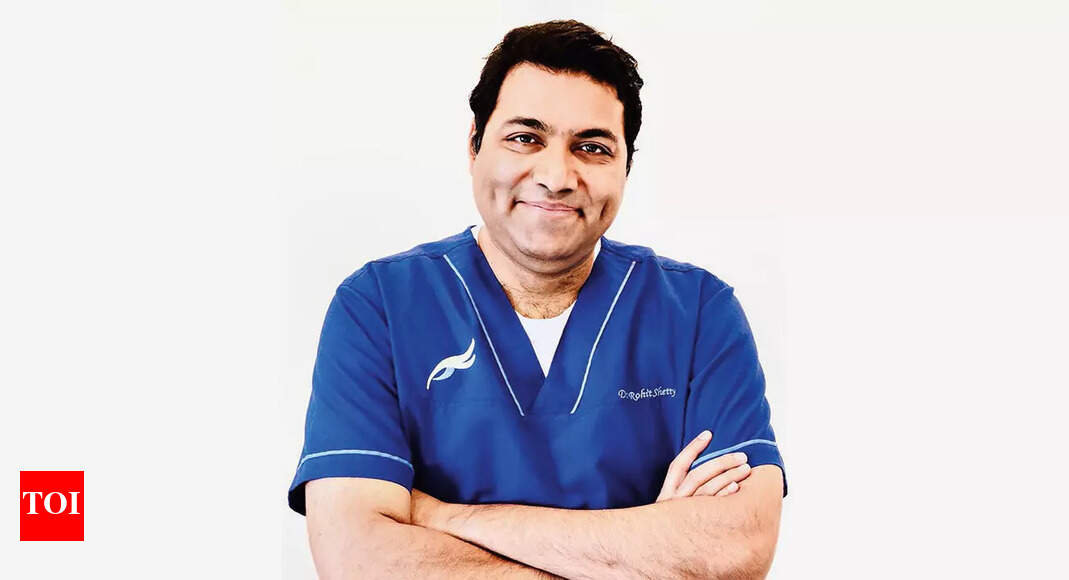
Tears may hold the key to groundbreaking advancements in medical diagnostics, with research emerging from Narayana Nethralaya in Bengaluru. Dr. Rohit Shetty, the director of both the eye hospital and GROW Research Laboratory, shared insights on how tear analysis is set to revolutionize healthcare. This innovative approach underscores the potential of tears to serve as non-invasive biomarkers for various health conditions, ranging from cancer to Alzheimer’s disease.
Tears contain crucial inflammatory markers that often signal underlying health issues before visible symptoms occur. “Tears can act as an early warning system, enabling the detection of diseases like rheumatoid arthritis long before traditional imaging might reveal any abnormalities,” Dr. Shetty explained. This non-invasive diagnostic method stands out not only for its efficiency but also for its affordability compared to standard tests, making it accessible to broader populations.
The procedure for tear sample collection is straightforward; sterile paper is used to absorb the tears, and results can be processed within 90 minutes. Dr. Shetty anticipates that after completing government certifications, tear-based diagnostic kits will be available for commercial use by February 2026.
Beyond rheumatoid arthritis, the diagnostic potential of tear fluid extends to Alzheimer’s disease. Current predictive measures rely heavily on MRIs, which only reveal changes once the disease has progressed. However, researchers at Narayana Nethralaya have identified the presence of Tau proteins in tears, which are specifically indicative of Alzheimer’s. “Early detection of these proteins is vital to prevent irreversible brain damage,” Dr. Shetty emphasized, highlighting ongoing collaborations with neurologists for further exploration.
Tear analysis is also being applied to other cancers, including breast, ovarian, and urinary cancers, where researchers are studying whether certain markers can aid in early detection. Additionally, the technique is proving useful in managing conditions like dry eyes and diabetes. As myopia, or shortsightedness, becomes increasingly prevalent among children in India, tear tests are being explored as tools for predicting susceptibility to this condition by evaluating dopamine levels in tear fluid.
“Myopia is reaching epidemic levels globally. Tear analysis can identify children with low tear dopamine levels, who may benefit from increased sunlight exposure to potentially mitigate their risk,” Dr. Shetty noted. Encouraging children to spend at least two hours outdoors daily might significantly reduce their chances of developing myopia, he added.
Another breakthrough from this research is its potential application in addressing retinopathy of prematurity (ROP), a leading cause of blindness in preterm infants. By detecting specific biomarkers in the tears of these infants, researchers aim to identify those at risk for progression to severe ROP, paving the way for community-based preventive initiatives.
Given the rising prevalence of dry eye disease-which could affect half of urban Indians by 2030-tear analysis presents a compelling avenue for understanding and treating this condition more effectively. Traditionally, treatments for dry eyes have been general and often ineffective, but targeted tear analysis can enable a more tailored approach. “By identifying elevated immuno-inflammatory markers in tears, we can provide precise treatments that cater to individual patient needs,” Dr. Shetty concluded.
As research continues, the promise of tear-based diagnostics could transform several aspects of healthcare, providing early detection capabilities, reducing costs, and improving patient outcomes. This innovative approach could indeed make a significant mark on the future of personalized medicine.
Original Source: https://timesofindia.indiatimes.com/life-style/health-fitness/health-news/tears-dont-just-reveal-your-emotions-new-tear-test-kit-can-detect-several-diseases-too/articleshow/121599576.cms
Category :
Tags:
Publish Date: 2025-06-04 05:00:00