Transformative Impact: How Trump’s ‘Big Beautiful’ Tax Bill Could Revolutionize the Senate Landscape

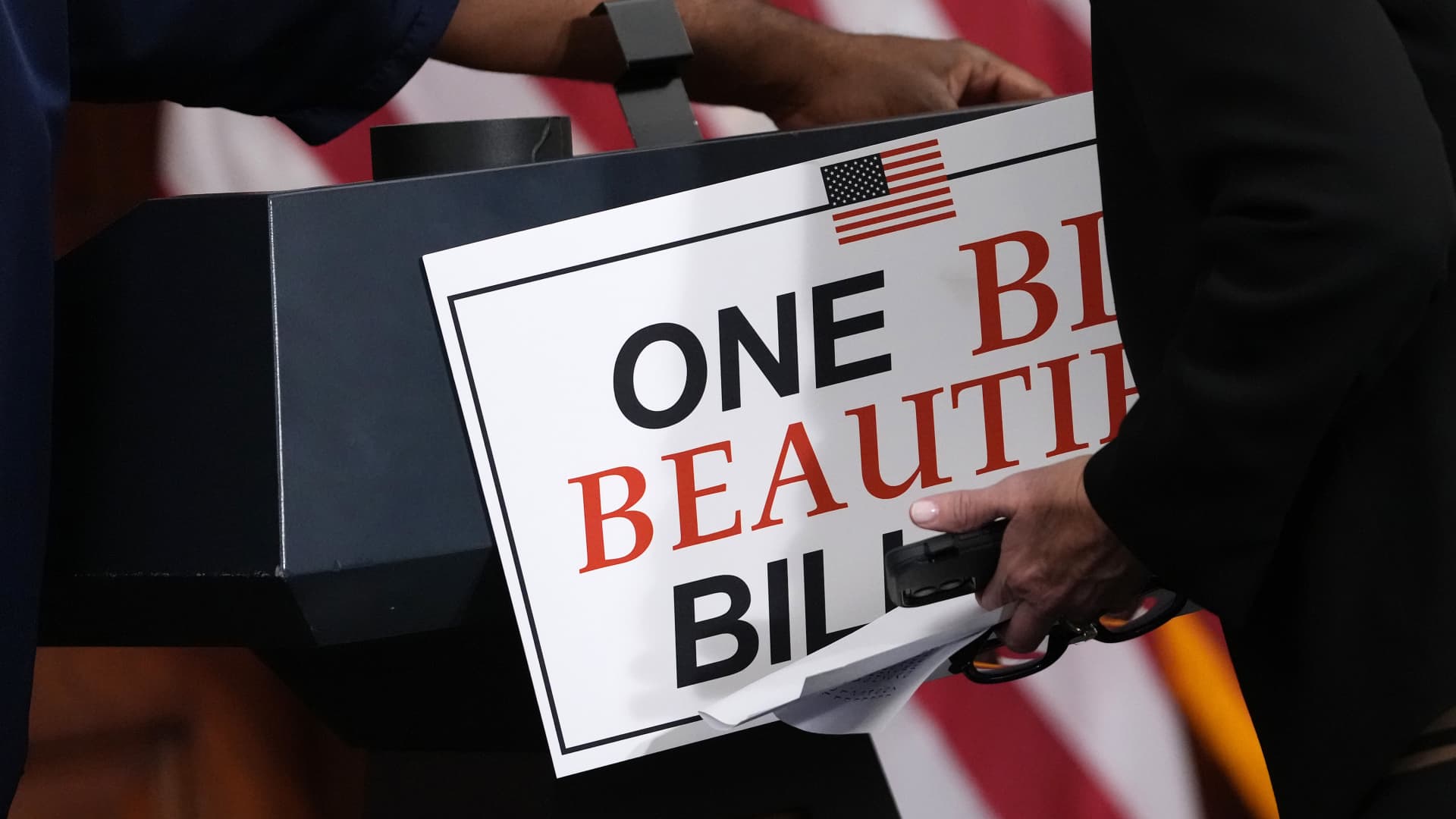
On May 22, 2025, House Republicans passed a sweeping tax and spending bill, reflecting several of President Donald Trump’s key priorities. Following a press conference at the U.S. Capitol, where a sign promoting the initiative was removed, attention now turns to potential changes in the Senate as GOP lawmakers aim to finalize the “One Big Beautiful Bill Act” by the Fourth of July.
If the bill withstands Senate scrutiny in its current form, it would permanently cement Trump’s 2017 tax cuts, introduce new tax breaks for tip income and overtime pay, and provide additional support for older Americans among various other provisions. However, the legislation also proposes significant spending cuts to assistance programs for low-income families, such as Medicaid and the Supplemental Nutrition Assistance Program (SNAP).
Howard Gleckman, senior fellow at the Urban-Brookings Tax Policy Center, noted that while the Senate version of the bill may not differ significantly from the House’s proposal, contentious debates are likely, especially concerning the Medicaid provisions. As negotiations continue, experts will be closely monitoring fiscal concerns that might delay the process.
Republicans are currently leveraging a budget reconciliation process that circumvents the Senate filibuster, allowing them to pass the bill with a simple majority. However, some GOP senators express worries regarding the financial implications of the House-approved legislation. Senator Ron Johnson, R-Wisconsin, recently stated on CNN’s ‘State of the Union’ that “we have enough to stop the process until the president gets serious about spending reduction and reducing the deficit.”
With estimates from the Congressional Budget Office suggesting that an earlier version of the bill could contribute to a $3.8 trillion increase in the deficit over the next decade, concerns regarding fiscal responsibility loom large. Other estimates indicate the House-passed reconciliation package could range from $2 to $3 trillion over the same period. Following Senate approval, the House would also need to endorse any modifications made, presenting additional challenges given their slim Republican majority.
One major debate point throughout the House discussions was the $10,000 cap on the federal deduction for state and local taxes, or “SALT,” which is set to expire in 2025. Prior to the enactment of the Tax Cuts and Jobs Act (TCJA) of 2017, taxpayers could claim unlimited deductions on state and local income and property taxes. The House’s approval of a $40,000 SALT deduction offers a temporary solution, slated to apply in 2025 while phasing out for earners above $500,000. Yet, analysts like Alex Muresianu from the Tax Foundation suggest the final figure may land closer to the current $10,000 limit following Senate negotiations.
Additionally, policymakers may revisit the child tax credit during Senate deliberations. The House bill aims to permanently maintain the maximum credit of $2,000 established by the TCJA, which is poised to decrease to $1,000 after 2025. As proposed, the maximum credit would increase to $2,500 from 2025 to 2028 but then revert to $2,000, adjusted for inflation. However, some senators, including Josh Hawley, R-Mo, have advocated for a more substantial tax break to better support families. With concerns that the existing tax breaks disproportionately favor higher earners, expectations are rising for the Senate to address these disparities.
As lawmakers prepare for further discussions, the deliberations on various components of this substantial tax and spending initiative will be pivotal in shaping fiscal policy moving forward.
Original Source: https://www.cnbc.com/2025/06/01/trump-big-bill-change-senate.html
Category :
Tags:
Publish Date: 2025-06-01 15:30:00