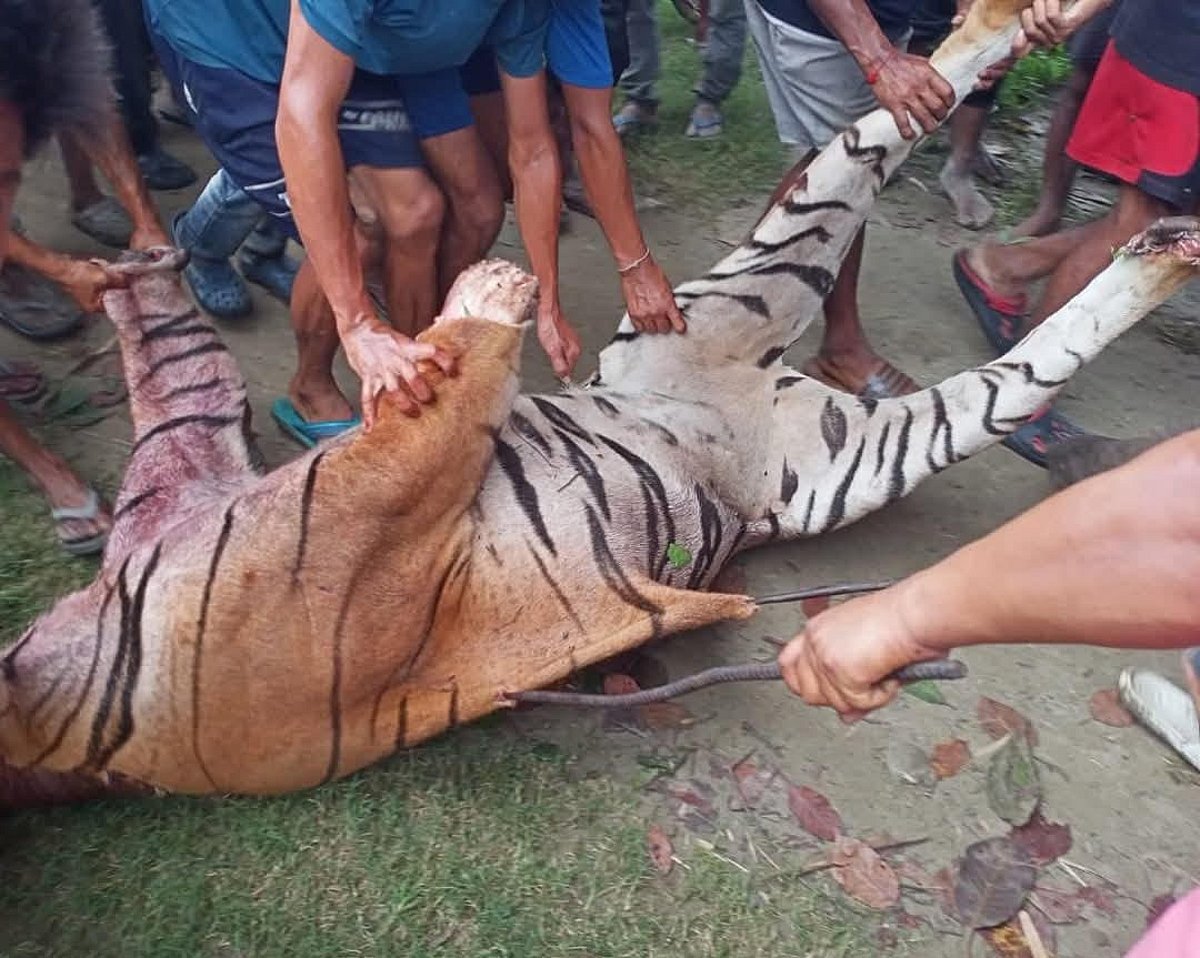

The brutal killing and dismemberment of a Royal Bengal Tiger by a mob in Assam’s Golaghat district underscores significant shortcomings in conservation efforts, even as the state’s tiger population grows. This incident, described as a revenge killing, raises alarms about the safety of tigers that wander into nearby villages from protected areas. Without intervention, this human-animal conflict could escalate, threatening the extinction of tigers in Assam.
Authorities are investigating whether the Forest Department and local administration failed to follow the Standard Operating Procedure (SOP) issued by the National Tiger Conservation Authority, which provides guidance for managing incidents involving tigers that stray into human-populated areas. Those responsible for the tiger’s killing must face justice, and accountability should extend to officials if any negligence is uncovered during the investigation.
The SOP aims to ensure the proper handling of straying tigers, minimizing the risk of harm to humans, tigers, livestock, and property. It outlines essential steps to take in the field, applicable to all forest formations, including tiger reserves, and directly relates to the village where the incident occurred, despite the tiger’s origin still being unknown. If tigers kill livestock, injure humans, or frequently stray near settlements, traps with minimal disturbance are to be set for capture.
The SOP also emphasizes coordinating with the district’s authorities-such as the collector, magistrate, and police-to maintain order and prevent mob behavior, while educating them on human-tiger conflicts. Additional SOP provisions include chemical immobilization of a tiger if trapping fails, with guidelines on releasing a healthy animal back into a suitable habitat after proper monitoring.
Local officials reported that villagers branded the tiger a “man-eater” following suspicions of it killing a villager. This situation highlights a troubling lack of understanding among residents regarding their role in protecting tigers, emphasizing the need for better cooperation with forest authorities and police. A thorough review of current approaches to wildlife conservation and human-wildlife conflict is essential to raise awareness and develop new strategies.
Awareness programs need to be more participatory, allowing the community to engage actively rather than passively receive information. Communication is crucial to ensure participants grasp the guidelines for conservation and feel empowered to act on them. Misconceptions persist that the Forest Department solely bears the responsibility for wildlife protection while community involvement is overlooked. Bridging this gap is vital to enhancing awareness of conservation and community roles in reducing conflicts.
Disseminating key SOP guidelines can enable villagers to effectively report straying tigers, positioning them as crucial stakeholders in conflict mitigation. Human encroachment into diminishing wildlife habitats and shrinking natural resources drives tigers into human areas in search of food. The ongoing impacts of climate change, habitat fragmentation, and illegal logging further exacerbate these conflicts. Addressing these pressing issues and evolving new conservation awareness strategies is a critical priority for the state.
Original Source: https://www.sentinelassam.com/more-news/editorial/strategizing-wildlife-conservation
Category: Editorial
Tags:
Publish Date: 2025-05-24 10:44:00