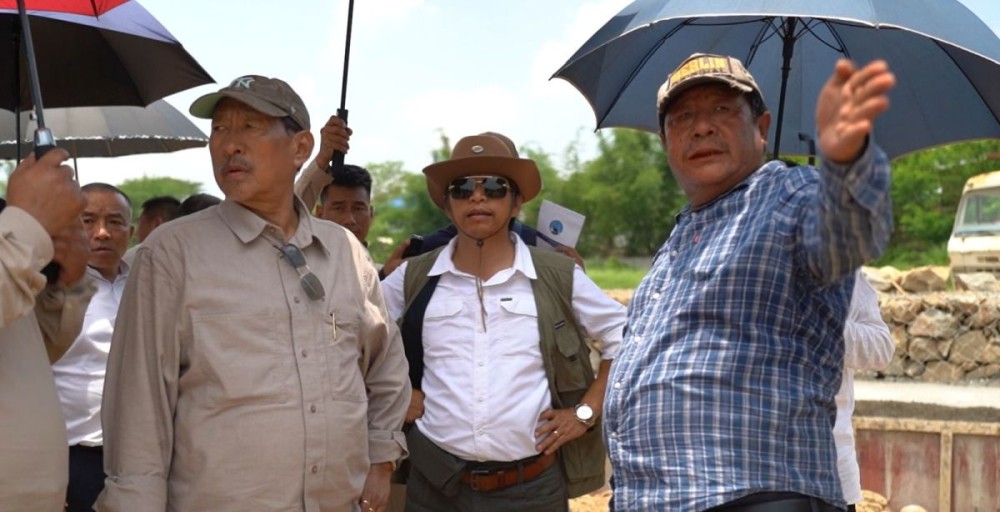

The Committee on Environment and Climate Change of the Nagaland Legislative Assembly is taking significant steps to address environmental issues in the state. Chairperson MLA Achumbemo Kikon announced a ban on riverbed mining and the dumping of septic waste into local rivers during a press conference following an inspection of vulnerable sites in Dimapur and Chümoukedima on May 23. The announcement comes amid growing concerns over environmental degradation in the region.
Kikon, along with only two other members of the seven-member committee, conducted a site inspection that included officials from the Nagaland State Disaster Management Authority, the Swachh Bharat Mission, and local village councils. The visiting team discovered alarming conditions, particularly concerning the Dhansiri River and local waste management sites. The committee plans to prohibit the issuance of new permits for riverbed mining in the Dhansiri and Chathe rivers within city limits, focusing on safeguarding these water bodies from further damage.
Acknowledging the potential loss of income for those involved in mining, Kikon stated that alternative locations outside urban areas would be identified for such activities. He emphasized community involvement, stating that the three town councils in Dimapur, East Dimapur, and Chümoukedima unanimously resolved to ban the disposal of household septic waste and garbage into the rivers. “This is a strong resolution that will be enforced by the town councils,” Kikon noted.
The inspection revealed the dire state of both the Dhansiri and local waste disposal sites, requiring immediate action. The committee’s vision includes reviving local rivers, ensuring they are protected and rejuvenated. Kikon mentioned that addressing issues such as human-animal conflict, noise and air pollution from stone crushers, and the improper burning of waste are also high on their agenda.
Urban waste management in Nagaland has faced persistent criticism. However, Kikon expressed optimism, stating that recycling plants are anticipated with the support of the 16th Finance Commission. He touched upon the need for scientifically managed waste facilities to replace problematic sites, assuring that land for a new dumping ground has been acquired.
Despite ongoing government promises regarding effective waste management, residents are urged to take greater responsibility. Kikon suggested that proper waste segregation at the household level and timely payment of sanitation fees are essential for progress. In 2022, Nagaland was scrutinized by the National Green Tribunal for poor waste management, leading to a requirement for the state to generate Rs 200 crore for environmental initiatives rather than a direct fine.
This initiative marks a historical first for the Nagaland Assembly, given that the formation of a legislative committee dedicated to environmental issues has never occurred in the state’s 60-year history. The committee, including MLAs and advisors, aims to pave the way for more sustainable practices that benefit both citizens and the environment.
Original Source: https://www.morungexpress.com/more-of-civic-sense-than-government-enforcement
Category: Nagaland
Tags:
Publish Date: 2025-05-23 22:36:00