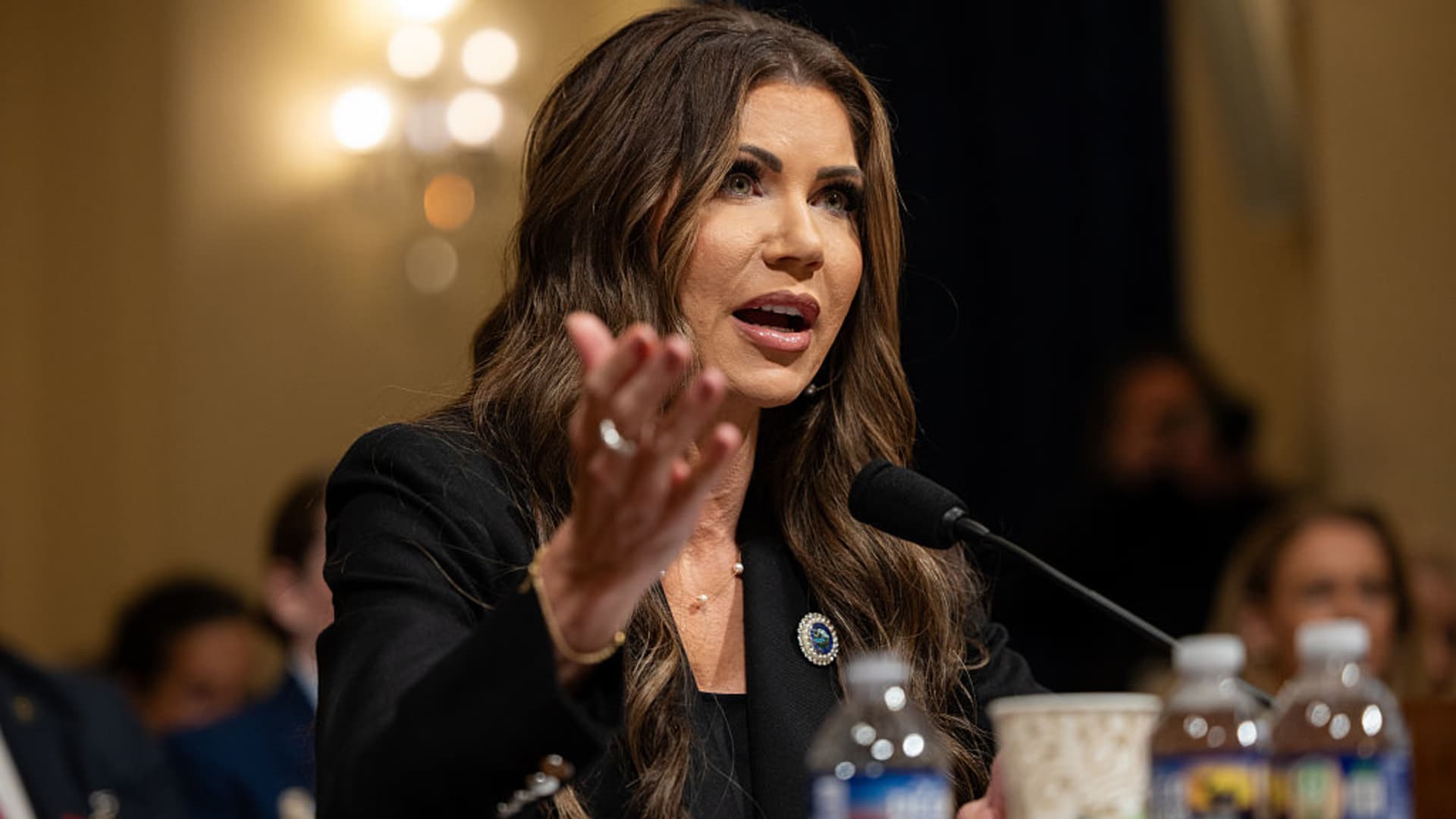

During a recent budgetary hearing, Homeland Security Secretary Kristi Noem asserted that President Donald Trump has the absolute authority to deport individuals without due process, a claim she made while misinterpreting the constitutional principle of habeas corpus. The assertion drew sharp criticism from Senator Maggie Hassan (D-N.H.), who challenged Noem’s definition of habeas corpus, emphasizing its role as a fundamental safeguard that distinguishes free societies from oppressive regimes.
Habeas corpus, which allows individuals to contest their detention in court, has been a contentious issue as Noem’s department engages in unprecedented levels of detention and deportation, often facing legal accusations of violating these constitutionally protected rights. Responding to queries about Noem’s remarks, DHS assistant secretary Tricia McLaughlin defended her, noting historical precedents where presidents such as Lincoln and FDR suspended habeas corpus during national crises. Despite constitutional provisions granting Congress the power to suspend this writ, McLaughlin argued that presidents have effectively acted first, a point that adds complexity to Noem’s controversial statement.
During the Senate Committee on Homeland Security and Governmental Affairs hearing, Noem’s statements came under further scrutiny due to increasing scrutiny regarding the administration’s immigration enforcement policies. Earlier in the month, White House deputy chief of staff Stephen Miller floated similar ideas regarding the suspension of habeas corpus for certain migrant populations, claiming such measures could be justified in times of invasion.
The topic gained urgency following an executive proclamation issued by Trump in mid-March, citing the 18th-century Alien Enemies Act to declare that members of a Venezuelan street gang, Tren de Aragua, were engaged in an “invasion” of the U.S. The proclamation stipulated that any Venezuelan over the age of 14 connected to the gang faced immediate deportation, overriding due process rights for these individuals. Consequently, U.S. authorities moved swiftly to detain and deport numerous Venezuelans, limiting their opportunity to contest these actions.
One group of Venezuelan detainees challenged their imminent deportation to El Salvador, claiming insufficient time and resources to question their detentions, thereby asserting their habeas corpus rights were violated. In a landmark 7-2 decision, the Supreme Court sided with the detainees, halting their deportation under the Alien Enemies Act. The Court’s unsigned ruling emphasized that the Trump administration’s notification-approximately 24 hours prior to removal-failed to provide adequate information for the detainees to exercise their legal rights effectively.
Since the ratification of the U.S. Constitution, habeas corpus has been suspended only four times, with three of those instances requiring Congressional approval. The current debate surrounding the application of habeas corpus during immigration enforcement underscores the ongoing tension between national security measures and the protection of civil liberties in a democratic society.
As the discourse surrounding immigration policy intensifies, the ramifications of these legal interpretations reflect broader societal concerns about the balance between governmental authority and individual rights, making it imperative for ongoing scrutiny and discourse regarding U.S. immigration practices.
Original Source: https://www.cnbc.com/2025/05/20/kristi-noem-habeas-corpus-immigration.html
Category :
Tags:
Publish Date: 2025-05-21 02:30:00