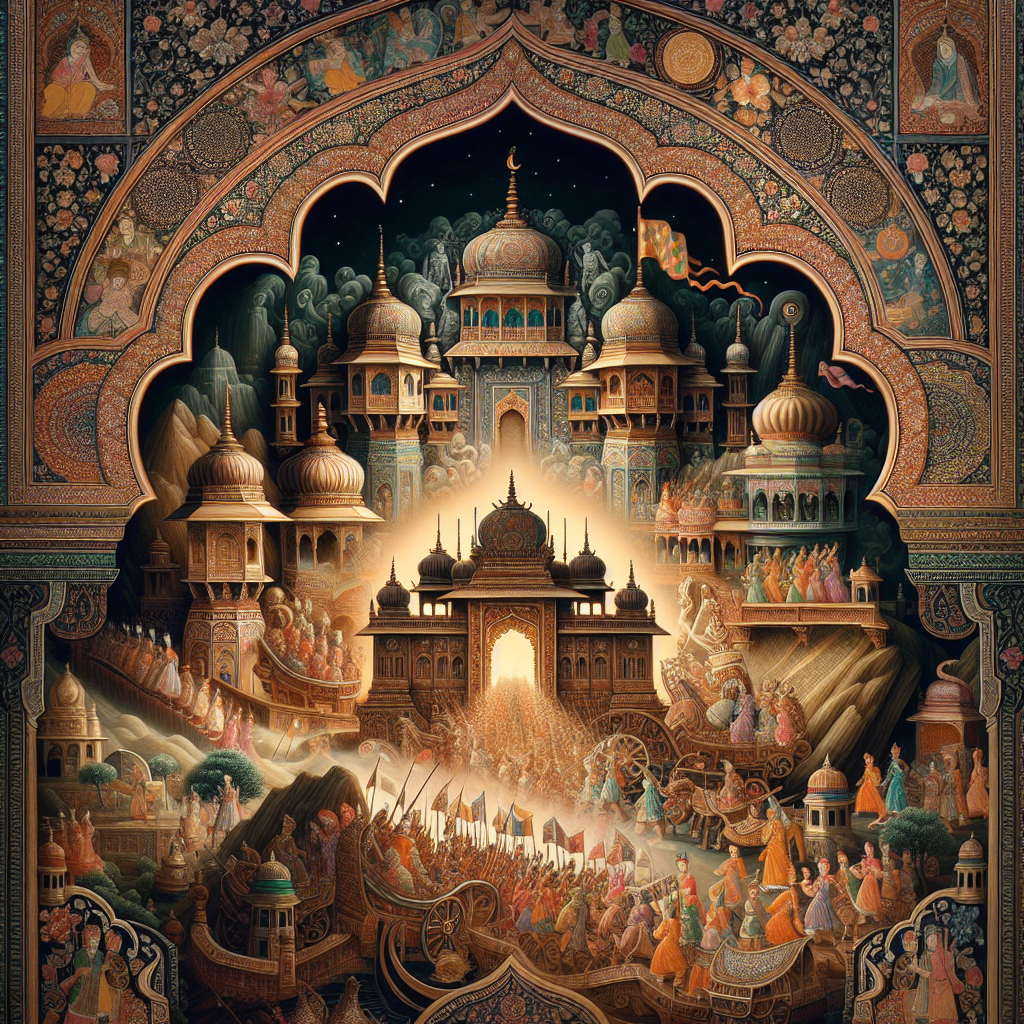
The Timeless Artistry of Indian Miniature Painting: A Captivating Journey Through History

When you think of Indian art, what pops into your mind? Perhaps vibrant murals or intricate sculptures? But what about those tiny compositions that convey grand stories? Indian miniature painting is like finding a rare gem: often overlooked yet brimming with history and soul.
Imagine walking through a bustling market in Jaipur, your senses assaulted by the colors and sounds of everyday life. Amidst the clamor, you stumble upon a small gallery showcasing miniature paintings—glorious little frames filled with mesmerizing tales. Each brushstroke carries whispers of a time gone by, capturing entire narratives within the confines of a palm. It’s easy to dismiss them as mere decoration, but each piece speaks volumes.
The journey of miniature painting in India is a rich tapestry woven through centuries. Its roots can be traced back to the 7th century, primarily in the royal courts, where these artisans served as the visual chroniclers of history, culture, and spirituality. Initially, these paintings came alive in Buddhist texts, evolving over time to depict the grandeur of Hindu epics like the Ramayana and Mahabharata.
One of the fascinating chapters in this evolution unfolded during the Mughal Empire. Here were emperors like Akbar who not only loved art but actively engaged in creating a unique fusion of Persian and Indian styles. Imagine artists sitting together, their brushes dancing over paper, blending landscapes, and human figures in a symphony of color and detail. The famous "Akbarnama," a historical record, emerged not just as a text but as a work of art, elevating the story of an empire to something visually awe-inspiring.
And then we have the Rajput style, flourishing in the courts of Rajasthan. Think about how varied our family portraits can be. The Rajput miniatures flaunt opulence with their use of gold leaf, tempura colors, and intricate patterns. Each painting tells not only a story but also conveys social customs and daily life of the time, much like a reel of a movie that captures emotions, relationships, and aspirations.
Yet, the evolution of miniature painting hasn’t just been historical; it has taken a modern twist as well. Fast forward to today, these ancient techniques are finding their way into contemporary forms. Artists are reinterpreting traditional themes, creating fusion art that blends ancient narratives with modern motifs. Take the renowned artist Jyoti Bhatt, who experiments with colors and styles while keeping the spirit of miniature painting alive. It’s a vivid reminder of how traditions can transform without losing their essence.
As we embark on this artistic journey, a few reflections come to mind. First, think of creativity as a heritage. Much like our ancestors passed down their techniques, every artist carries a legacy, whether they realize it or not. Second, art serves as a bridge—a bridge between cultures, eras, and emotions. Today’s digital age is about collaboration and storytelling, echoing the old artisans’ ethos. And lastly, never underestimate the power of small things. Just as miniature paintings hold vast narratives in tiny frames, our little daily choices can weave magnificent stories over time.
So, the next time you happen upon a miniature painting, take a moment. Reflect on its journey, its makers, and the worlds encapsulated within its boundaries. Art is a beautiful reminder that even the smallest brushstroke can contribute to a grand narrative.
Let’s leave the world a little more colorful than we found it.
Sanjeev Sarma is the Director of Software Services and Chief Software Architect at Webx Technologies Private Limited. With a passion for IT and an ever-curious mind, he explores the intersection of technology, culture, and creativity, aiming to inspire conversations that spark innovation and understanding in our rapidly evolving world.