Fed’s Powell Warns: Rising Long-Term Rates Amid Supply Shocks Create Unprecedented Policy Challenges

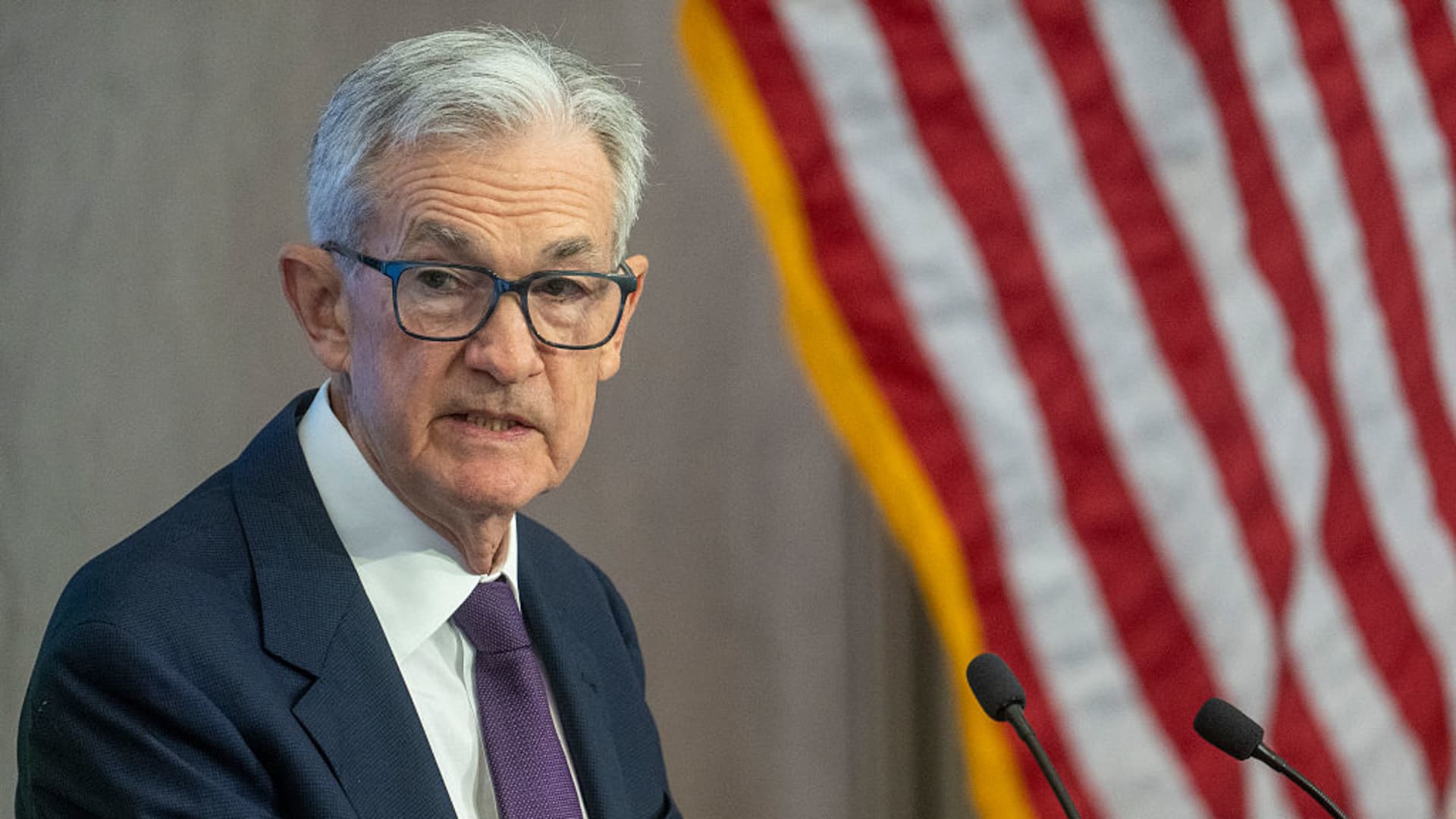
Federal Reserve Chair Jerome Powell addressed the Thomas Laubach Research Conference in Washington, D.C., on May 15, 2025, delivering insights on the evolving economic landscape and its implications for monetary policy. Powell emphasized that longer-term interest rates are expected to rise in response to a changing economy, highlighting that the Federal Reserve’s policy framework is under review—its last comprehensive assessment taking place in the summer of 2020.
Reflecting on significant developments over the past five years, Powell pointed out the surge in inflation that prompted aggressive interest rate hikes. While long-term inflation expectations remain aligned with the Fed’s 2% target, he cautioned that the era of near-zero interest rates is unlikely to return soon. Powell remarked, “Higher real rates may also reflect the possibility that inflation could be more volatile going forward than in the inter-crisis period of the 2010s,” signaling potential challenges for both the economy and central banks.
Since December 2024, the Fed has maintained its overnight lending rate between 4.25% and 4.5%, currently sitting at 4.33%. Powell’s recent comments on “supply shocks” reaffirm ongoing concerns about navigating the delicate balance between supporting employment and controlling inflation. Although he did not specifically address President Trump’s tariffs, Powell has indicated that these tariffs could potentially dampen growth and raise inflation, although the full impact remains uncertain, especially with recent negotiations underway.
As the Fed embarks on its framework review, it aims to establish a five-year plan to guide its policy decisions and enhance communication with the public. This process will consider various factors, including how the Fed articulates its future expectations and how it can refine the methodologies used in past assessments. The 2020 framework introduced a “flexible average inflation target,” allowing inflation to exceed traditional benchmarks to promote full employment. However, soaring prices in the wake of the COVID-19 pandemic soon rendered the inflation targeting strategy less viable, leading to a series of historical rate increases.
The new review seeks to address “shortfalls” in achieving inflation and employment goals, a concept that Powell indicated may require re-evaluation. “In our discussions so far, participants have indicated that they thought it would be appropriate to reconsider the language around shortfalls,” Powell stated. He also noted that the Fed’s consensus approach will need to adapt to a variety of economic conditions.
Further discussing the implications of potential supply shocks, Powell stressed the importance of effective communication. He acknowledged that while the Fed’s messaging has generally been effective, there is always room for improvement. “Effective communication requires that we convey the uncertainty that surrounds our understanding of the economy,” he added.
Though Powell did not specify a completion date for the framework review, he expressed expectations for its conclusion in the coming months. Historically, significant updates are often presented during his annual remarks at the Jackson Hole economic symposium in Wyoming, a notable event in the Fed’s calendar.
As the Fed navigates a complex economic environment, the ongoing review of its policy framework promises to shape future monetary strategies in an era characterized by volatility and uncertainty. This evolution underscores the Fed’s commitment to adapting to changing economic challenges while striving to fulfill its dual mandate of maximum employment and stable prices.
Original Source: https://www.cnbc.com/2025/05/15/feds-powell-cautions-about-higher-long-term-rates-as-supply-shocks-provide-policy-challenges.html
Category :
Tags:
Publish Date: 2025-05-16 00:05:00