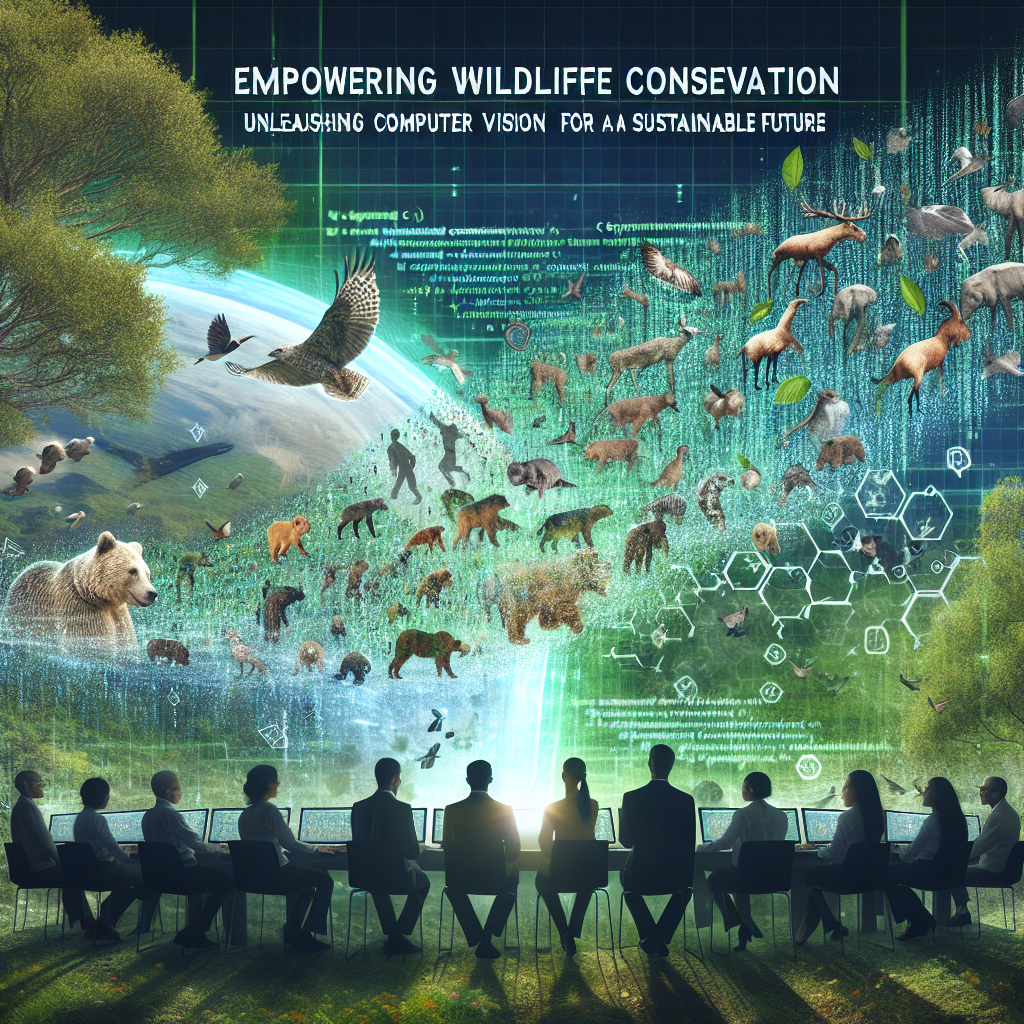
Empowering Wildlife Conservation: Unleashing Computer Vision for a Sustainable Future

Imagine taking a stroll through a dense forest, with sunlight filtering through the leaves, casting dappled patterns on the forest floor. You can hear the rustle of leaves and the distant call of a bird. But what you don’t see are the hidden wonders happening just out of sight.
Enter computer vision—the superhero we didn’t know we needed for wildlife conservation. This isn’t just tech-speak; it’s a transformative force reshaping how we protect the incredible diversity of life around us. With cameras acting like modern eyes, machine learning algorithms stepping in as brainpower, we’re witnessing a revolution in our understanding of wildlife and habitat preservation.
Consider the case of Tanzania’s Serengeti National Park, where researchers employed computer vision to monitor animal populations. Traditional methods—like using human observers—were slow and often provided incomplete data. But with camera traps and sophisticated algorithms, researchers can now analyze footage of thousands of animals over vast terrains. Not only does this shift save time, but it also reveals patterns of animal behavior that human eyes might miss. Picture this: a simple camera captures the nuanced social interactions of lions or provides insights into migration patterns of wildebeests—information that can inform conservation strategies effectively.
One might ask, "How does this tech translate into real-world change?" Let’s break it down. Firstly, computer vision enhances data collection efficiency. Conservationists can cover more ground, analyze more footage, and gather insights that would have remained hidden in the past. Secondly, it aids in detecting poaching activities. Advanced algorithms can identify unusual patterns, like a sudden shutdown of cameras in an area (perhaps indicating trouble). This means quicker intervention to protect endangered species.
Moreover, it’s about community engagement, too. Remote monitoring contributes to local conservation efforts by connecting communities with the wildlife around them. By sharing real-time data, communities can better understand their natural surroundings, fostering a sense of stewardship.
Here’s a practical takeaway: Imagine if your local community had access to a platform that shares insights gathered from local wildlife populations, encouraging schools, families, and individuals to get involved in conservation. Simple acts—reporting a sighting or participating in a local clean-up—can have a ripple effect on understanding and protecting local ecosystems.
And let’s not forget the ethical considerations. We have a responsibility to use this tech wisely. With great power comes the potential for misuse, whether it’s invasion of privacy or ecological surveillance that overrides the local way of life. So, as we rush toward these technological advances, grounding our efforts in respect for wildlife and local communities becomes paramount.
Now, here’s where it gets even more fascinating. Imagine future generations of students learning not just biology but how to use technology in harmony with nature. They could become the next wave of innovators who see the world through the lenses of both silicon and empathy. They could be the ones developing tools that blend conservation with community needs, turning passive observation into active participation.
As we stand at the intersection of technology and wildlife conservation, the possibilities are immense. Each camera hidden in the foliage represents a story waiting to be told—an uncharted territory in the wildlife narrative. Ultimately, we’re not just using tech for conservation; we’re evolving our relationship with nature itself.
So, the next time you find yourself in the great outdoors, pause for a moment. Think about all the unseen relationships and ecosystems at work around you. And remember, behind every remarkable conservation effort is a blend of innovation and insight, waiting to usher in a new chapter where technology and nature coexist beautifully.
About the Author
Sanjeev Sarma is the Director of Software Services and Chief Software Architect at Webx Technologies Private Limited. A passionate advocate for technology’s role in enhancing everyday life, Sanjeev blends insight with curiosity, exploring how AI, machine learning, and digital transformations impact our world—from wildlife conservation to entrepreneurship in the tech space.