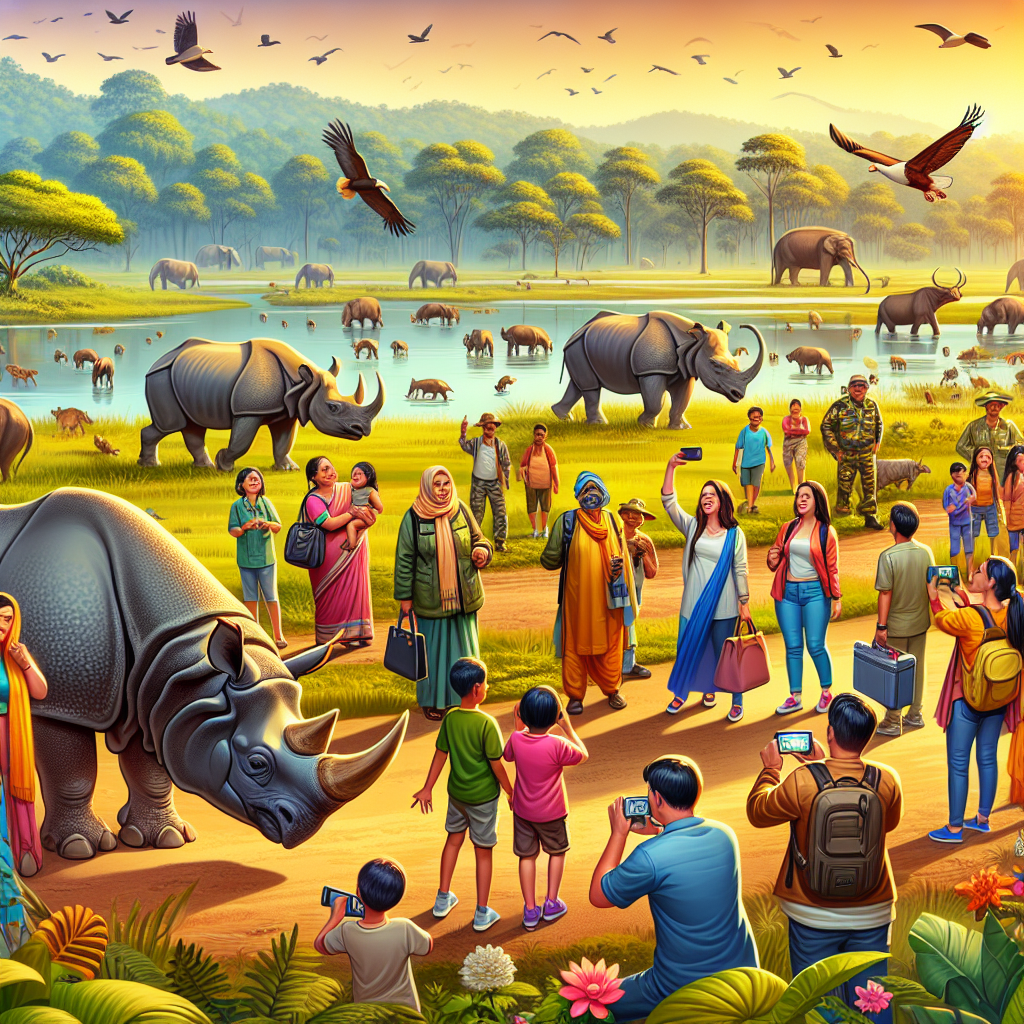
Kaziranga National Park Sees Unprecedented Surge in Tourist Influx After Two Decades

Imagine you’re standing at the edge of the lush, verdant landscape of Kaziranga National Park, the air thick with the earthy scent of wet grass and wildlife. The distant sound of an elephant trumpeting echoes through the trees, and suddenly, you feel like a part of something magical. For many, this is more than just a picturesque tableau; it’s an untamed slice of paradise that has increasingly beckoned tourists from around the world.
Kaziranga, a UNESCO World Heritage Site nestled in Assam, India, has recently seen a monumental surge in tourist inflow—nearly doubling its visitor numbers compared to two decades ago. In just the last year alone, it witnessed over 1.25 million tourists flock to its sprawling wetlands and rolling grasslands, drawn to its rich biodiversity, particularly the famed one-horned rhinoceros.
What’s behind this boom? To start with, there’s the enhanced accessibility. Major roads have been improved, and travel options have expanded, transforming Kaziranga from a well-kept secret into a mainstream go-to destination. For context, I recall visiting the park years ago; the journey felt like an adventure in itself, riddled with dusty roads and rough patches. Fast-forward to today, and those long, bumpy rides have been replaced by smooth highways and reliable transportation services. It’s as if Kaziranga has morphed from a hidden gem into a glittering jewel, sparkling brighter than ever.
The role of social media and digital marketing can’t be understated either. Platforms like Instagram and TikTok have become modern-day postcards. Just a single stunning shot of a rhino against Kaziranga’s breathtaking backdrop can ignite wanderlust in thousands, driving traffic to an already thriving tourism sector. I often chuckle to myself—if a picture is worth a thousand words, a few great shots of Kaziranga could be worth a million tourists!
But here’s something that caught my attention. With the rising influx highlighted by tourism reports, there’s increasing discourse about sustainability. Maintaining the delicate balance between tourism and conservation has become more pressing than ever. Unlike the cliché of rural tourism leading to irreplaceable damage, there’s a growing understanding that eco-friendly practices can co-exist with economic benefits.
Take, for example, the local communities that are gradually becoming active participants in this tourism wave. Alongside the rangers vigilantly protecting the rhinos, local villages have started offering homestays and guided tours. This collaboration gives visitors an authentic experience while empowering local families. It creates a scenario where both the park and the communities thrive, a win-win that reminds me of an age-old adage—”When the tide rises, all boats float.”
As the narrative of Kaziranga continues to evolve, here are a couple of takeaways worth reflecting on. Firstly, sustainable tourism is not just a buzzword; it’s a necessity. It’s imperative that tourists respect the fragile ecosystems they visit and that operators commit to practices that protect them. Secondly, local community involvement is crucial. Tourists often speak of wanting authentic experiences, and what could be more genuine than engaging with the local people whose lives are intertwined with the land?
Kaziranga is more than a sanctuary for rhinos; it’s a microcosm reflecting larger global conversations about sustainability, community, and the future of tourism. As I watch the sun dip behind the horizon, casting an amber hue over the park, I’m left with a thought: How do we ensure that places like Kaziranga can delight future generations while still preserving their wild spirit?
In an age where technology meets nature, our choices will shape the experiences of tomorrow. Let’s embrace the wanderlust but tread lightly.
—
### Author Profile
Sanjeev Sarma is the Director of Software Services and Chief Software Architect at Webx Technologies Private Limited. An IT enthusiast and thought leader, he blends curiosity with insight in his writing. When he’s not strategizing about technology, you’ll find him exploring the wonders of India, drawing connections between the digital world and everyday life.